


Rogeti TSE Frame feature update
Rogeti TSE Frame Mk.3 features added
Improved diagonal shift support for the lens mount

Keith has removed all Google ads. Too many deceptive and irritating adverts.
Any ad links left are non tracking, to companies we know, trust and we've worked with for years [Park Cameras]
Ads helped pay for site running costs, so if you found something useful, please
...Make small KoFi donation?
...Subscribe to Keith's YouTube Channel
...Get Keith's book about how to use tilt/shift lenses
Our site contains affiliate links - these help support the site. See our Advertising policies for more
Rogeti have produced a new version of the TSE Frame which better supports diagonal stitching.
The diagonal mode of stitching allows for four shots to be taken without parallax, for maximal coverage to the TS-E lens image circle.
The lens mount for the Canon TS-E17mm and TS-E24mm mk2. lenses lets you attach the lens to a tripod and shift the camera, to reduce parallax errors when stitching.
For a detailed review about using the TSE Frame and why it’s a fixture in Keith’s kit bag see:
Update: There is now a specific version of the TSE Frame for the Canon TS-E50mm lens
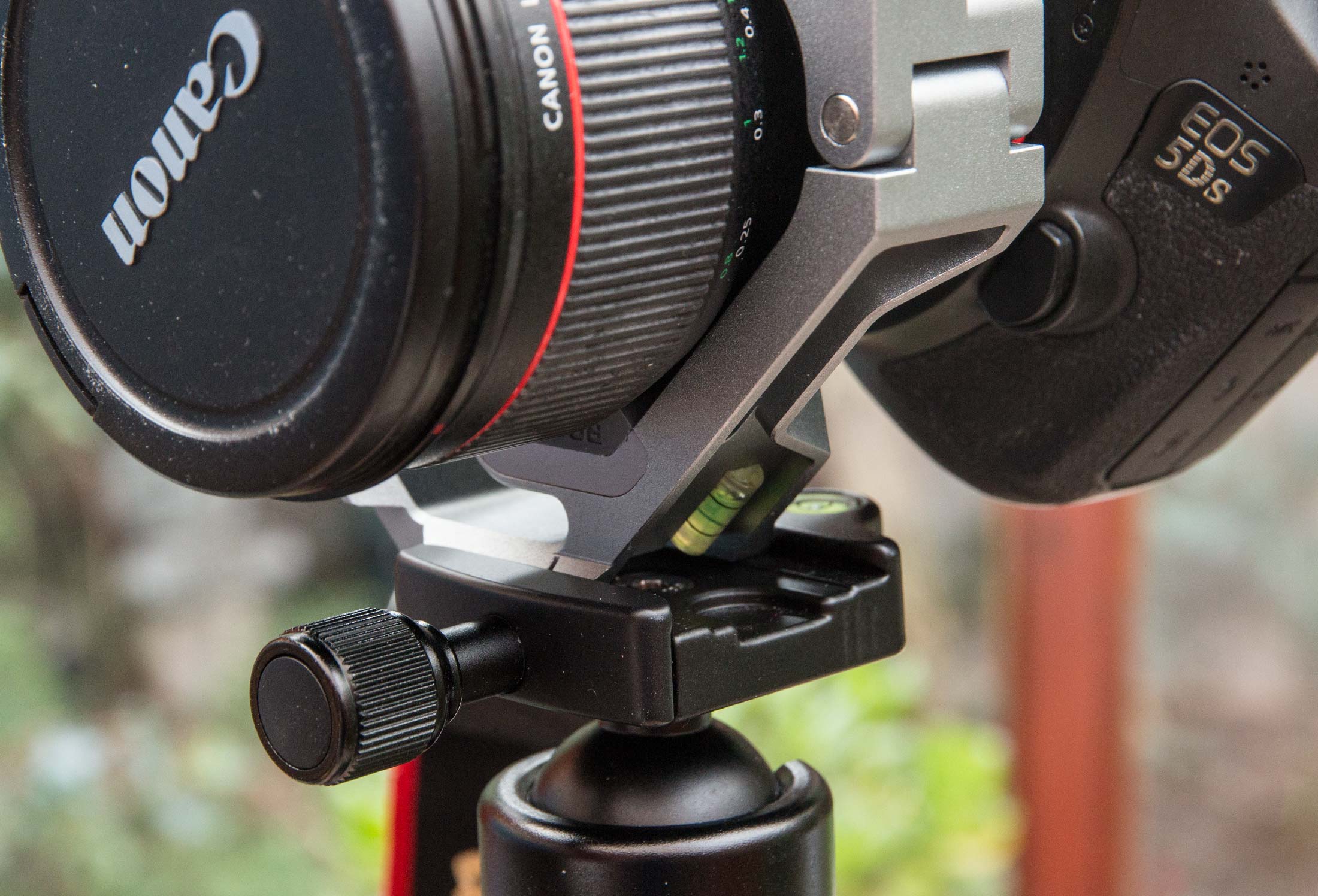
The Rogeti TSE Frame is available for $359
This is an affiliate link, added some time after my review – it helps support the site and if you use it, is greatly appreciated – Keith
TSE Frame Mk3 changes
The TSE frame is now an absolute fixture in my camera bag when out doing architectural work with the Canon 24mm and 17mm lenses, so when Rogeti asked if I’d check the new Mk3 version, I did wonder just what it did differently.
Putting it behind my old one, I can see it’s been slimmed down a bit, making it just a bit easier to access the focus ring.
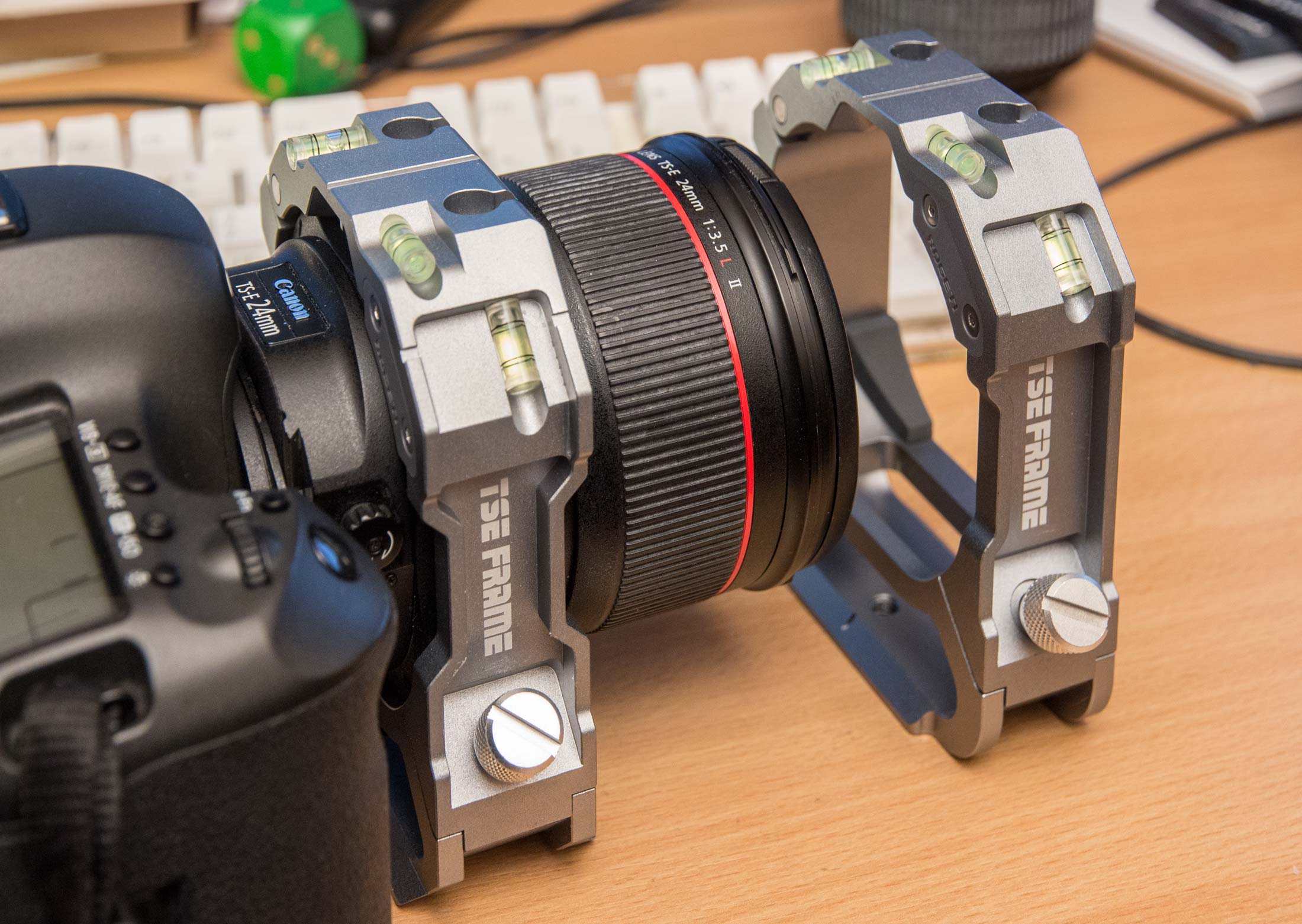
Looking at the other side I spotted the new 45º swiss style mount plate.
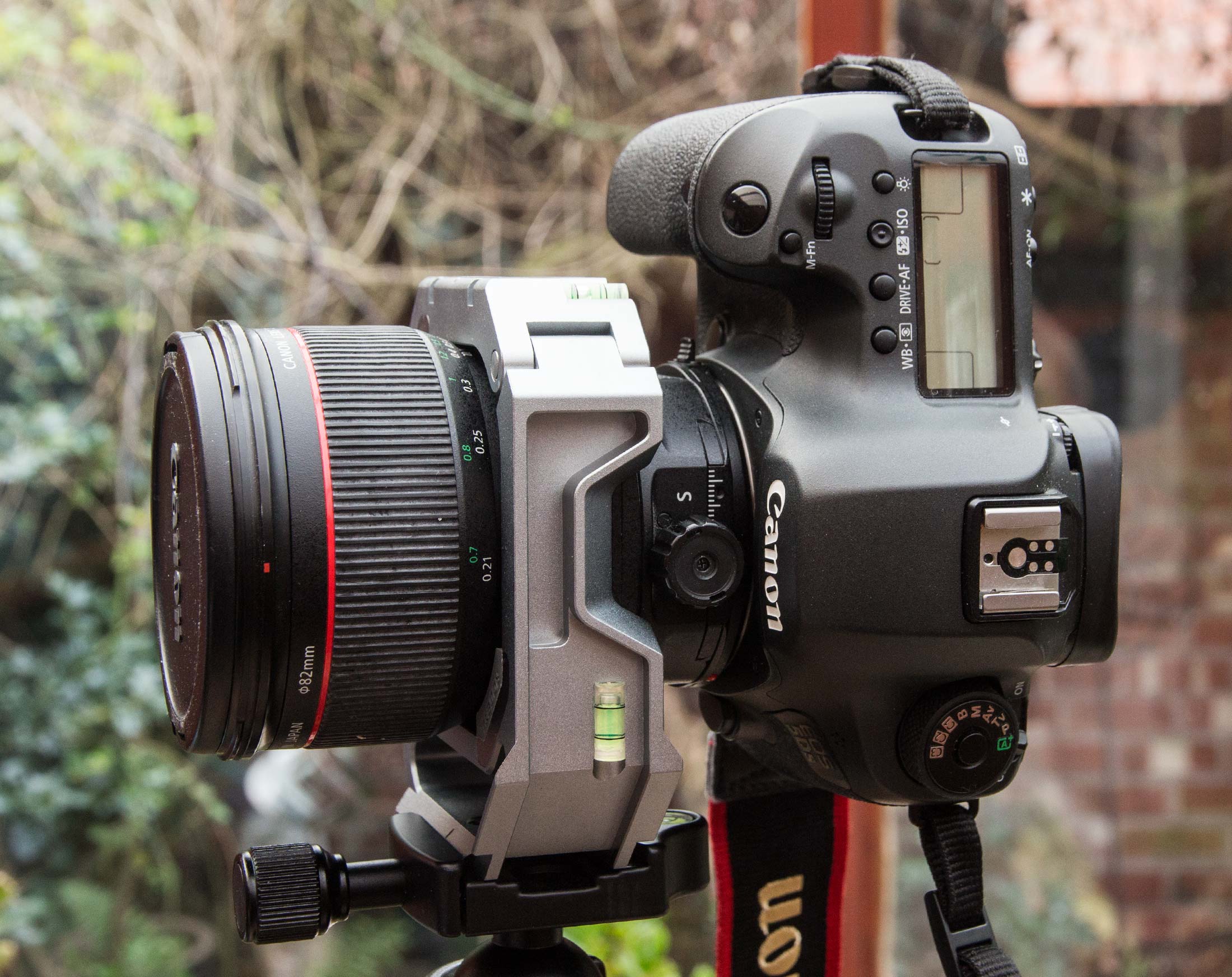
This lets me attach the TSE Frame to a level tripod after rotating the frame 45º
Previously, you had to tilt the head by 45º, but now you can keep it level. This also has the advantage that you’re not moving the camera off to one side, so improving stability.

The camera then needs rotating via the lens mount by 45º to level it (a bubble level on the camera hot shoe may help here (if it’s an accurate one).

In the example above, the camera has been shifted diagonally up and to the right. This is equivalent to moving the lens downwards and to the left.
Note too the two sighting notches in the frame, now at the top, that let you ‘aim’ the lens. The two circular holes you can see are for the optional support and sighting frame which is the same as before.
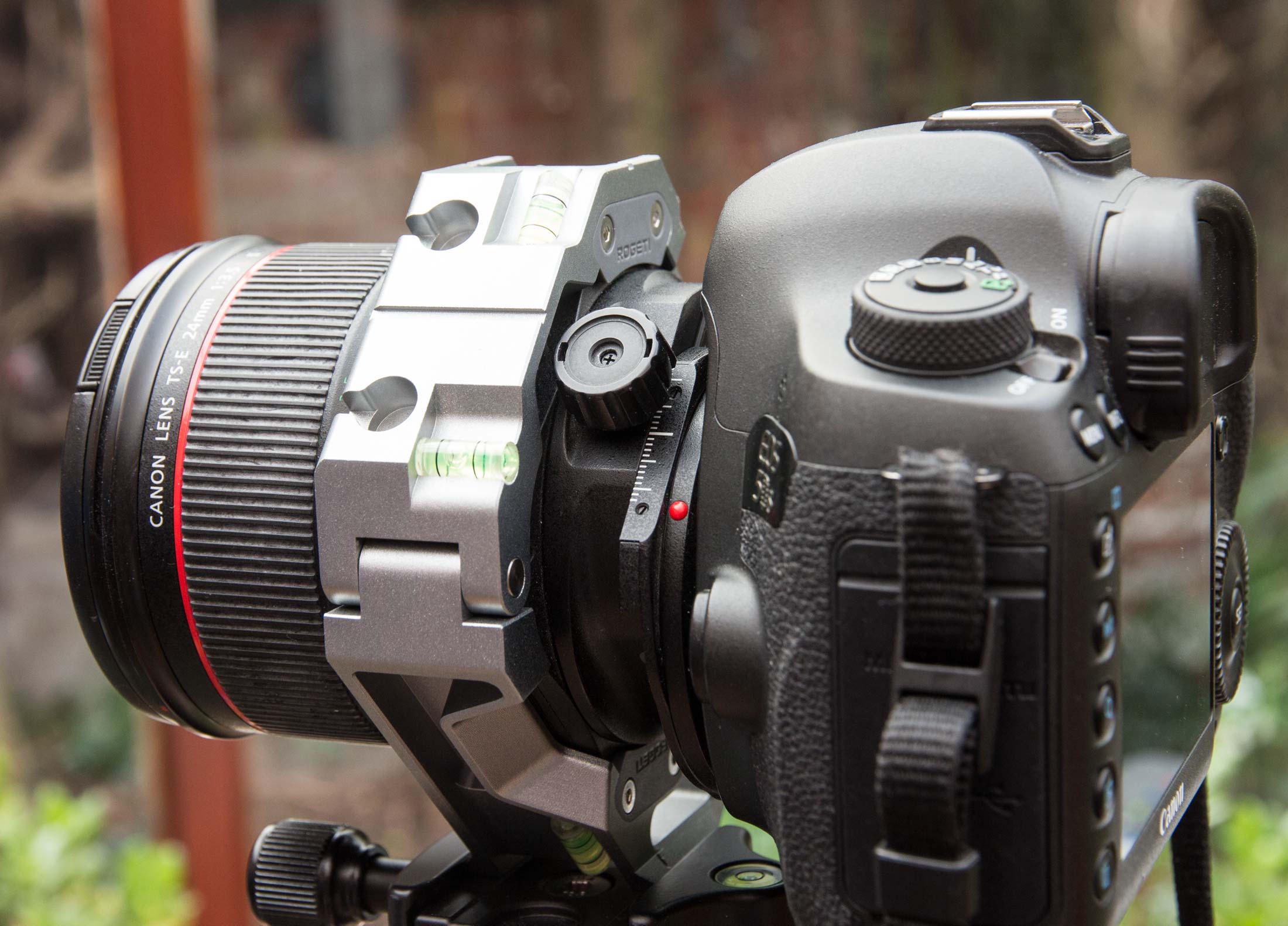
In the second example, the camera has been fully shifted the opposite direction.
The lens tilt axis will need moving by 90º to get the other two diagonal shifts (see my TSE Frame review for many more examples)
Using the frame
I’ve not used a full four shot diagonal stitch very often, partly because most of my stitching just needed 1,2 or 3 shots in a single plane. The other reason would be that leaning the whole assembly over and the lack of 45º stops on the lens mount made it feel less solid than I’d like.
It turns out that just adding the 45º plate to the frame does make it feel a lot more solid for the 45º stitch option.
Rogeti information
This chart shows all the parts of the Mk3 frame

Here’s their quick guide to the coverage you can get by stitching.

How I use the TSE Frame
For a detailed review about using the TSE Frame and why it’s so useful see:
One quick example from the review showing four images, shot on the diagonal and their stitch.

Stitched and corrected.

Never miss a new article or review - Sign up for our occasional (ad-free) Newsletter
and please do subscribe to Keith's YouTube Channel

Other areas of our site that may be of interest...
All the latest articles/reviews and photo news items appear on Keith's Photo blog

Keith explains tilt and shift lenses
Keith has written a book that looks at the many ways that tilt/shift lenses can benefit your photography from a technical and creative point of view. If not in the UK check for import issues and maybe try an on-line bookshop. Keith has no connection with sales of the book.
ISBN 9781785007712
There is also a specific index page on the site with links to all Keith's articles, reviews and videos about using tilt and shift.
We've a whole section of the site devoted to Digital Black and White photography and printing. It covers all of Keith's specialist articles and reviews. Other sections include Colour management and Keith's camera hacks - there are over 1200 articles/reviews here...
We're an Amazon.com affiliate, so receive payment if you buy via Amazon US
Andrey | Oct 14, 2025 at 12:39 pm
Re: The other reason would be that leaning the whole assembly over and the lack of 45º stops on the lens mount made it feel less solid than I’d like.
It seems that the TS-E 17mm does not lock at the desired point, and the stitching of four frames is done poorly… It’s a shame, of course, but I have to accept this situation, otherwise I would think that something was wrong with my lens. At the locking points, the camera is shifted by 15 degrees in one direction or the other…
Keith | Jun 27, 2022 at 2:48 pm
The TS-E lens mount section rotates on the body… it the same as normal rotation of the shift axis…
Mario | Jun 27, 2022 at 7:50 am
“The camera then needs rotating via the lens mount by 45º to level it ” How do you achieve that?