


Review: Laowa 85mm 2x Macro F5.6 APO
Review: Laowa 85mm 2x macro f/5.6 APO lens
Compact 2x macro lens for mirrorless

No more Google ads. Too many deceptive and irritating adverts.
Any ad links left are non tracking, to companies we know, trust and we've worked with for years [Park Cameras]
Ads helped pay for site running costs, so if you found something useful, please
...Make small KoFi donation?
...Subscribe to Keith's YouTube Channel
...Get Keith's book about how to use tilt/shift lenses
Our site contains affiliate links - these help support the site. See our Advertising policies for more
Keith has been testing the new compact Laowa 85mm 2x macro lens from Venus Optics
The Laowa 85mm f/5.6 2x Ultra Macro APO is a new announcement in their range of specialist and unusual lenses.
There are lots of examples of it in use, tested here on the EOS RP. There is a short video review to go with this article.
Index

Check with Laowa
for the list price for the 85/5.6
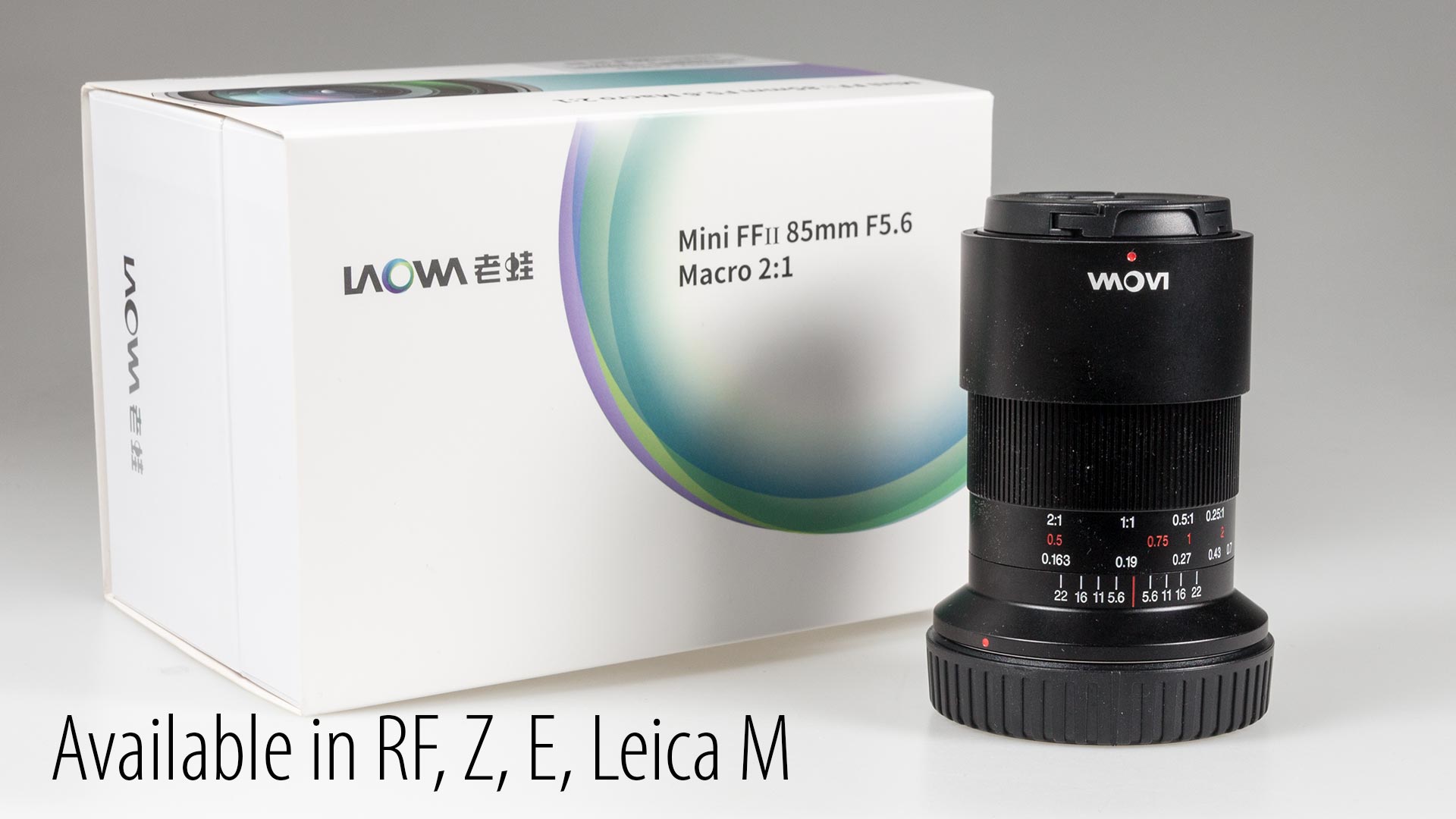
The lens will be available in several mount options: Canon RF, Nikon Z, Sony E and Leica M mounts
Initially $449 RF / E / Z | $499 Leica M
The Laowa 85mm 2x macro
This new lens from Venus Optics is a compact, fully manual design, for mirrorless full frame cameras
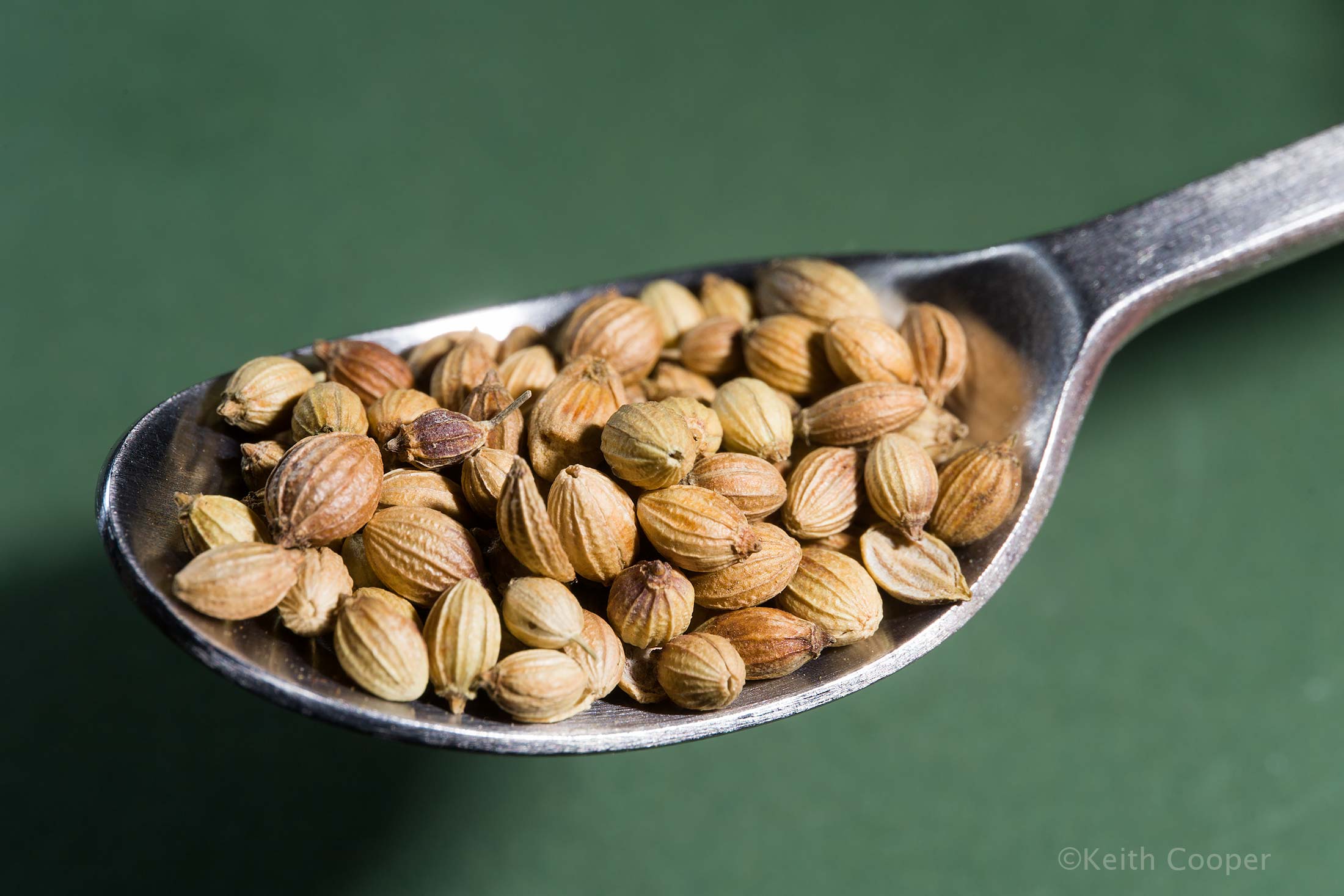
Coriander seeds. F/16 0.75x magnification (est.)
Laowa 85mm 2X macro
The lens comes with a soft bag, lens cap and snap on lens hood.
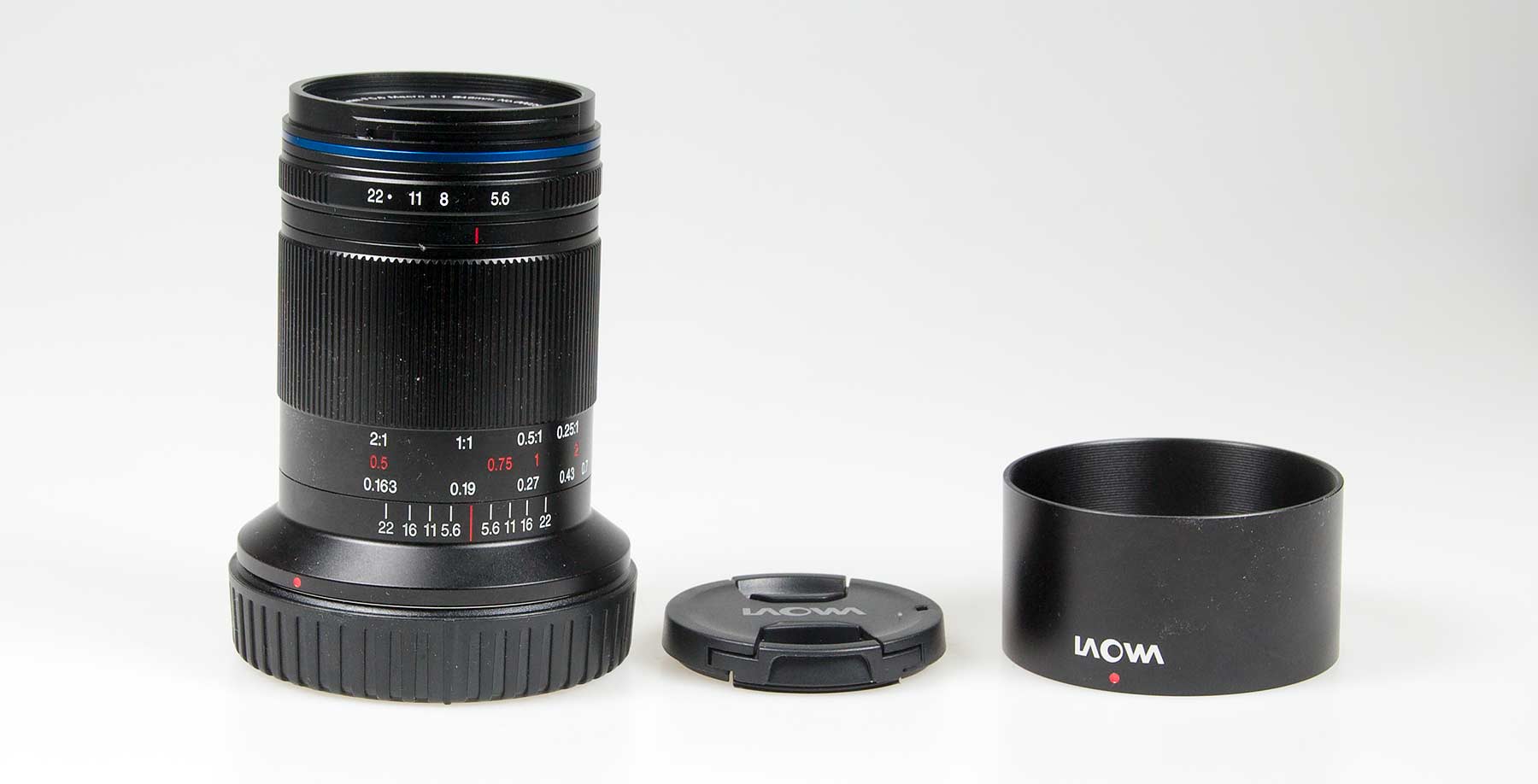
The (metal) hood can be reversed for storage, although it then covers the aperture ring.
Aperture and focus
The lens has seven slightly rounded aperture blades, shown here at f/8
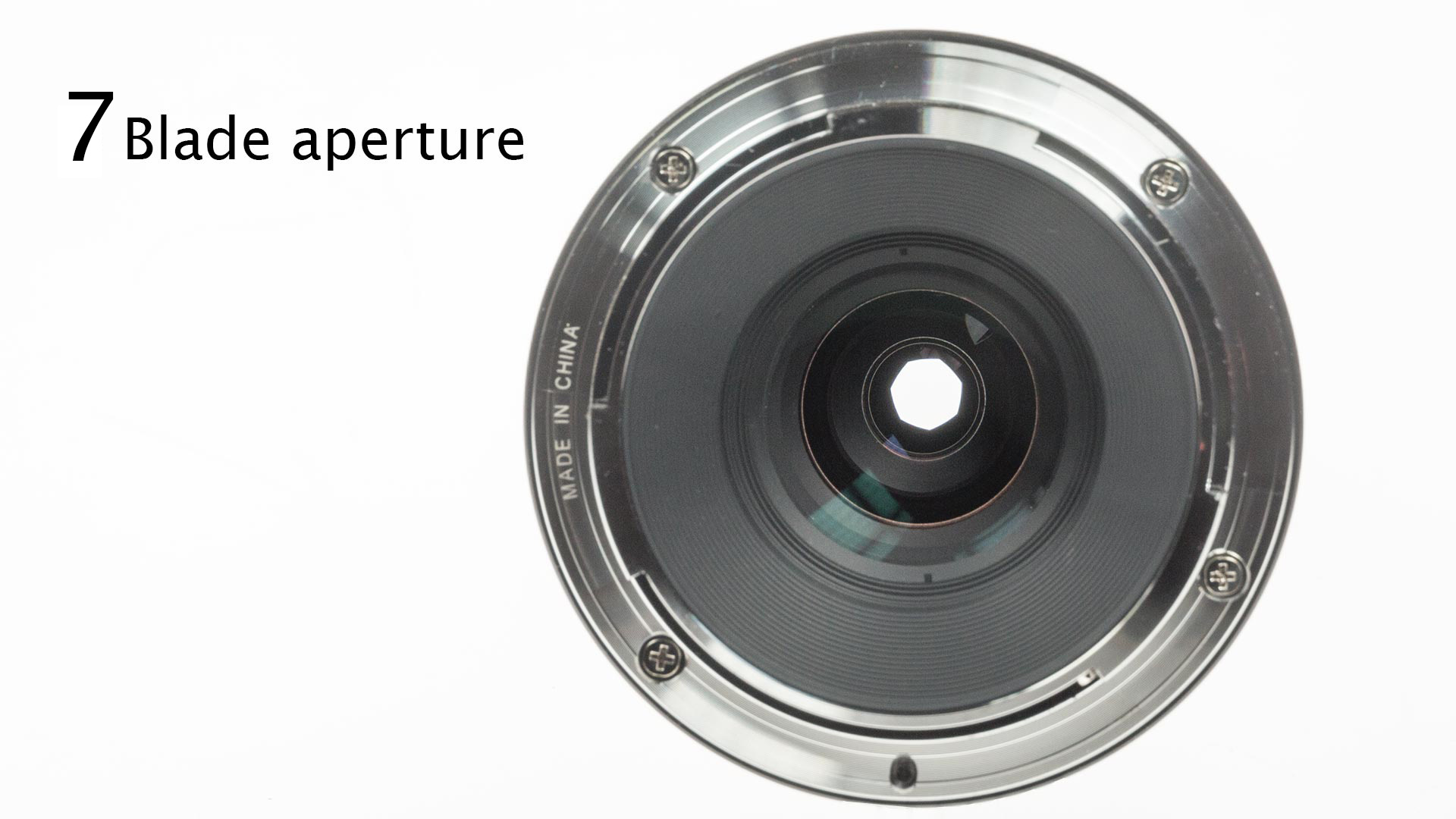
The aperture ring has click stops from f/5.6 to f/22

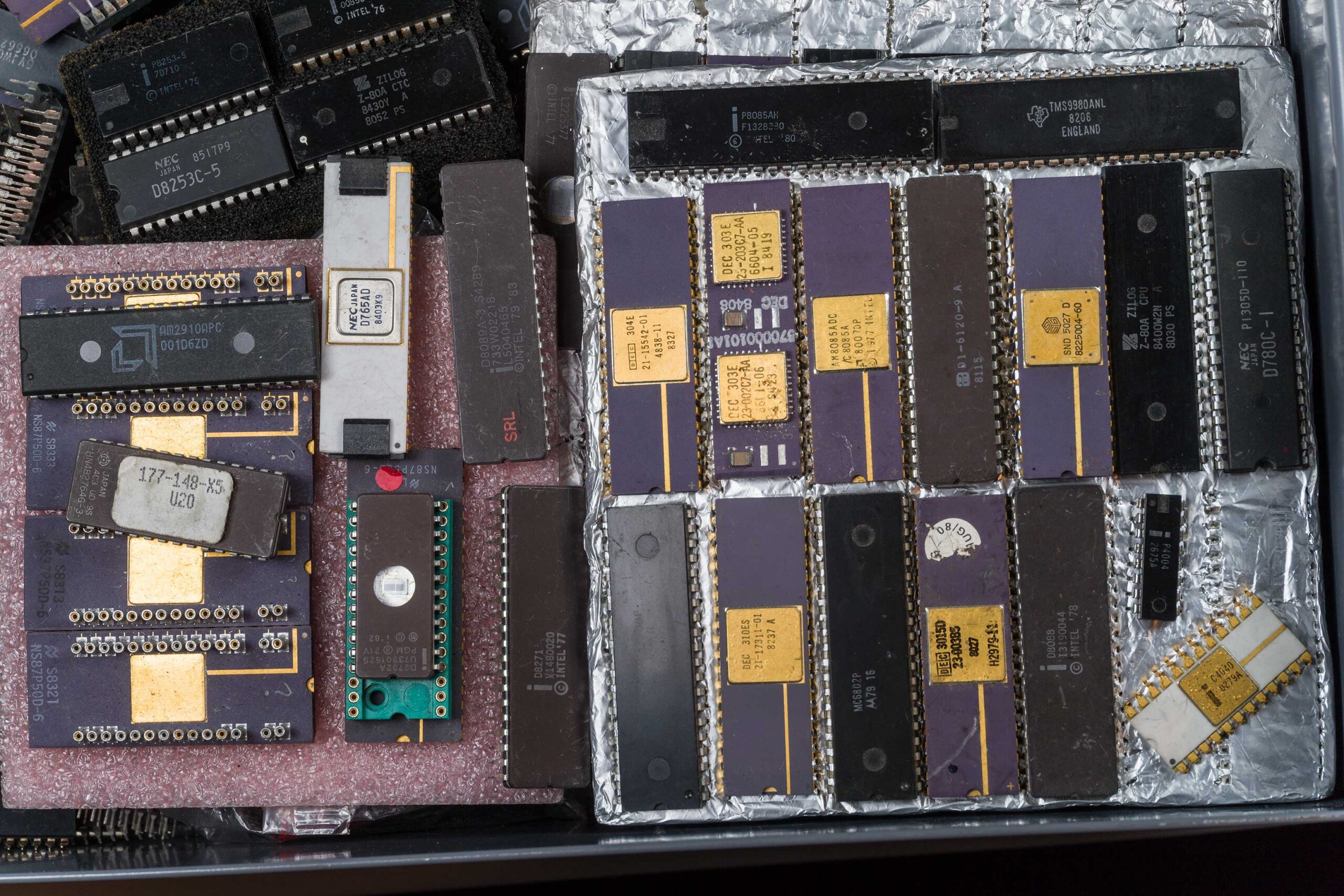
The manual focus ring is smooth and gives a good throw (~160º) for close up focus precision. I’d note that the lens works just fine as a manual focus ‘normal’ 85mm as well. This shot of a box of assorted microchips from my scrap drawer shows very good coverage – I believe it was f/11, since with manual lenses there is no lens EXIF data.
As with many images here, click to see higher res versions
Here’s a view showing the lens set to 1:1. The live view screen on the EOS RP gives a feel for the scale and DOF at f/5.6

Moving to the highest 2x magnification once again shows the view from the camera.

Extension tubes
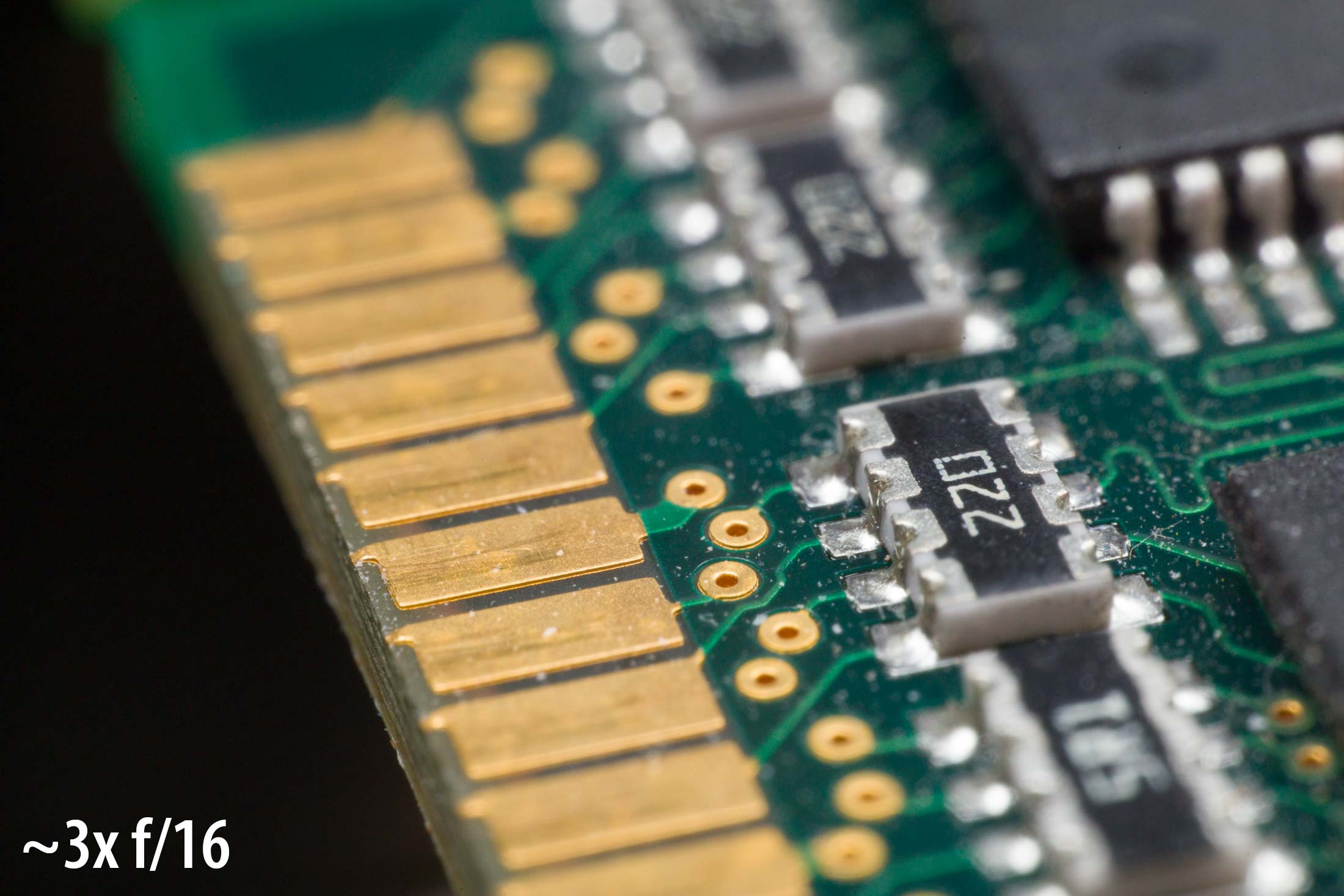
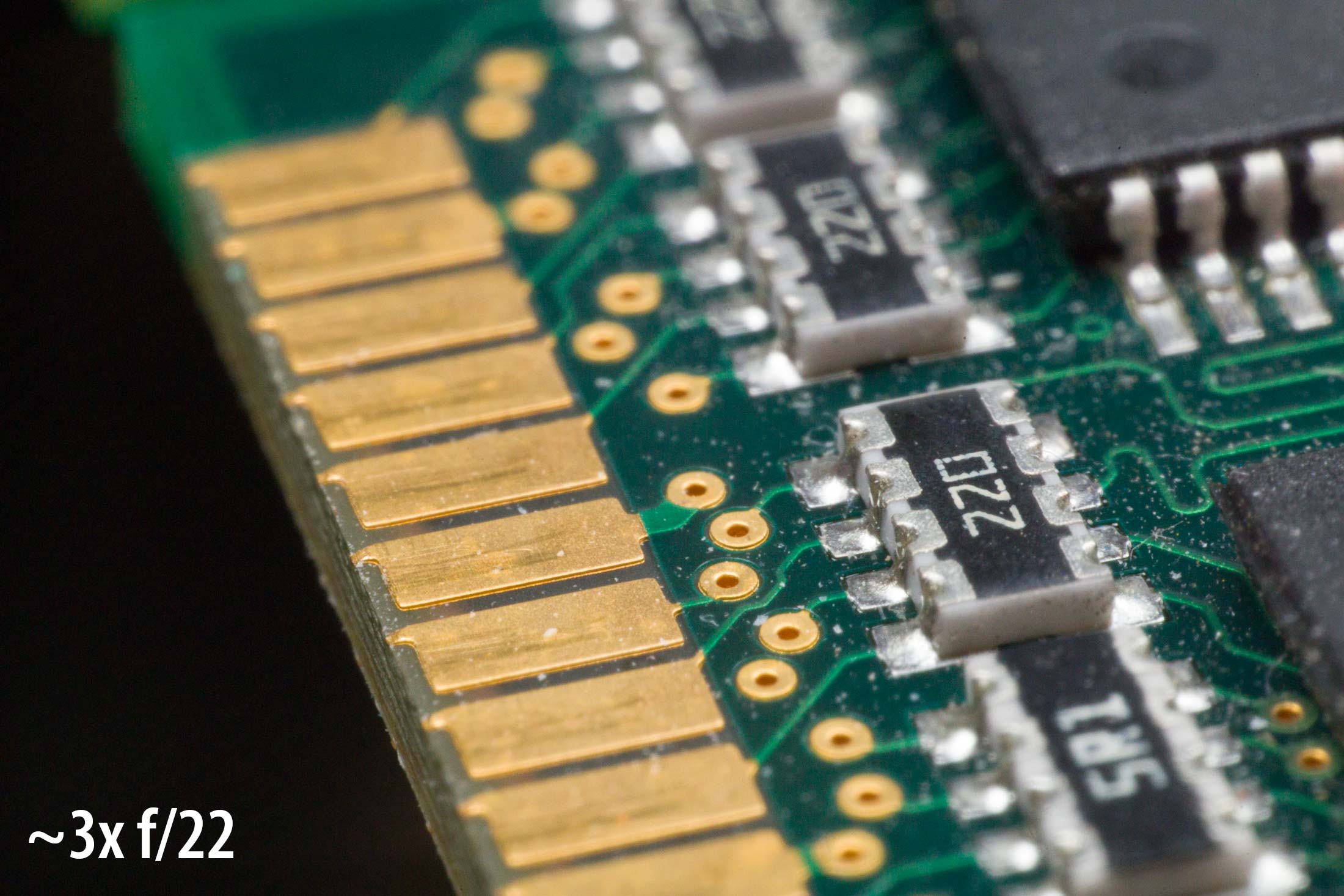
It’s possible to use the lens with extension tubes – the ones here upped the magnification to just over 3x (details later)
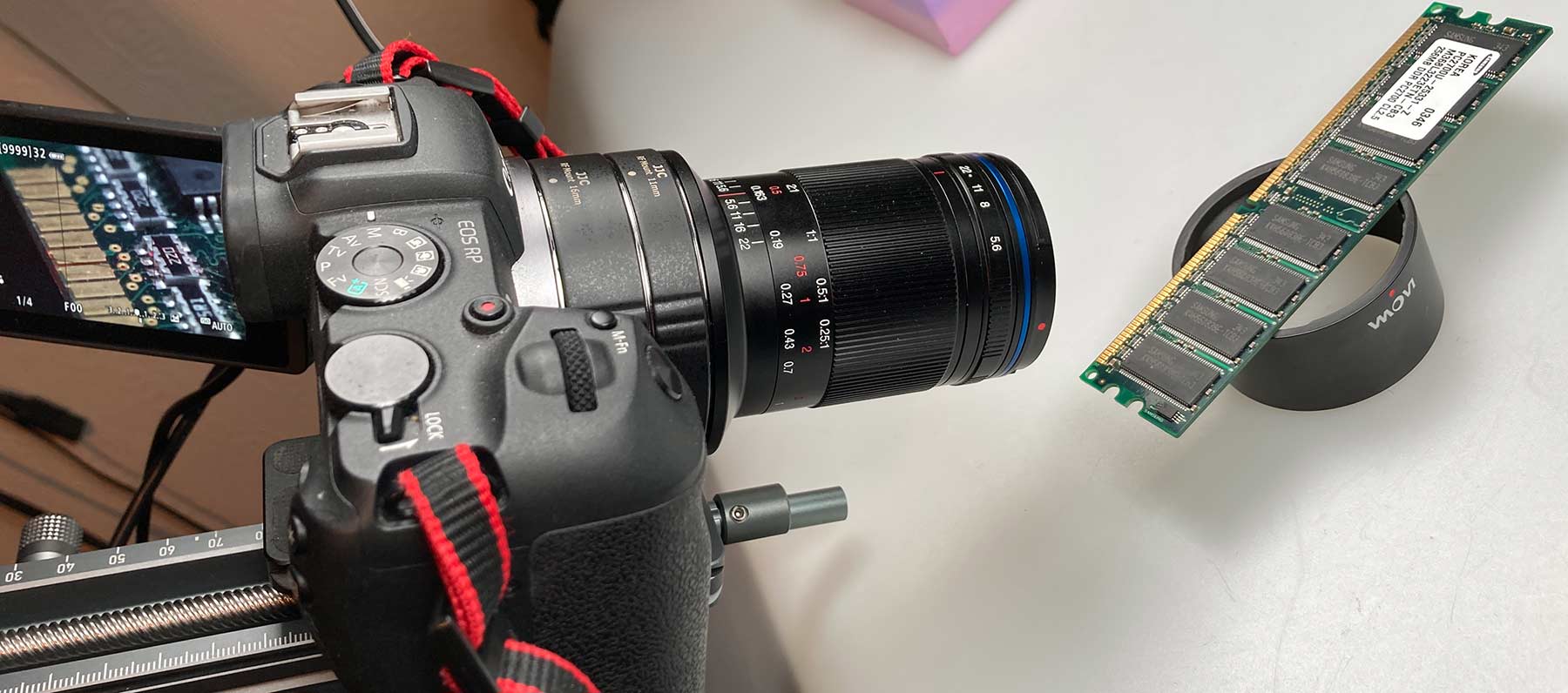
The RF mount tubes are 16mm and 11mm.
The lens specifications
This table is from the initial lens launch information
| Laowa 85mm f/5.6 2x Ultra Macro APO | |
| Focal Length | 85mm |
| Max. Aperture | f/5.6 |
| Min. Aperture | f/22 |
| Angle of View | 28.55° |
| Format Compatibility | Full Frame |
| Lens Structure | 13 elements in 9 groups (3 ED glasses) |
| Aperture Blades | 7 |
| Min. Focusing Distance | 16.3cm |
| Max. Magnification | 2x |
| Filter Thread | Φ42mm |
| Dimensions | Φ53mm×78mm (Leica M) |
| Weight | around 252g |
| Mounts | Canon RF, Sony E, Nikon Z, Leica M |
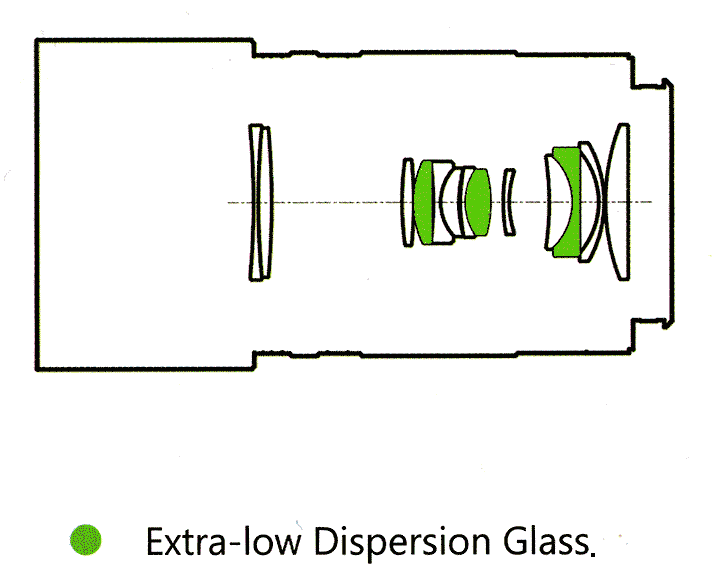
Lens design – the lens is internally focusing
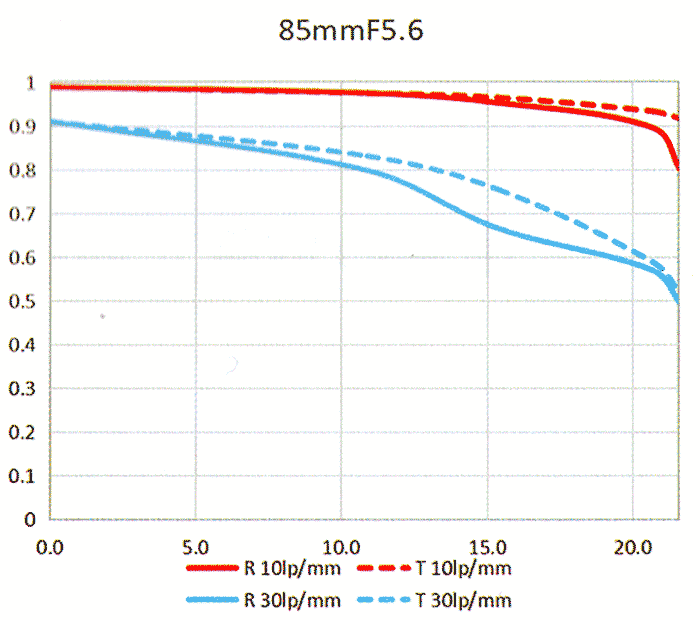
MTF chart
The lens is very compact – seen here in comparison with the TS-E90mm f/2.8 I use quite often for close-up work.
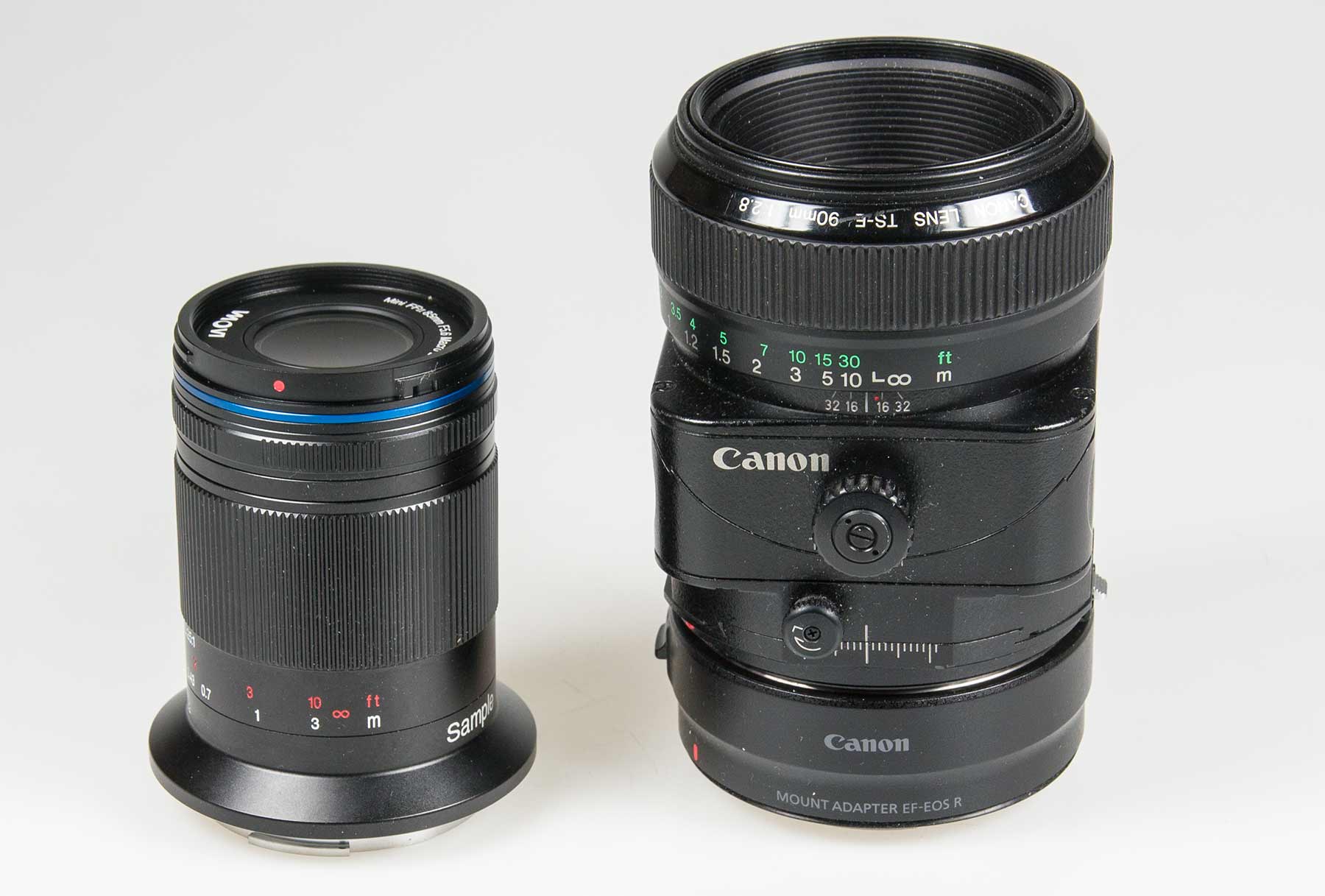
The TS-E90 has an EF->RF adapter fitted and needs extension tubes to get to 2x – It’s not advertised as a Macro lens unlike the even larger TS-E90mm F2.8L Macro [Review]
Lens detail
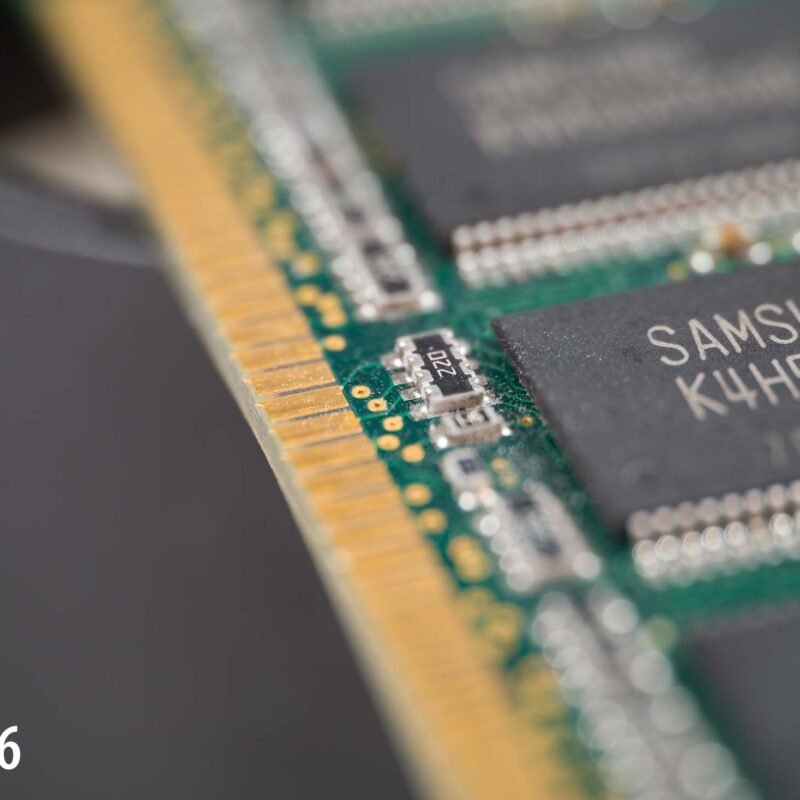
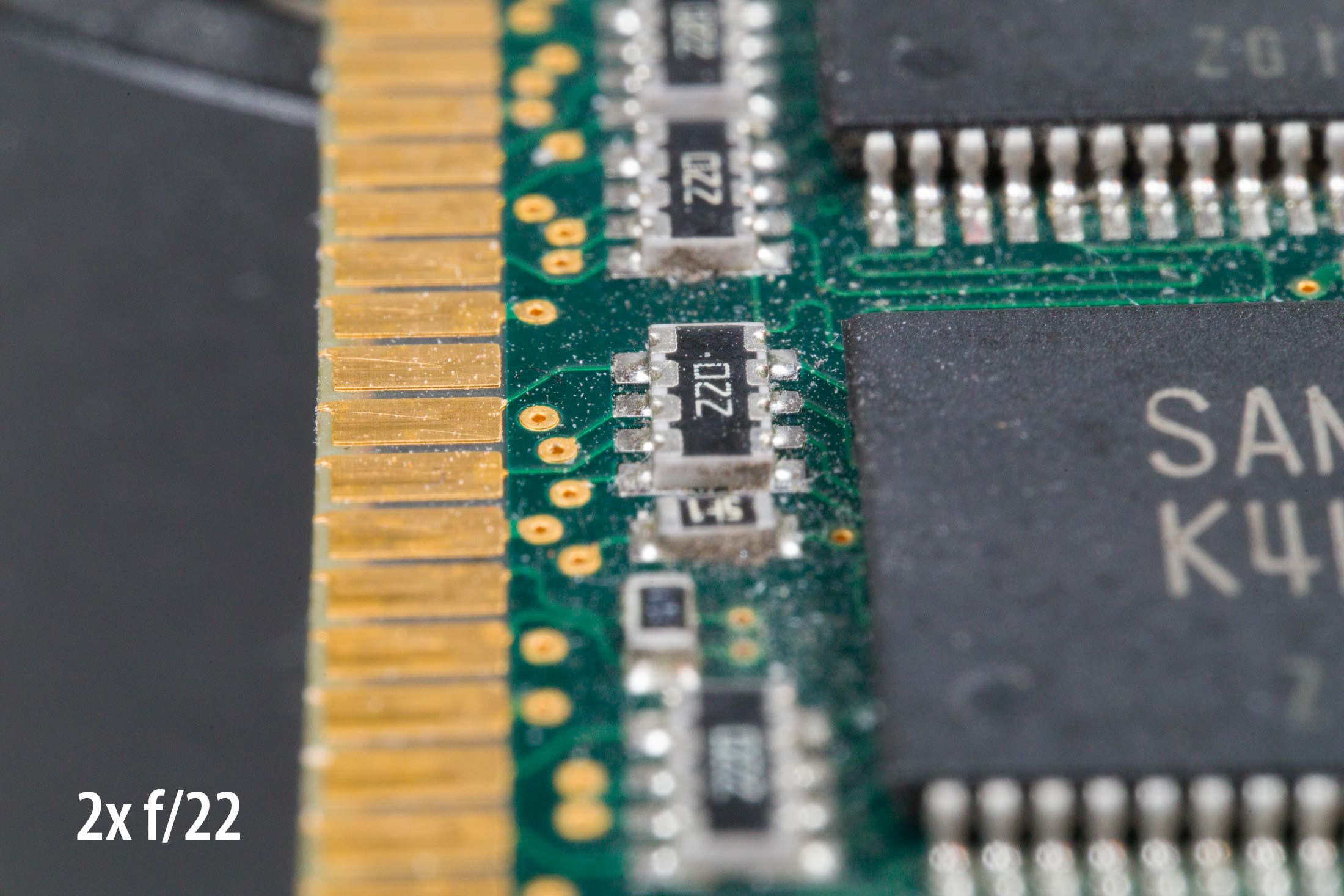
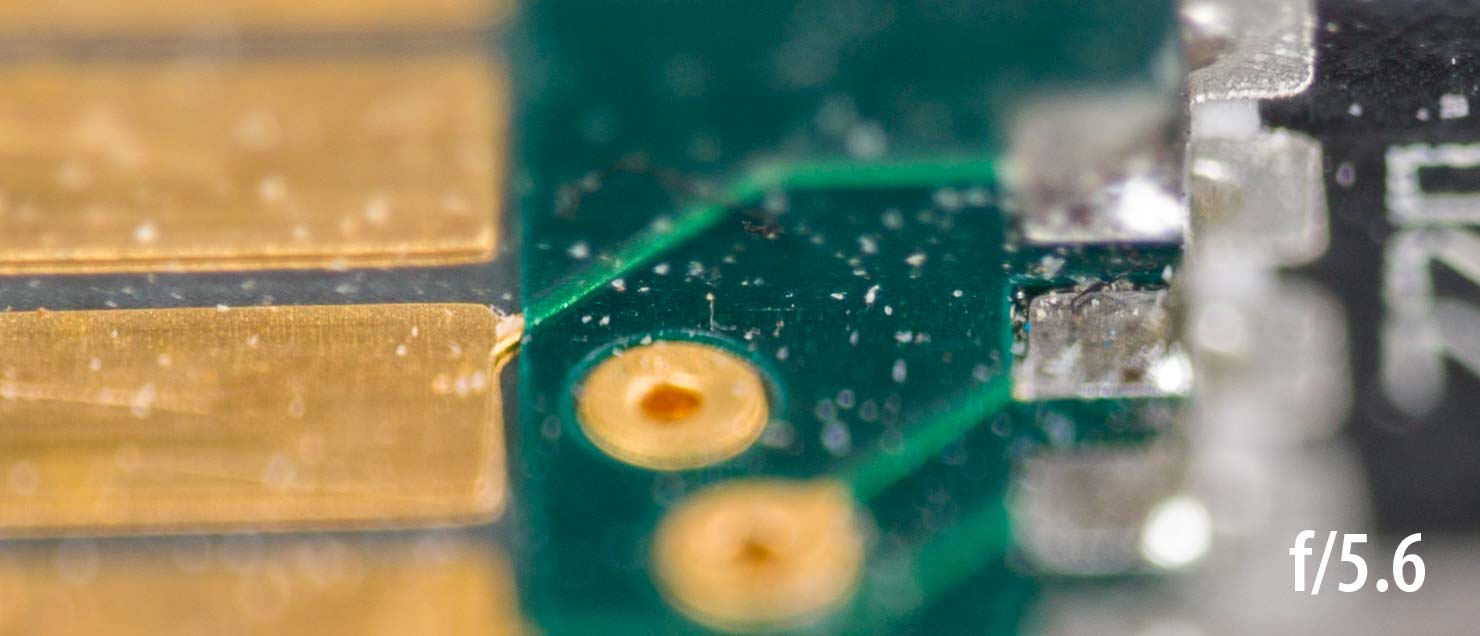
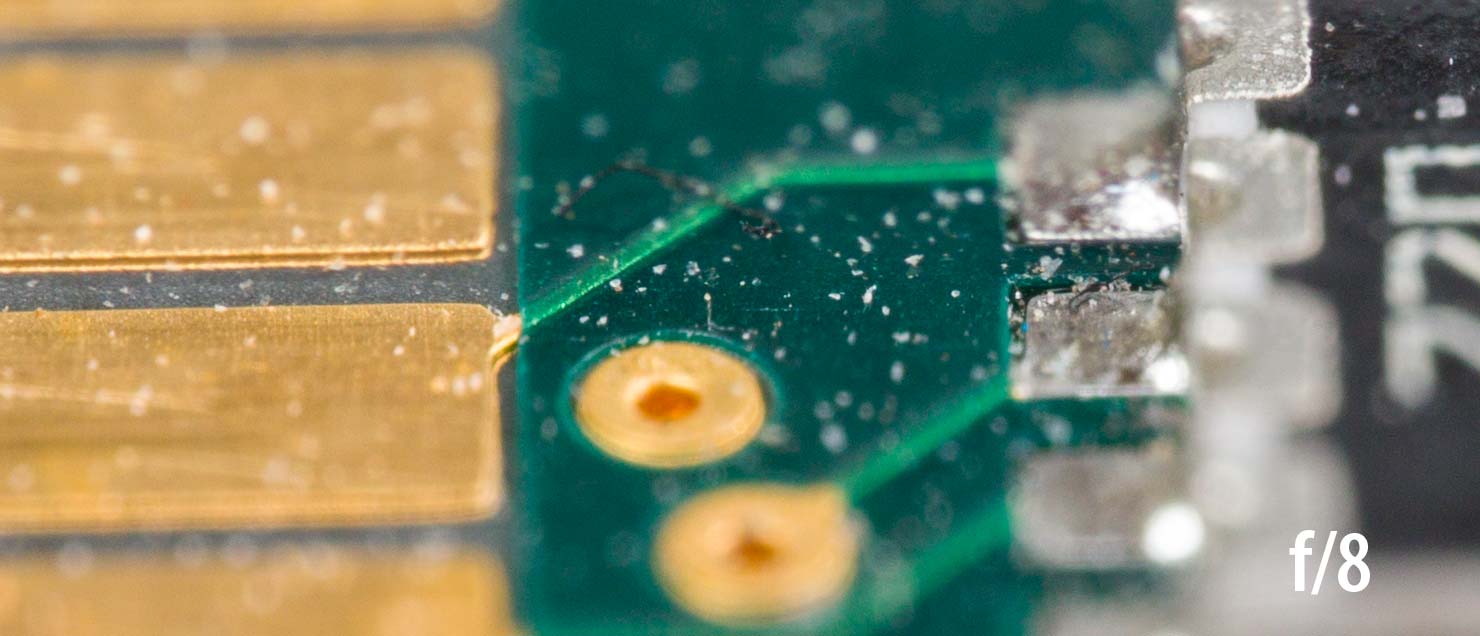
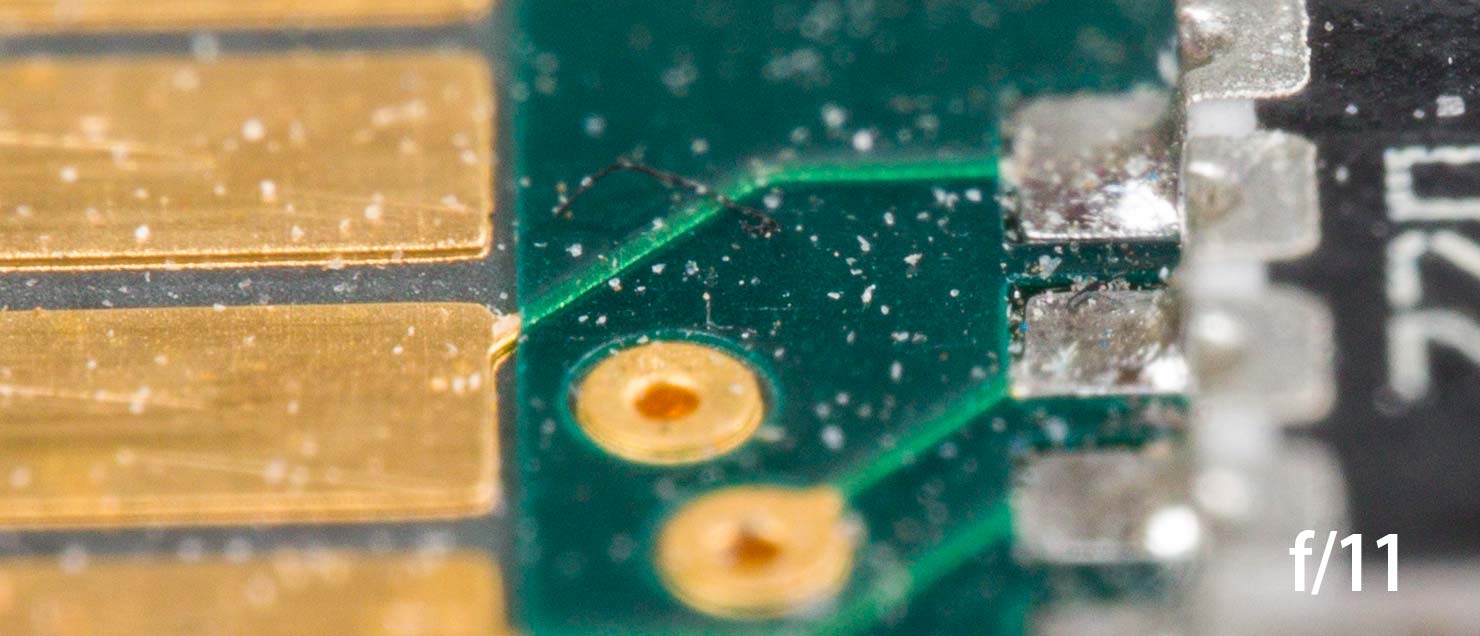
For checking macro detail I find electronic components like the memory module shown earlier, very useful.
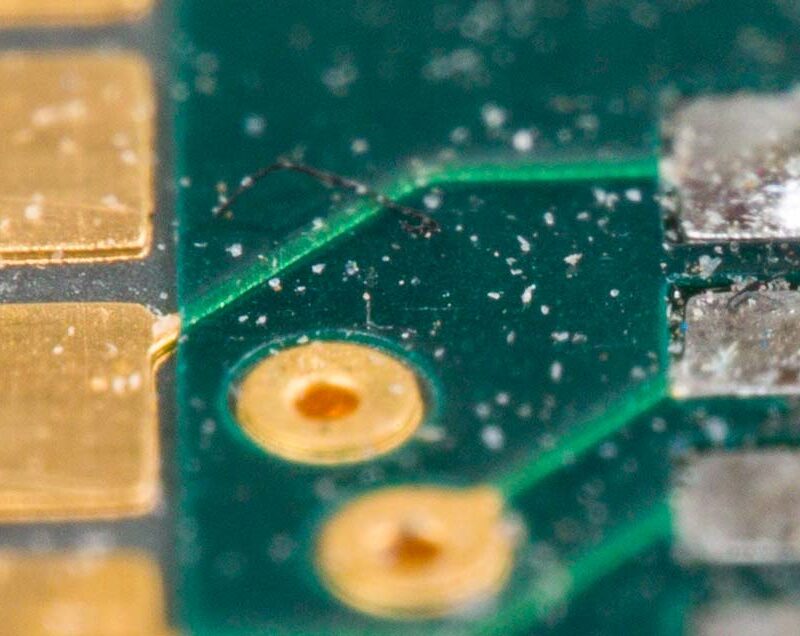
I’ve a collection of shots at 1x, 2x and ~3x (extension tubes) here in a gallery at the end of the article – it includes some 100% samples at x2.
These two examples at f/5.6 and f/11 give a good feel for the lens performance.
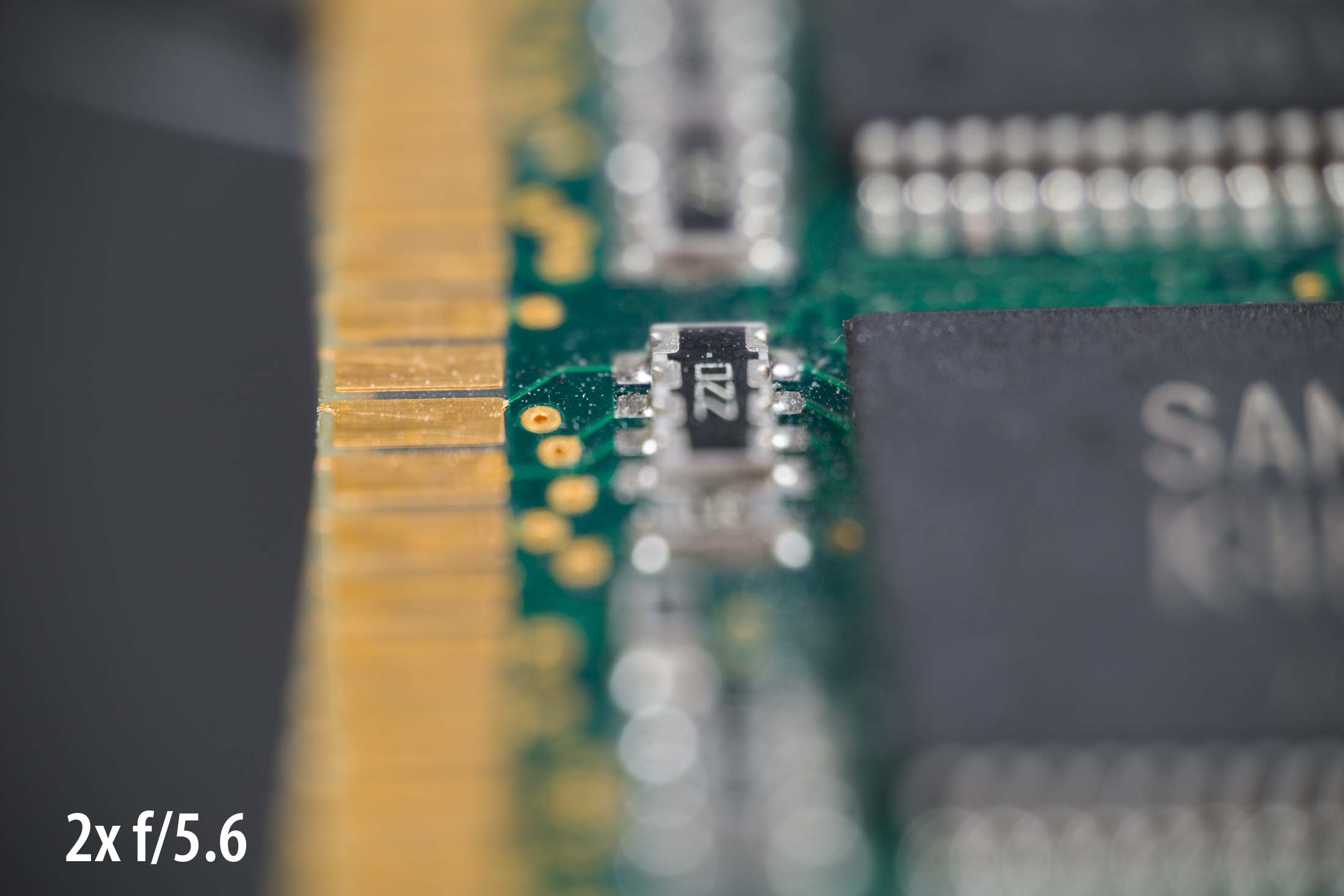

The images are unsharpened. However do note that this is a pre-production lens.
For actual work I’ll always sharpen images by some amount.
Aberrations
Colour fringing, both longitudinal and lateral is very well controlled – with a small amount of lateral CA readily fixable in RAW processing. Vignetting is noticeable at f/5.6 but hardly an issue – dropping noticeably at f/8 and reducing further at small apertures.
Using the lens
With no electronics, you’re going to be using a lens like this fully manually. If you’re inexperienced with manual operation, look on it as a way of thinking more what you’re doing, and an opportunity to better appreciate how light varies around you.
Focus peaking helps on mirrorless cameras.
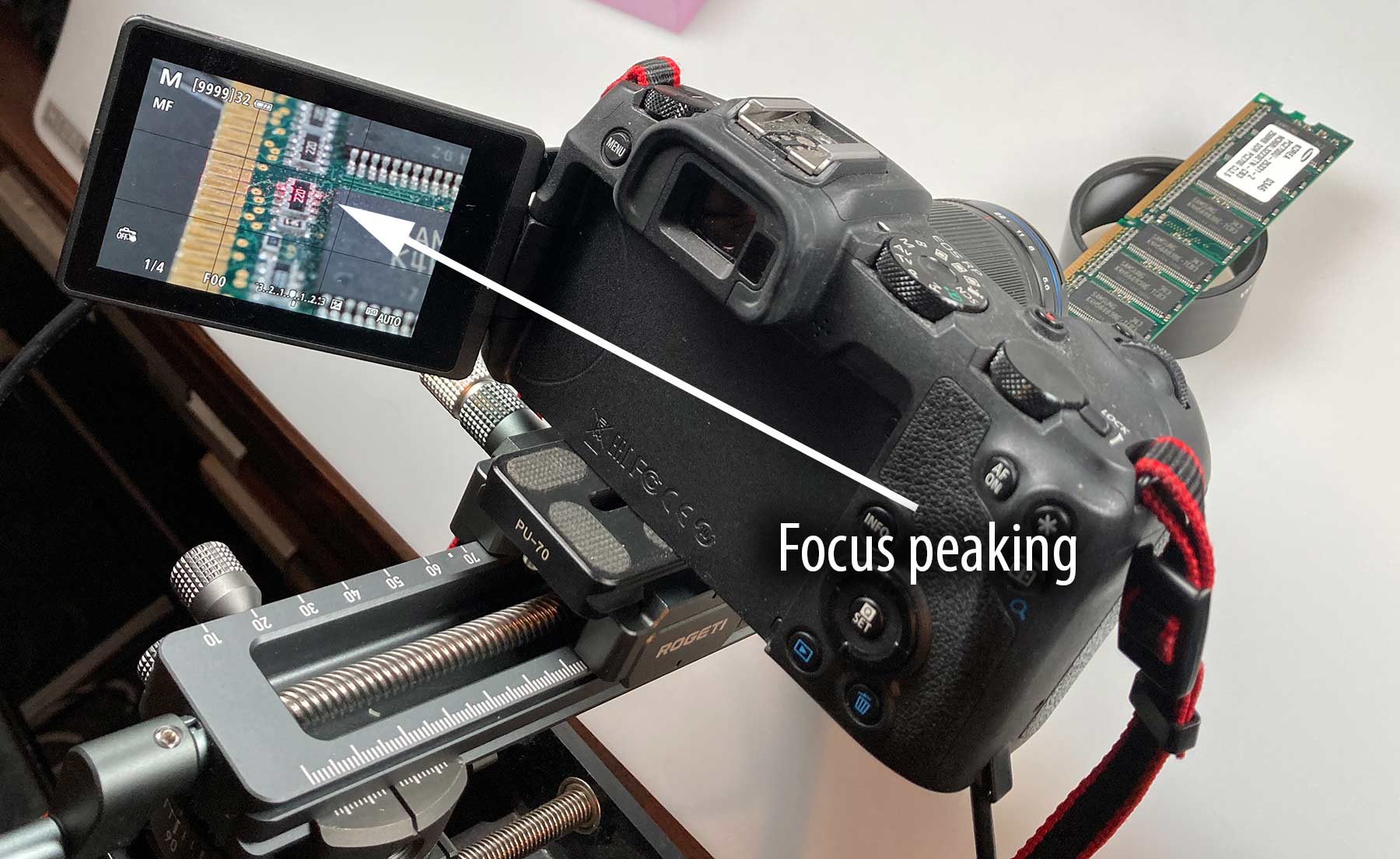
Note that the apertures I mention here, are those marked on the lens, ignoring any effective changes as you go to higher magnifications or make use of extension tubes. The metering on the RP worked fine, but with all manual lenses with no electronics, it’s often best to stick to fully manual operation.
When testing with a KF-150 ring flash [see my review a while ago], I needed a 46mm to 58mm step up ring, but the whole assembly was quite solid, with enough space between the front of the ring flash and the focal point not to cause problems, even at 2x magnification.
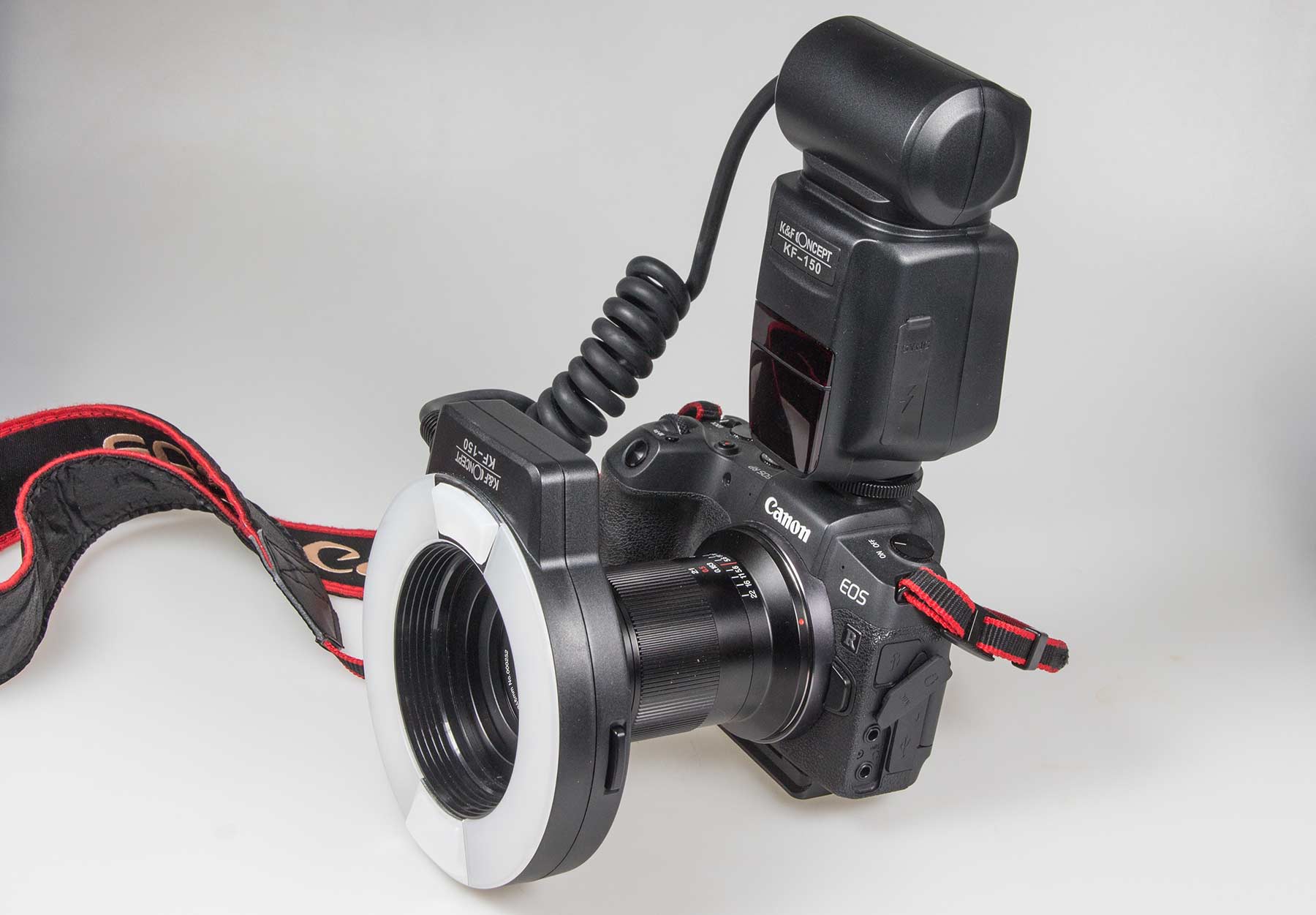
Ring flashes are excellent for a ‘shadowless’ look, but watch for the distinctive ‘double C’ highlights.
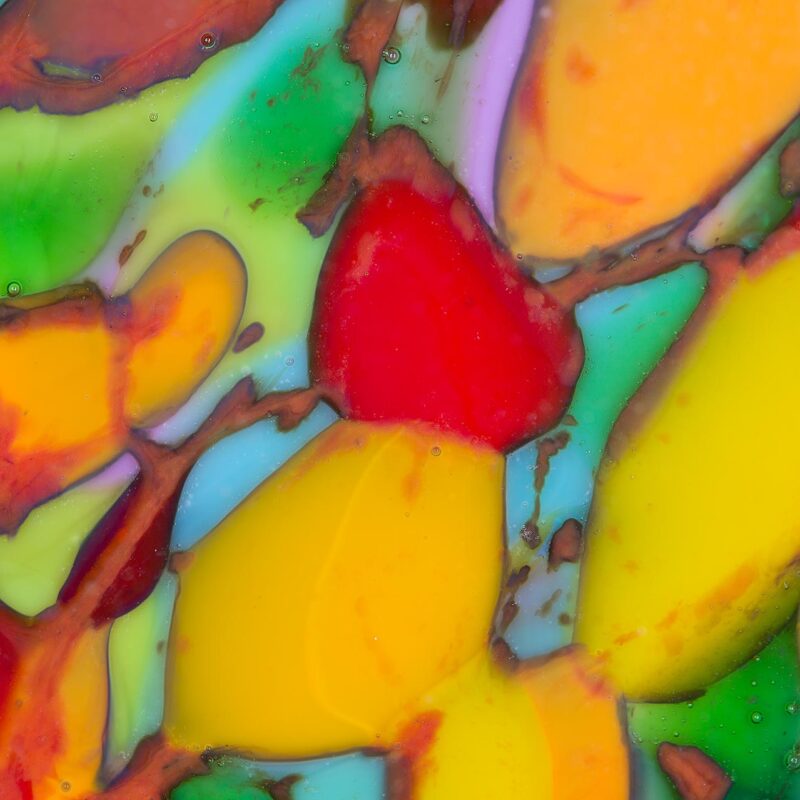
This is a detail of some hand blown decorative glass (at ~0.5x).
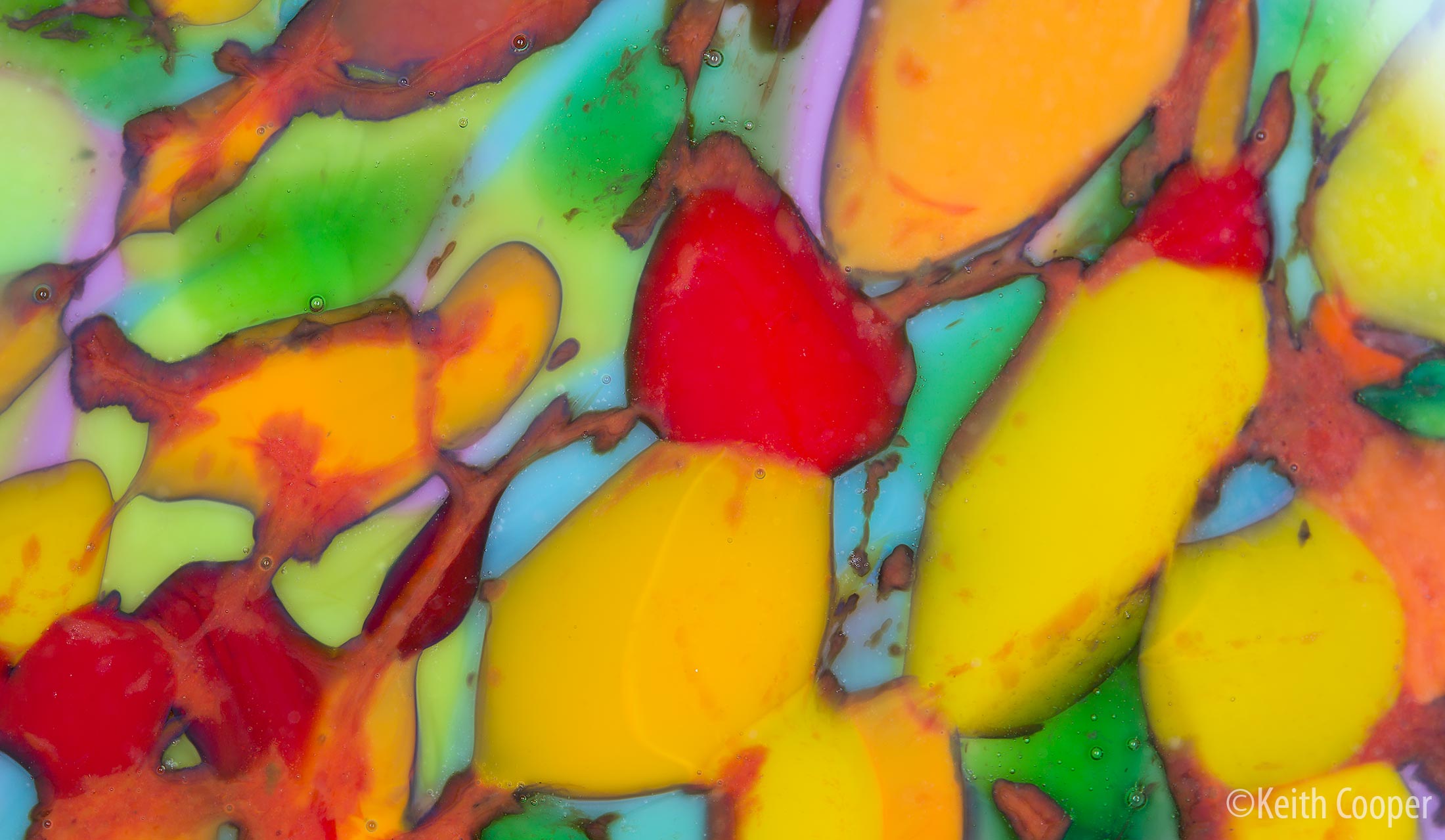
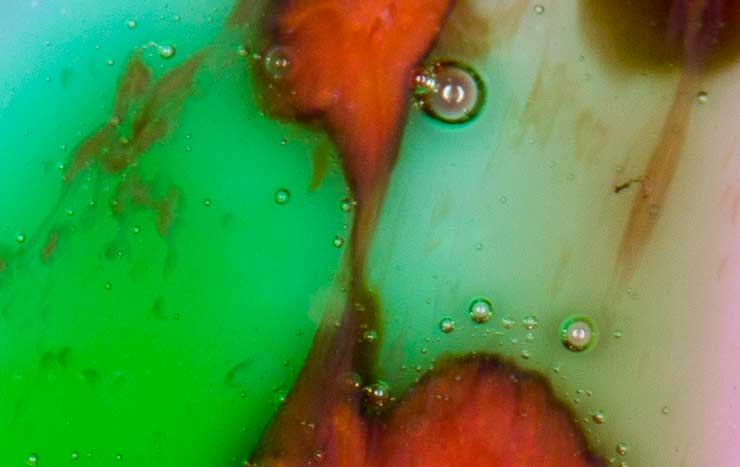
A 100% detail of the top centre showing air bubbles trapped in the glass, and the characteristic look of a ring flash reflection.
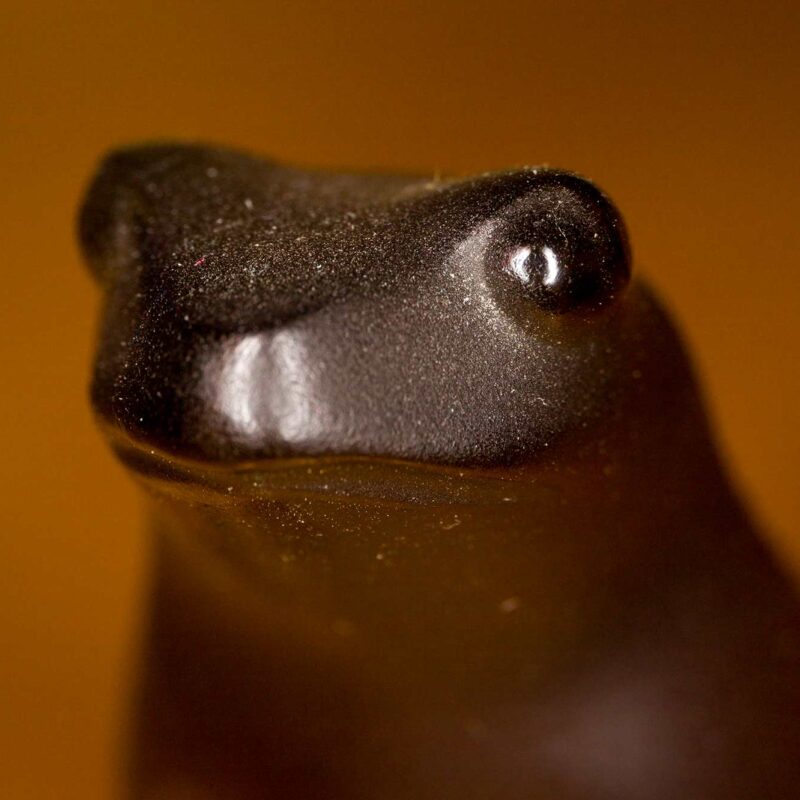
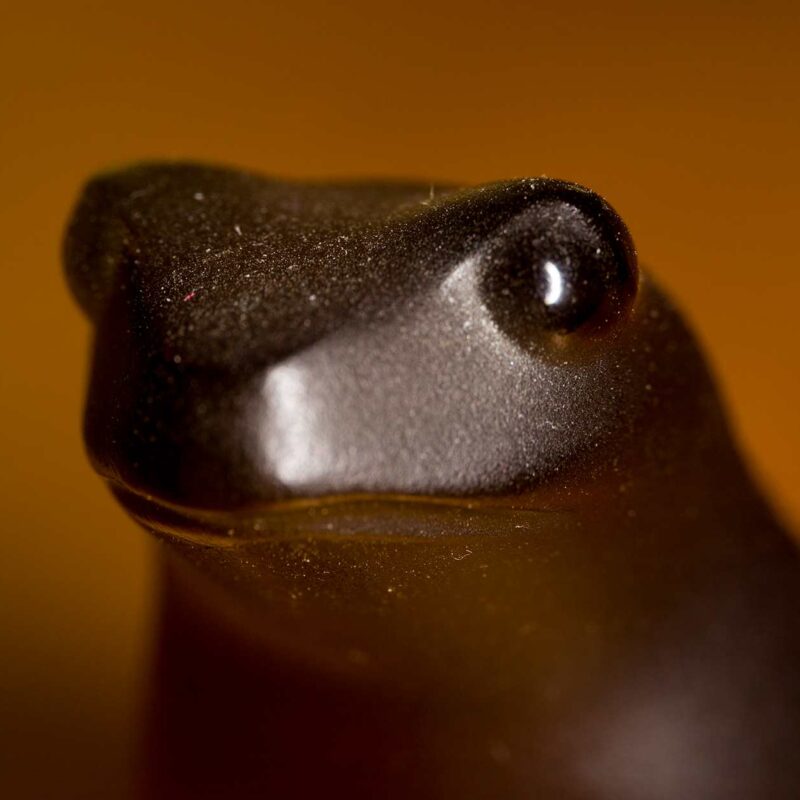
Sometimes switching off one side of the flash makes a difference, as with this small glass frog.
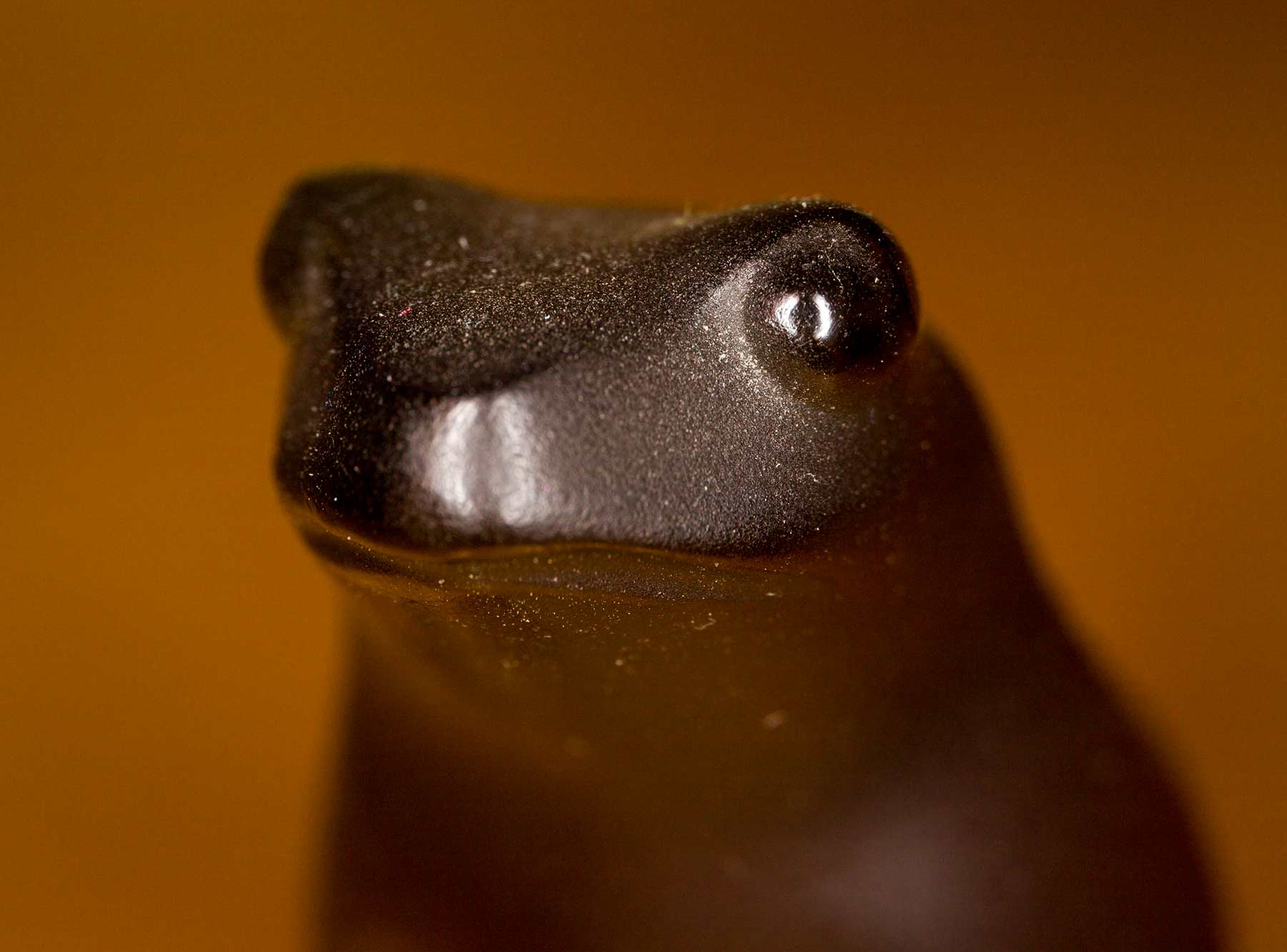
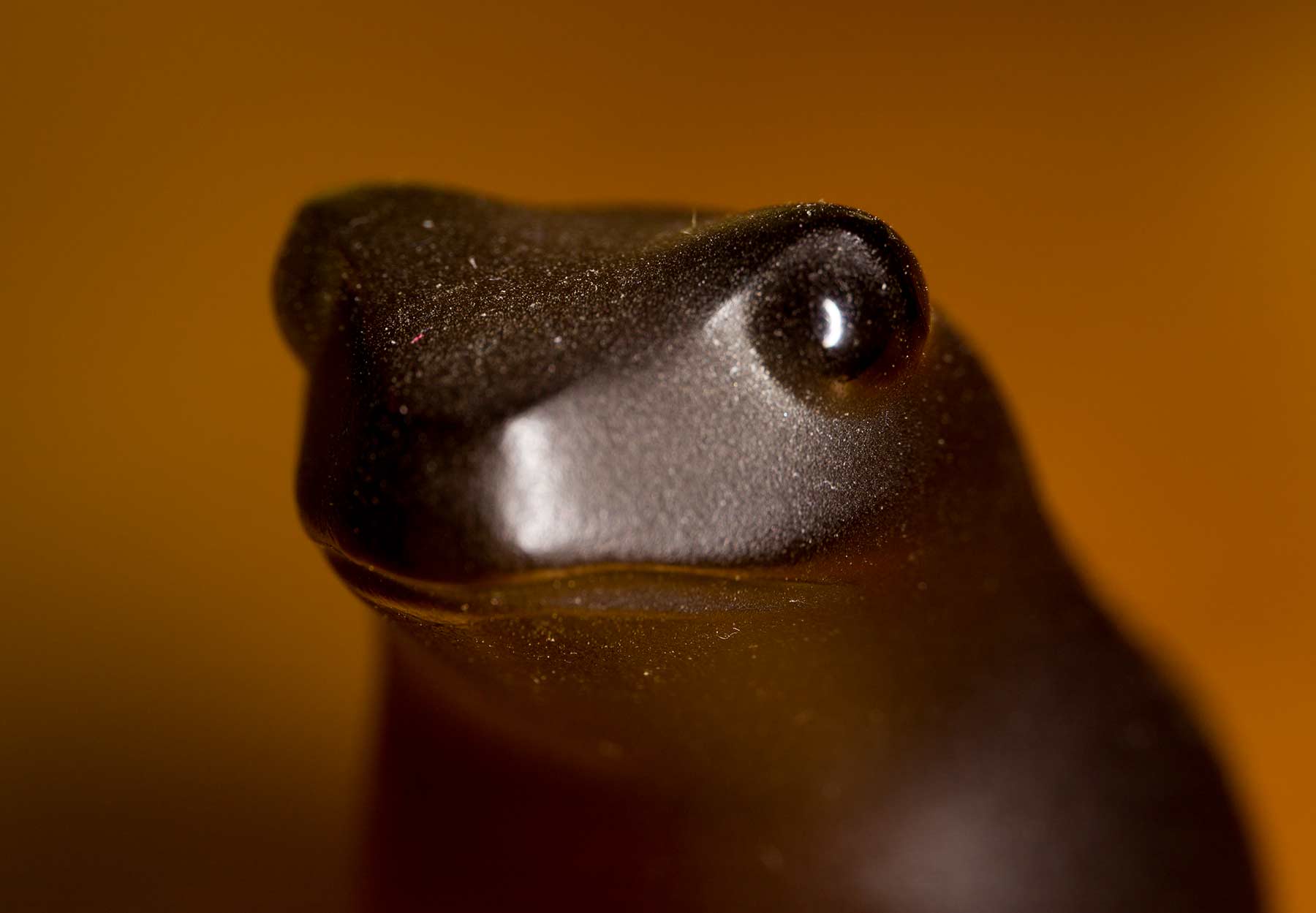
It also shows how much dust quickly collects on any item on an open shelf. In my commercial macro work I usually reckon I’ve no more than 20 minutes working before some noticeable dust will settle in the small chips and components I photograph.
Photography with the laowa 85mm 2x macro
In any macro lens review, the staples are fungi and insects – however I’m a commercial and industrial photographer, so such stuff rarely features in my work (it will however pack any other reviews of the laowa 85mm so if that’s your thing, you won’t be disappointed).
The depth of field is as you’d expect extremely thin, meaning that I tend to focus stack images in various ways to capture enough detail.
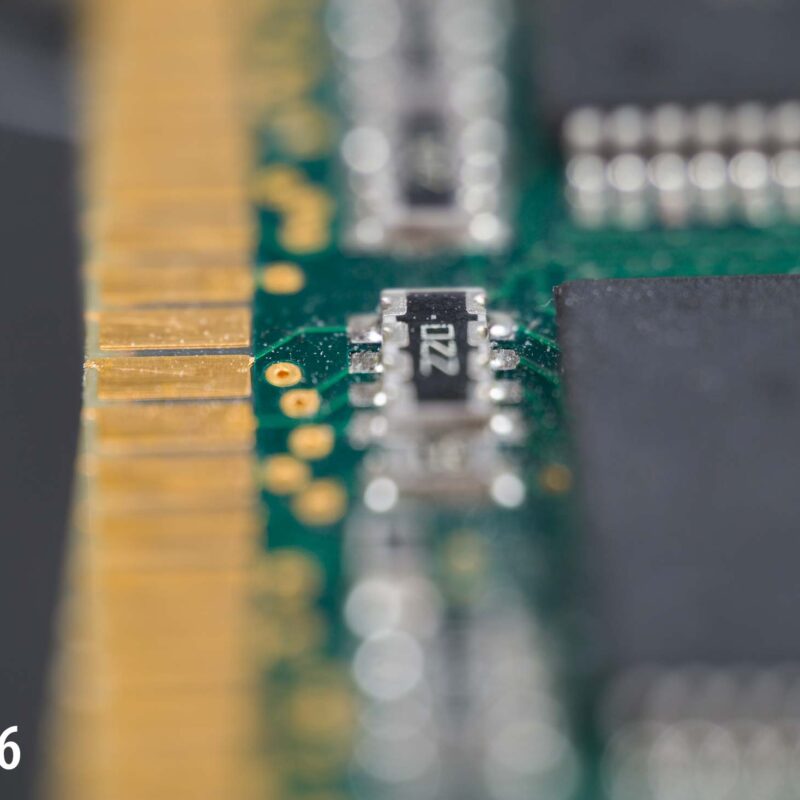
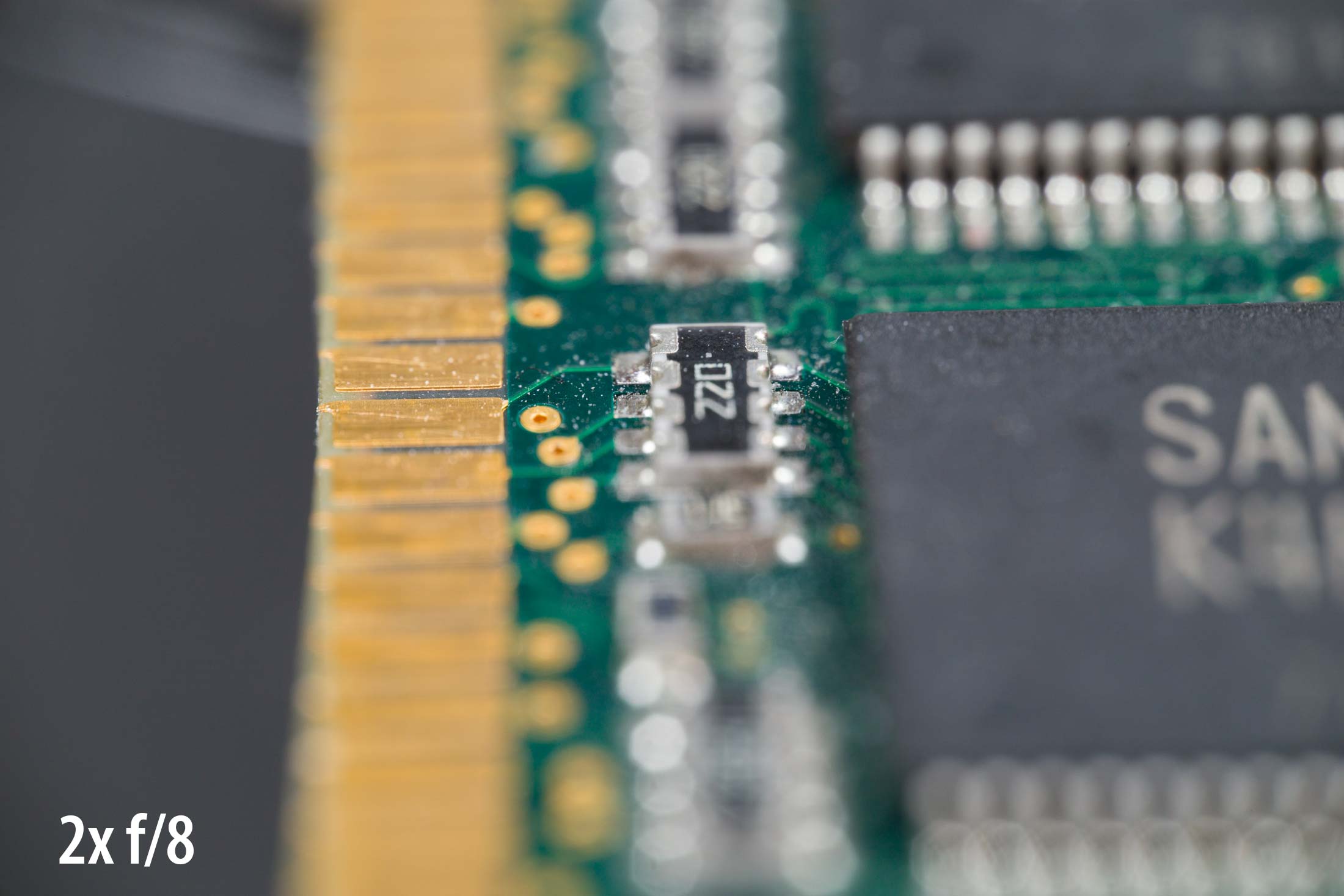
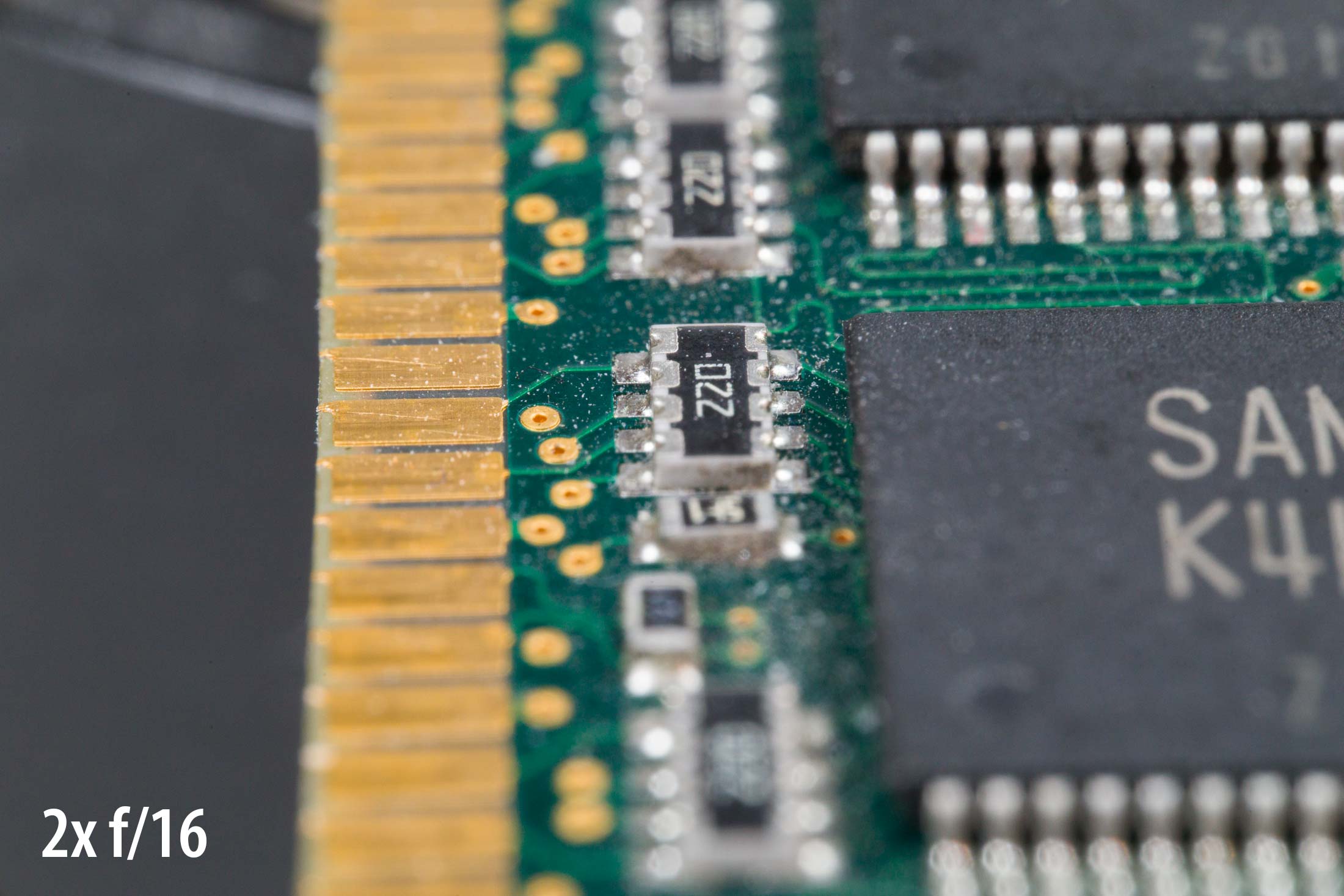
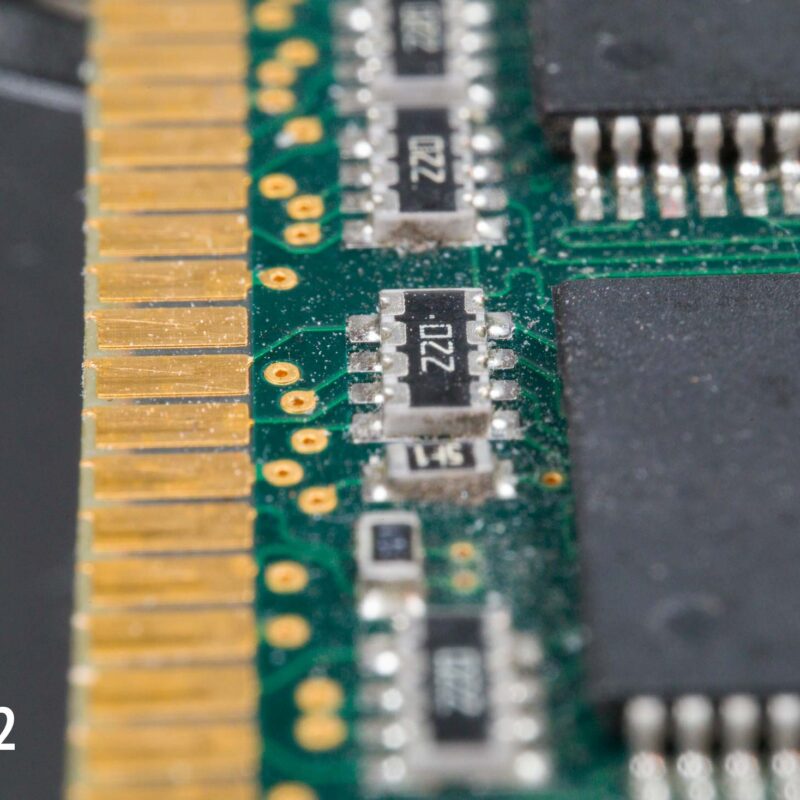
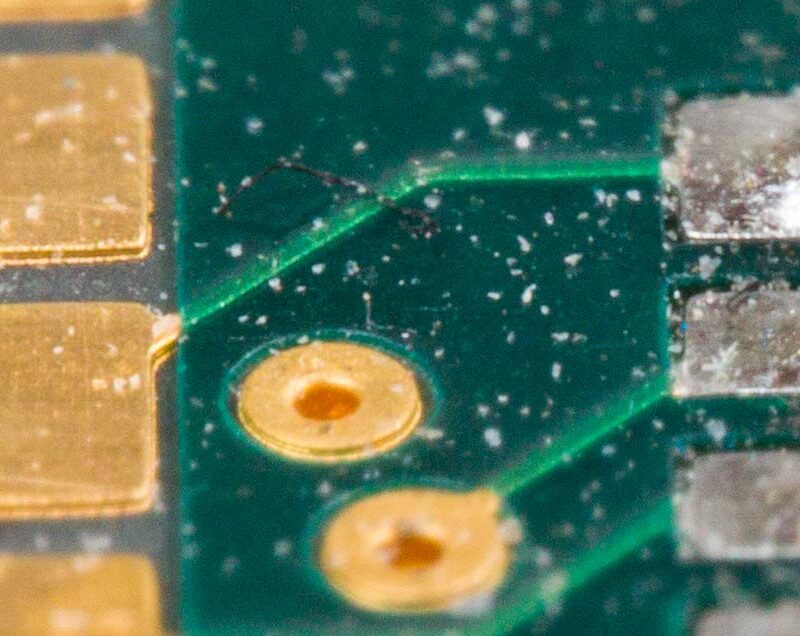
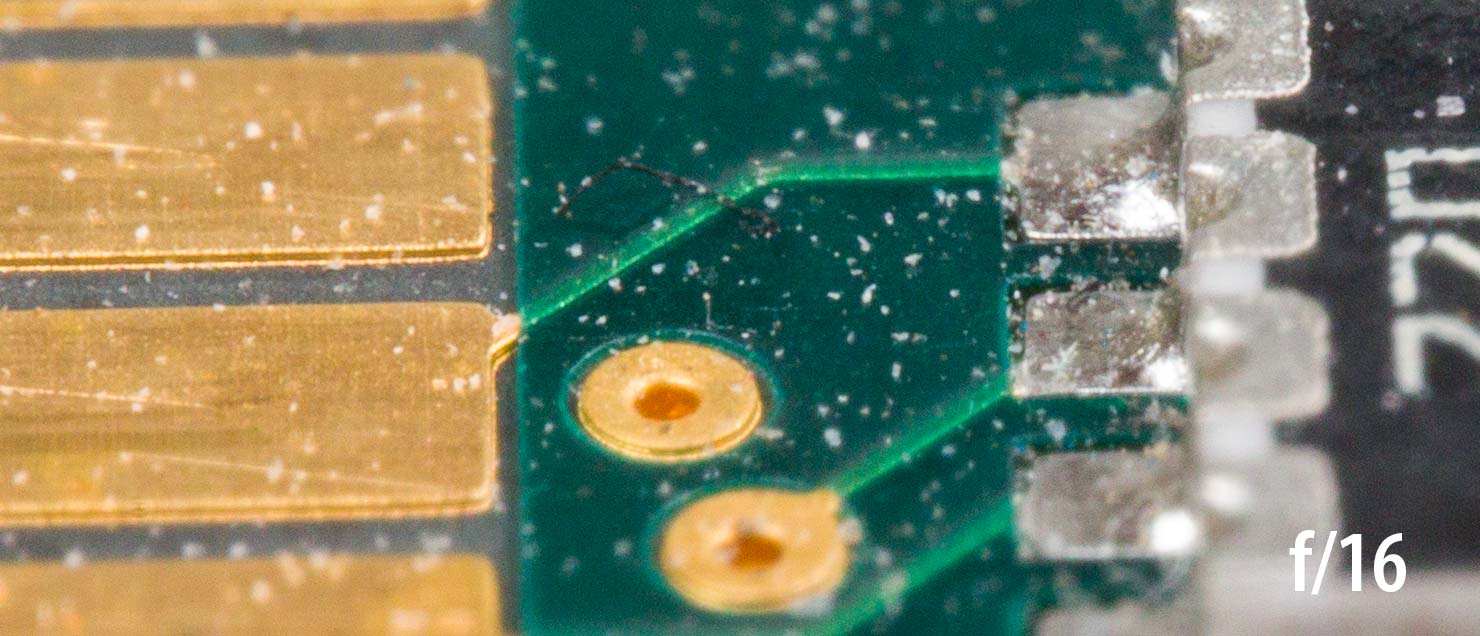
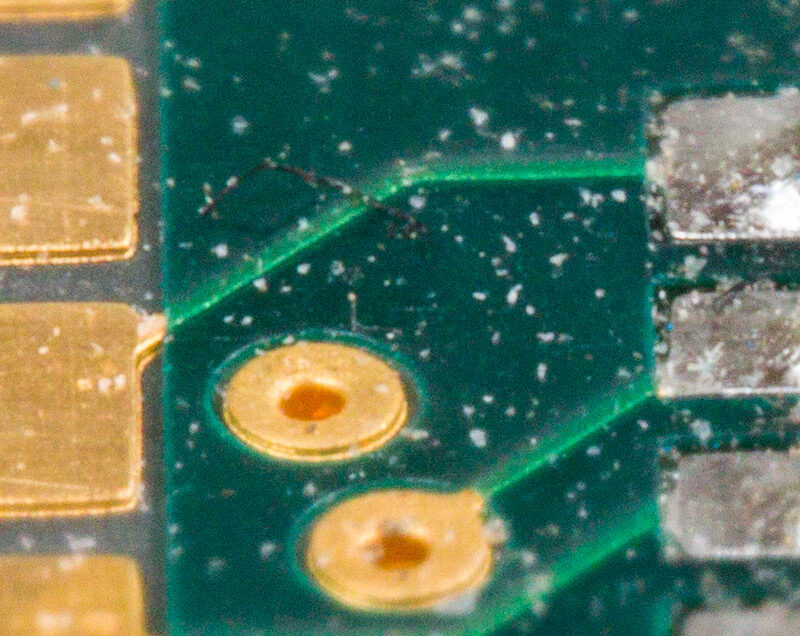
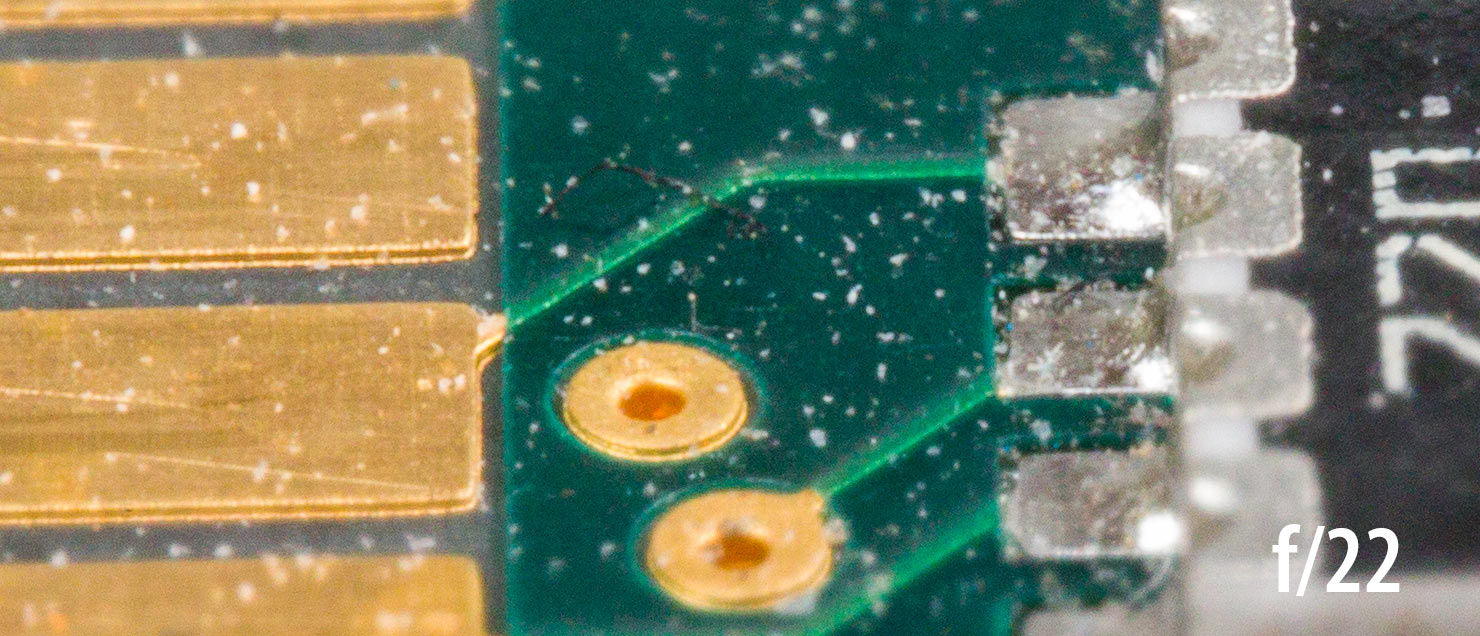
The depth of field is obviously greatest at f/22, but with the 26MP EOS MP I started noticing just a bit too much softening of detail from diffraction at f/22. That and sensor dust spots become much sharper and obvious.
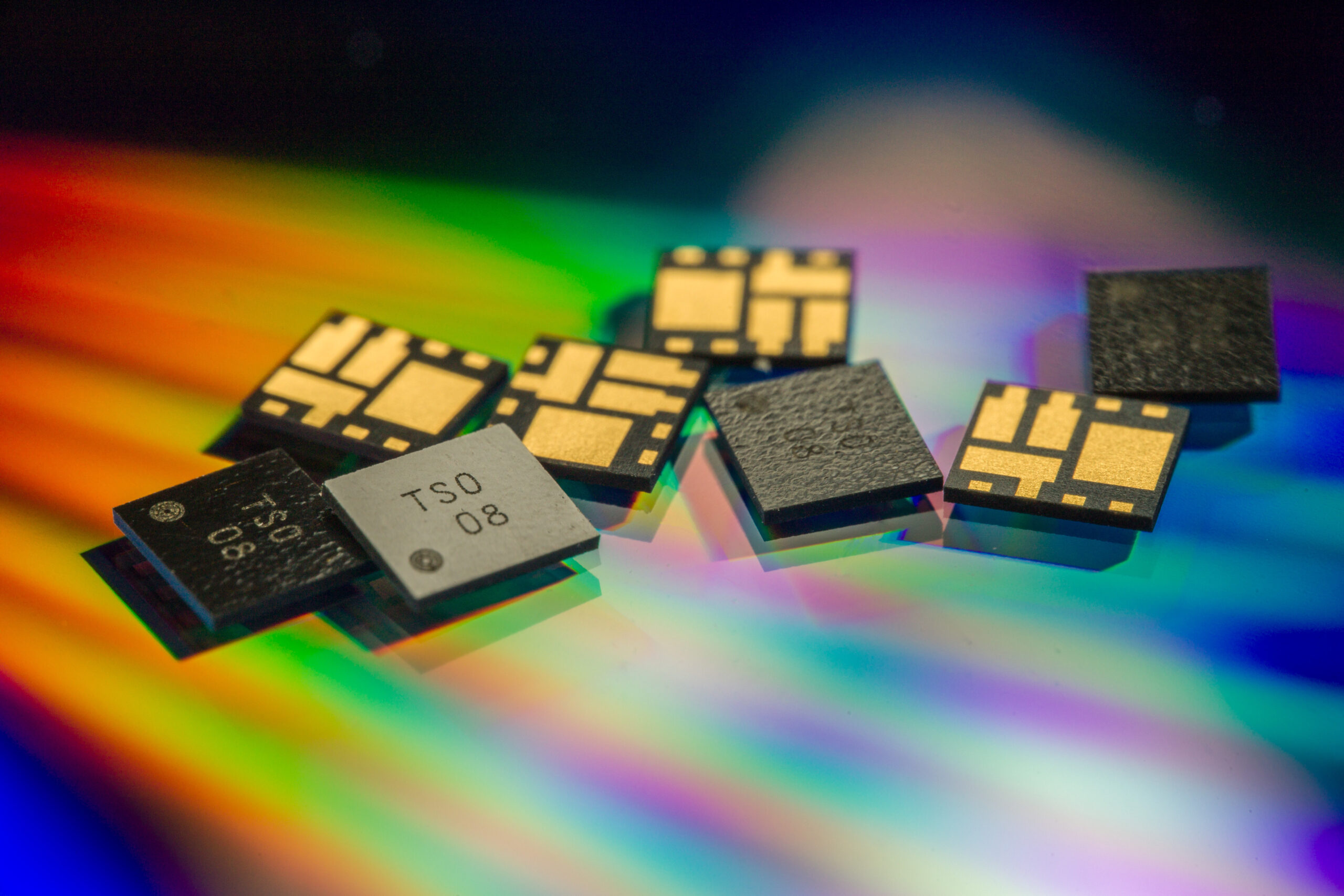
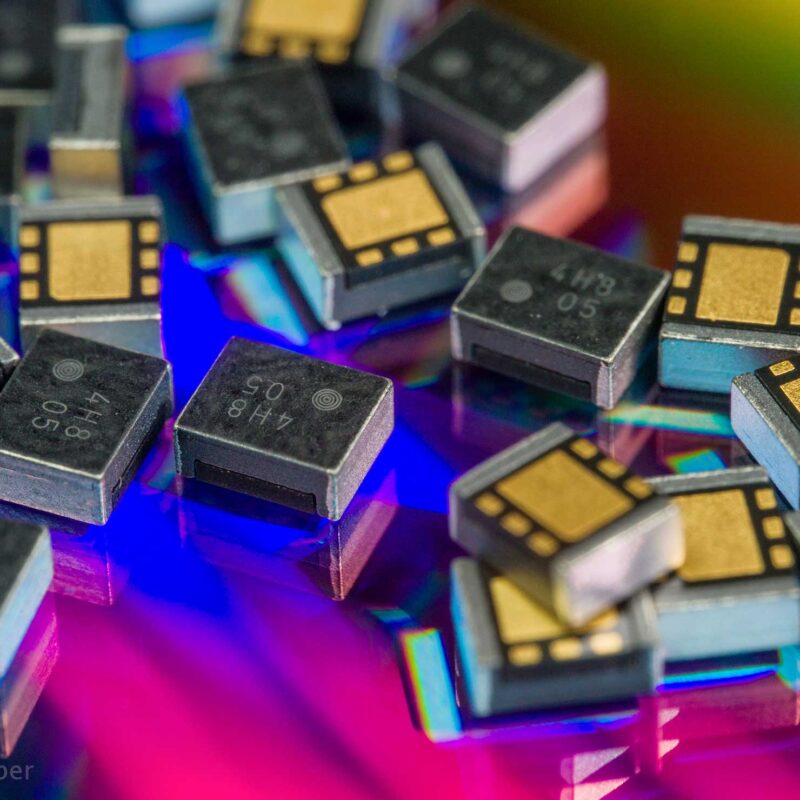
These components are only a few mm along each side and I’ve gone to f/16 to lessen the softness of the background rather than just to increase the width of the truly sharp zone.

One of the problem I normally have in photographing such items (at high magnifications) is that without multiple pairs of glasses I can’t read the lettering to make sure it’s the right way up. Items are arranged with a sewing needle, and the hardest job is standing them on their sides – oh that and the dust…
This individual display shows 4 5×7 LED matrix displays. The chips that are visible are shift registers which make it easier to drive the display – that said, the software to display ASCII characters on the display (or several of them in a line) is not a trivial matter (an area I last worked on in the 1990’s).

Note the slight softness in the top corner – once again a shot that I would normally stack, even 3 shots would improve things.
Flowers
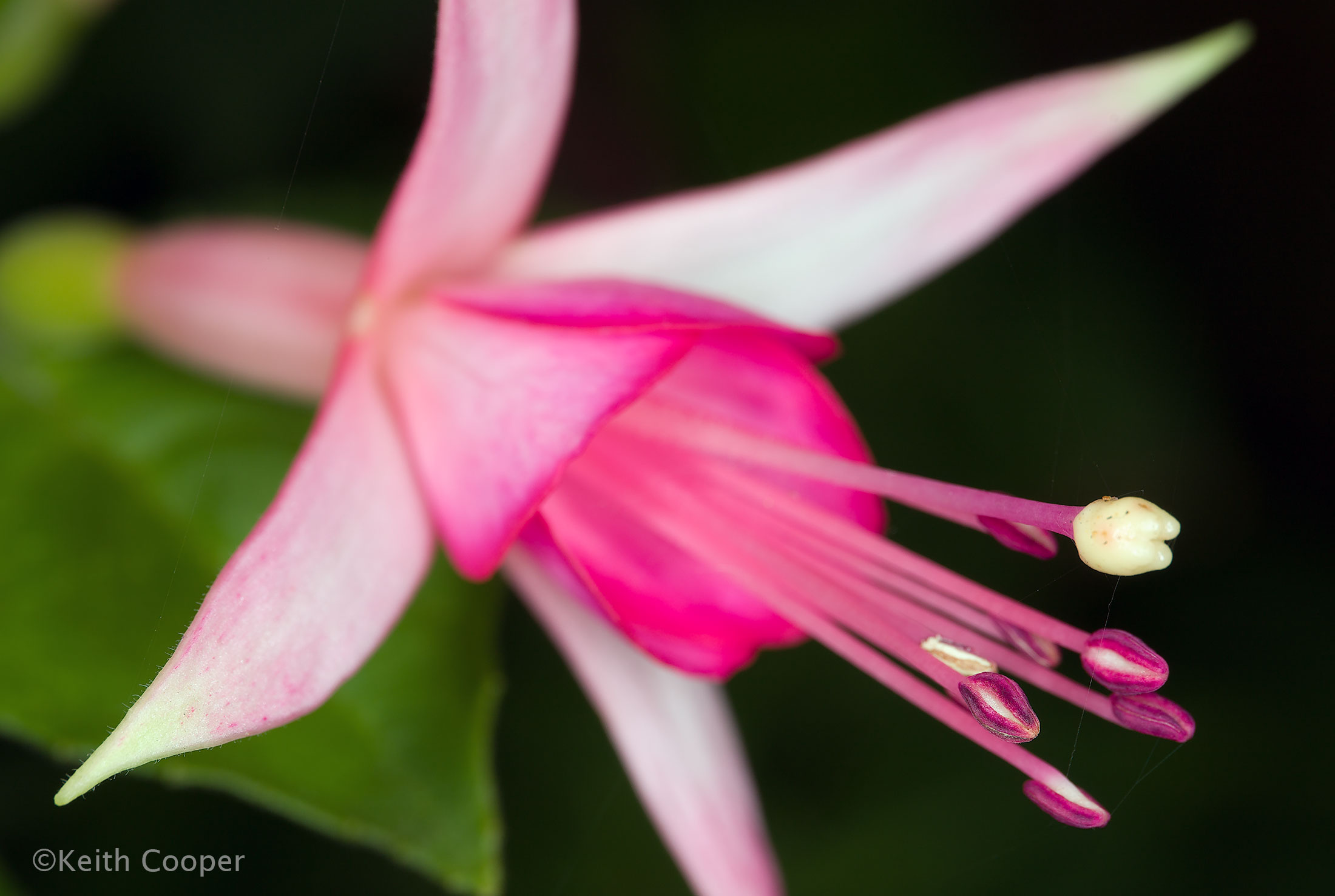
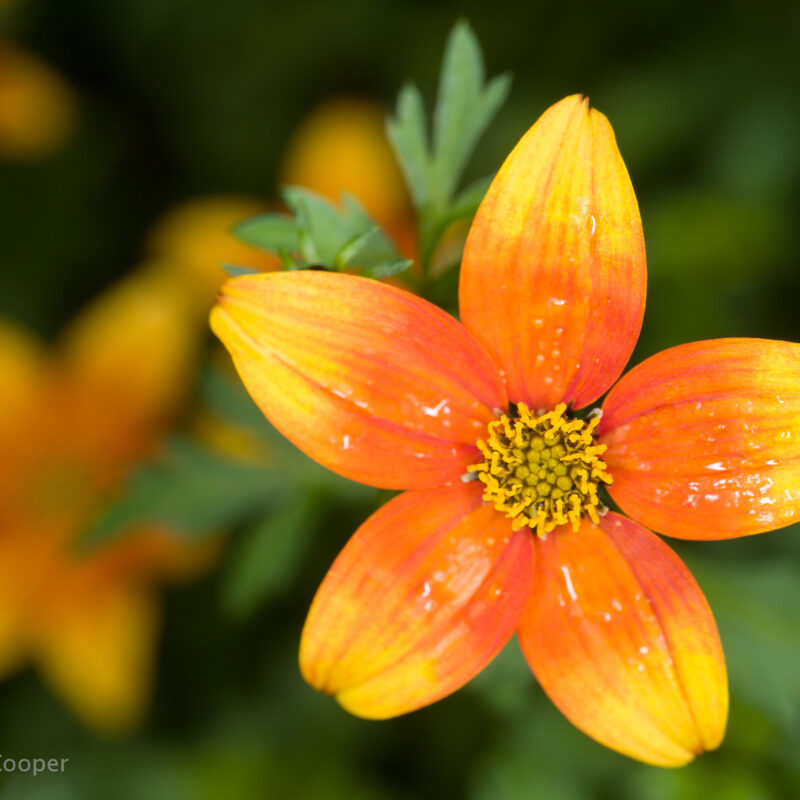
Ok, there are still (mid November) a few flowers in the garden. So, here are a couple of examples (with the ring flash) taken hand held at ~f/11
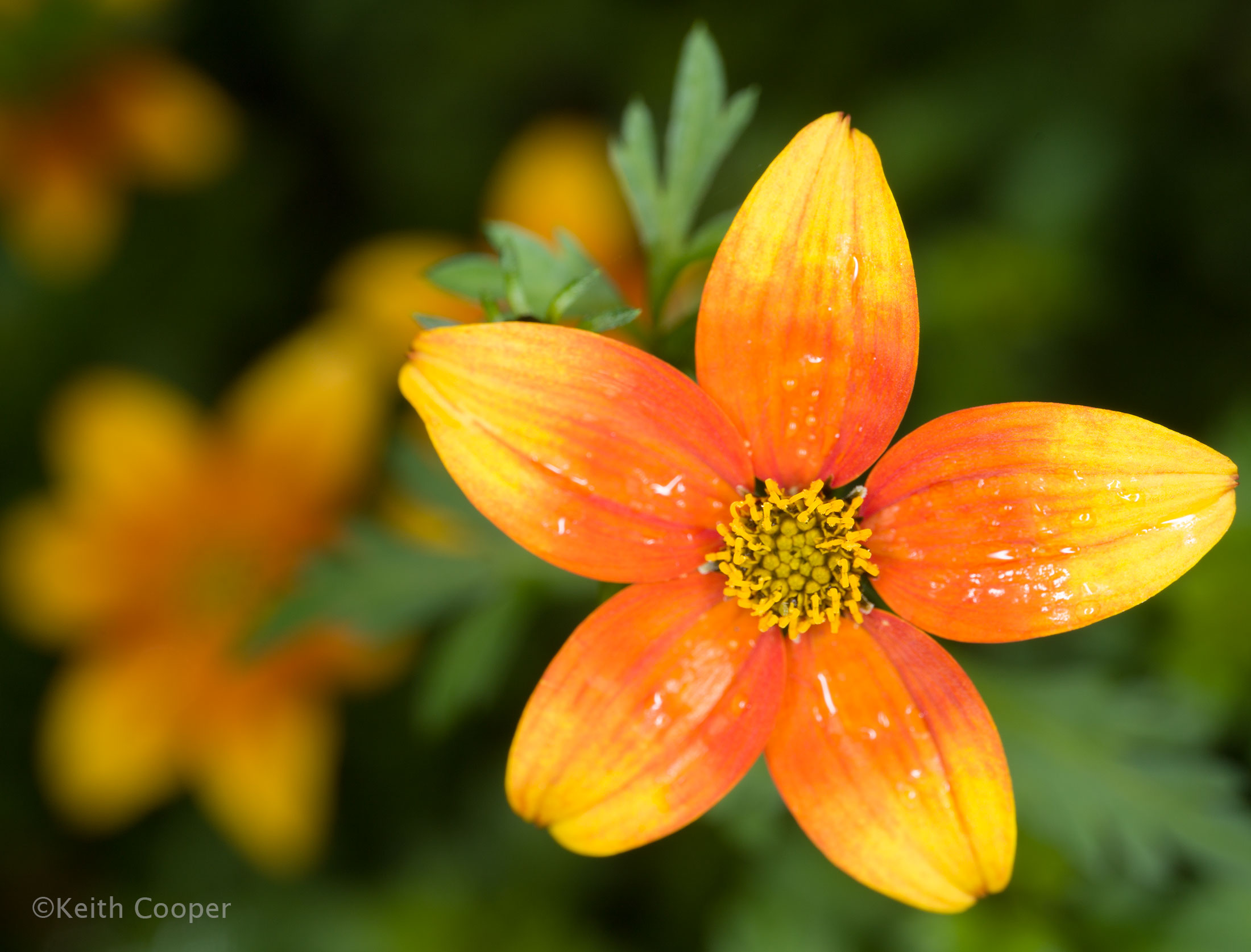
The white marks are from water droplets and the ring flash.
In the Fuchsia picture at a larger size you can see some bits of spider web
Conclusions: Laowa 85mm 2x Macro
For a distinctly small lens, I’m rather pleased with the overall performance of the new Laowa 85mm 2x Macro. The longer focal length is longer than I regularly use with several of my macro lenses and gives a good working distance, even at f/5.6.
The fully manual operation is no hinderance to my own use of the lens, since I use manual lenses a lot (such as adapted medium format lenses with a tilt/shift adapter – testing/review)
Of course, with any close-up work, depth of field can be an issue, just don’t expect working at f/22 to sort this for you. The lens does soften (diffraction) by f/22, and the small aperture will really show up any dust spots on your sensor. At f/8 the lens gives a good overall performance.
Out of focus areas are well handled – see the examples in the gallery below. Where the lens excels is in its virtual elimination of chromatic aberrations.
Do note that this was a sample lens, so a full lens analysis will have to wait for reviews which do that sort of thing.
As with any macro lens, the features/functions of interest will vary depending on what it is you want to photograph. You might want a lens with autofocus and image stabilisation, but you are going to be paying a lot more than the ~$450 the Laowa85mm costs.
Check with Laowa for the list price for the 85/5.6
–ooOoo–
If you’ve any questions – please feel free to ask. There is a short video review to go with this article.



























Never miss a new article or review - Sign up for our occasional (ad-free) Newsletter
and please do subscribe to Keith's YouTube Channel

Other areas of our site that may be of interest...
All the latest articles/reviews and photo news items appear on Keith's Photo blog

Keith explains tilt and shift lenses
Keith has written a book that looks at the many ways that tilt/shift lenses can benefit your photography from a technical and creative point of view. If not in the UK check for import issues and maybe try an on-line bookshop. Keith has no connection with sales of the book.
ISBN 9781785007712
There is also a specific index page on the site with links to all Keith's articles, reviews and videos about using tilt and shift.
We've a whole section of the site devoted to Digital Black and White photography and printing. It covers all of Keith's specialist articles and reviews. Other sections include Colour management and Keith's camera hacks - there are over 1200 articles/reviews here...
Adverts removed