


Laowa 19mm GFX f2.8
Review: Laowa 19mm GFX f/2.8 Zero-D
Ultra-wide lens for Fuji GFX medium format

No more Google ads. Too many deceptive and irritating adverts.
Any ad links left are non tracking, to companies we know, trust and we've worked with for years [Park Cameras]
Ads helped pay for site running costs, so if you found something useful, please
...Make small KoFi donation?
...Subscribe to Keith's YouTube Channel
...Get Keith's book about how to use tilt/shift lenses
Our site contains affiliate links - these help support the site. See our Advertising policies for more
An ultra-wide 19mm f/2.8 prime lens, under $1000, designed for coverage of a (small 33×44) medium format sensor, as found in the Fuji GFX cameras.
Keith has had the lens for a short while before its announcement and has been using it on the 100MP Fuji GFX100S camera.
This review is produced to coincide with the launch of the lens and will be extended in due course with more examples and details of testing.
The lens is available from Venus Optics.
Parts of the review
- Lens specs
- Using the lens
- At different apertures
- Image quality
- The Fuji 20-35 at 20mm
- More thoughts on the 19mm

Review: Laowa 19mm GFX f/2.8
Venus Optics: Laowa 19mm GFX f/2.8 Zero-D
This 19mm lens would be wide angle on any of my Canon cameras, but with the medium format sensor of the Fuji GFX100S I’m testing it with, it moves firmly into ‘ultra-wide’ territory, with a field of view equivalent to 14mm on 35mm.

It’s a fully manual lens and with an initial price of $999 might well be a serious thought for wide angle use with medium format.

Lens features [via Laowa]
- Exceptionally Light & Compact
- 110° Ultra Wide Angle of View
- An f/2.8 Fast Aperture
- Zero Distortion
- 18cm Minimum Focusing Distance
- 77mm Filter Thread
- 10-point Sunstar
- Focusing scale adjustment system
Laowa 19mm GFX Specifications

Internal design and MTF
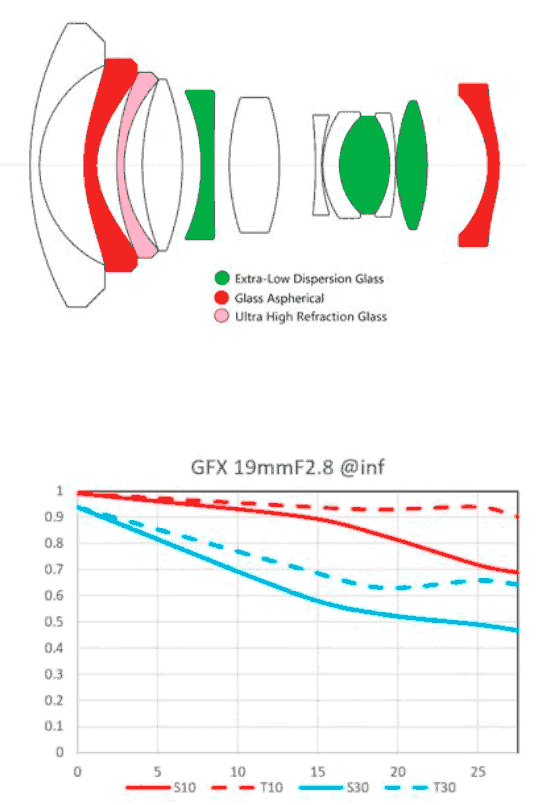
The lens has no electronics.
So, no EXIF data is recorded with respect to the lens. All my RAW files showed an aperture of f/1.0
You will need to make sure the camera is set to allow photos without a lens present. As far as your camera is concerned there is no lens.
The GFX100S has adapter info options, but I didn’t get a chance to experiment with this at the time of writing.

Using the lens
The lens is internally focusing which means that the large front element is static.
The aperture is a 5 blade unit [blue lens ring] with curved blades, giving pronounced sunstars to light sources, although not quite as obvious as the ones I saw with the Laowa 15mm shift lens I tested a while ago.

I do have a 15mm shift lens here again in G mount for testing with the GFX100S – that is a ‘red ring’ version with the 13 blade aperture.
Laowa 19mm GFX – Focus Throw
The lens has a good smooth manual focus and a throw of just under 90º

The aperture ring has fairly soft click stops from f/2.8 to f/22
There is an adjustment option for the lens to set the focus end stop accurately to infinity – useful for astrophotography.
Note the huge depth of field scale. This gives a feel for the wide DOF of this short a focal length, although such scales are actually dependent on sensor resolution, so take them as indicative at best.
That said focusing at f/8 and infinity captures a lot of subjects quite adequately – I found that enabling focus peaking for manual focus made focusing very easy, especially if I started a f/2.8 and manually stopped down (ah – just like my early film cameras in the 70’s)
Here’s a view of the lens at its closest focus setting.
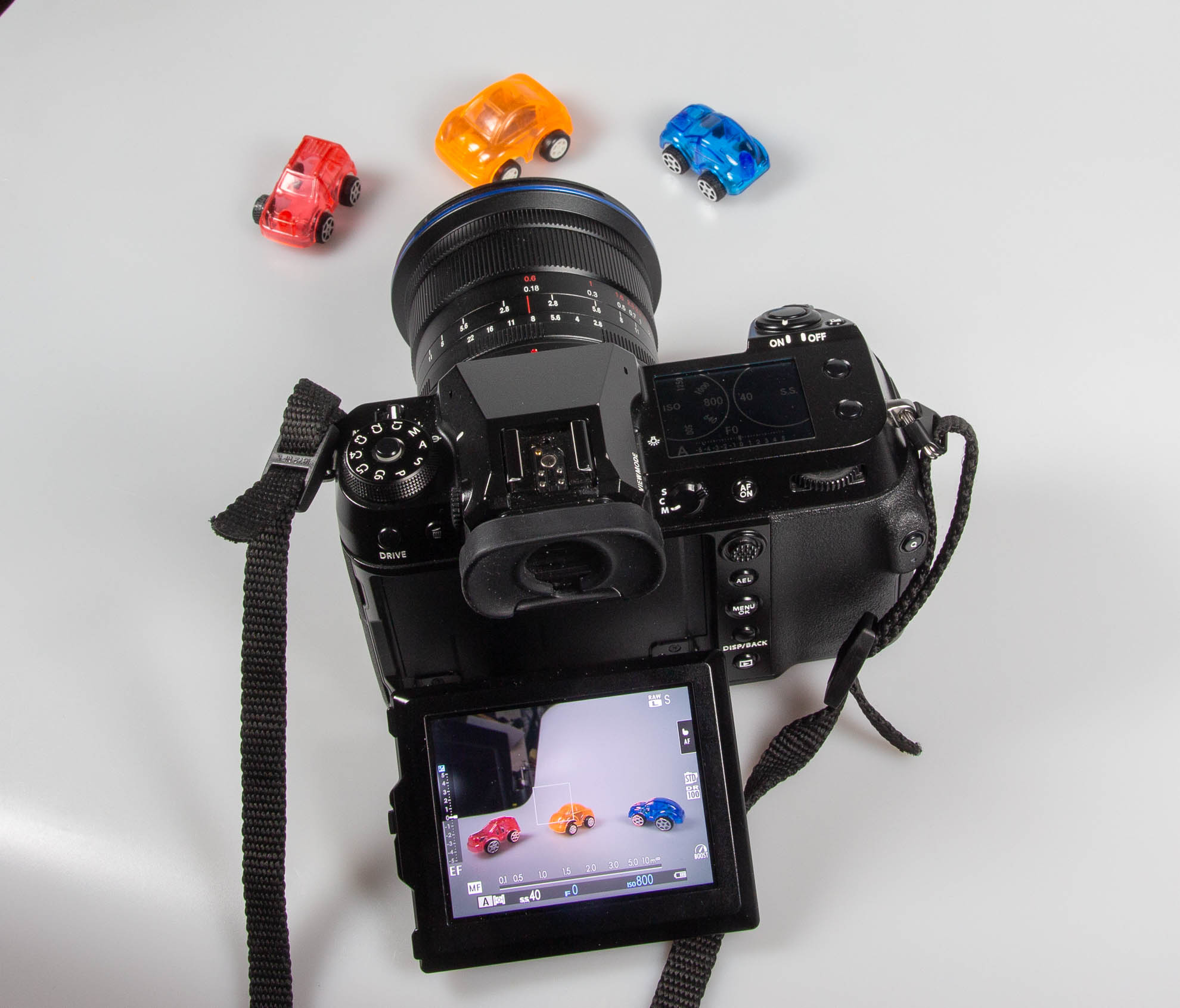
Focus at close distances is very much easier if making use of focus peaking (in red here).
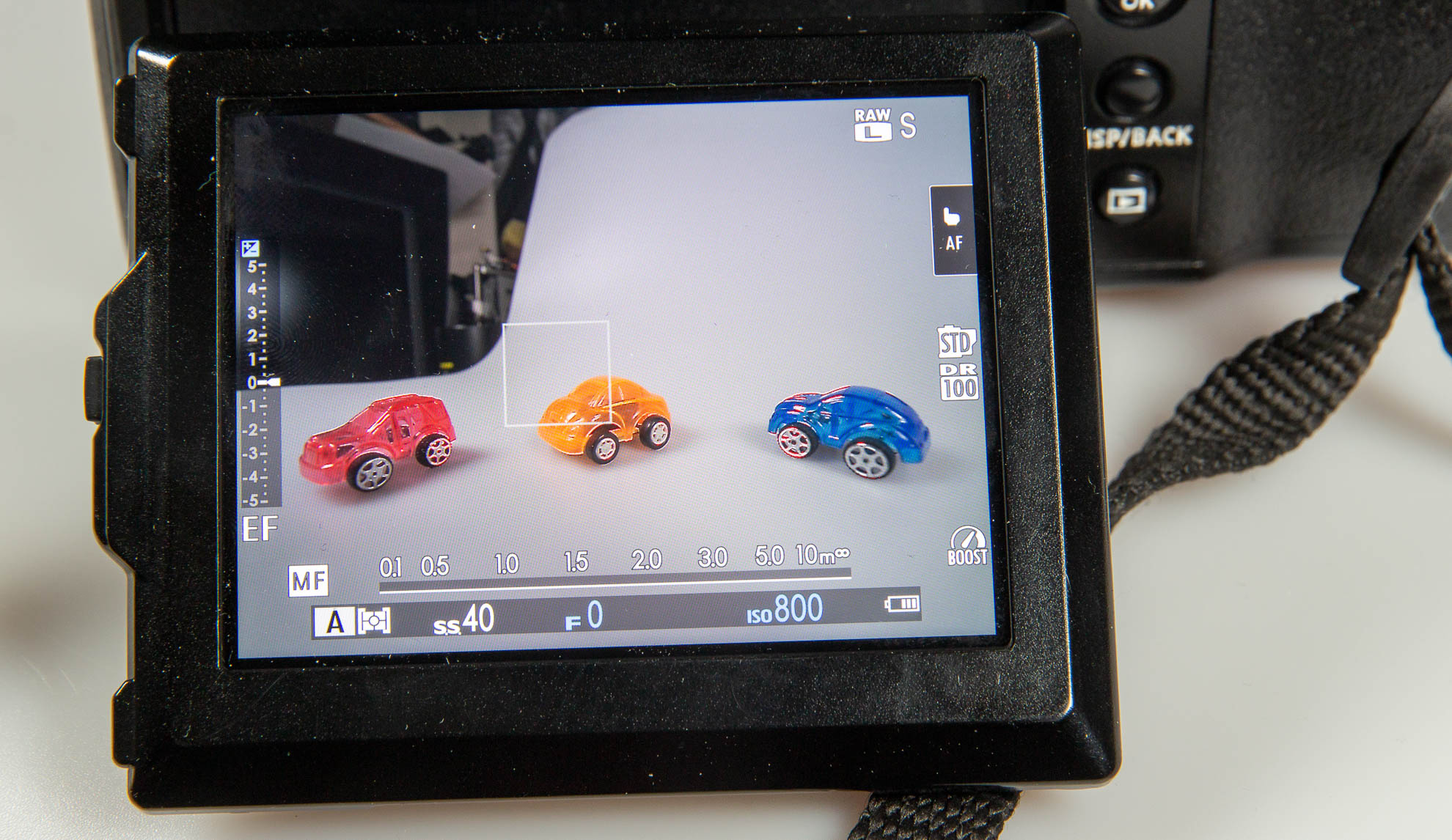
Note the lack of focus distance info on the display – the lens ‘isn’t there’ from the camera’s POV.
What the Laowa 19mm GFX f/2.8 can do
It’s very difficult to convey many aspects of image quality from a series of images from just one example of a lens.
Suffice to say, chromatic aberrations are almost absent, field curvature was not something I noticed, sharpness peaked at f/5.6 for the centre and f/8 for the edges.
The geometric accuracy of the lens is excellent – getting actual numbers for this would require far more patience than I have.
Of course, without careful lining up, distortions may not be that obvious

Even here, I can’t see any issues.

Overall sharpness
I’ll include a series of sequences of images stepping in aperture. If you want more detail and numbers, then I’m surre there will be other reviews catering to this need.
Click on any image to see it at a larger size.
Aperture f/2.8 to f/22
Full frame followed by centre detail, followed by corner detail.
[Click here to skip past all these images…]
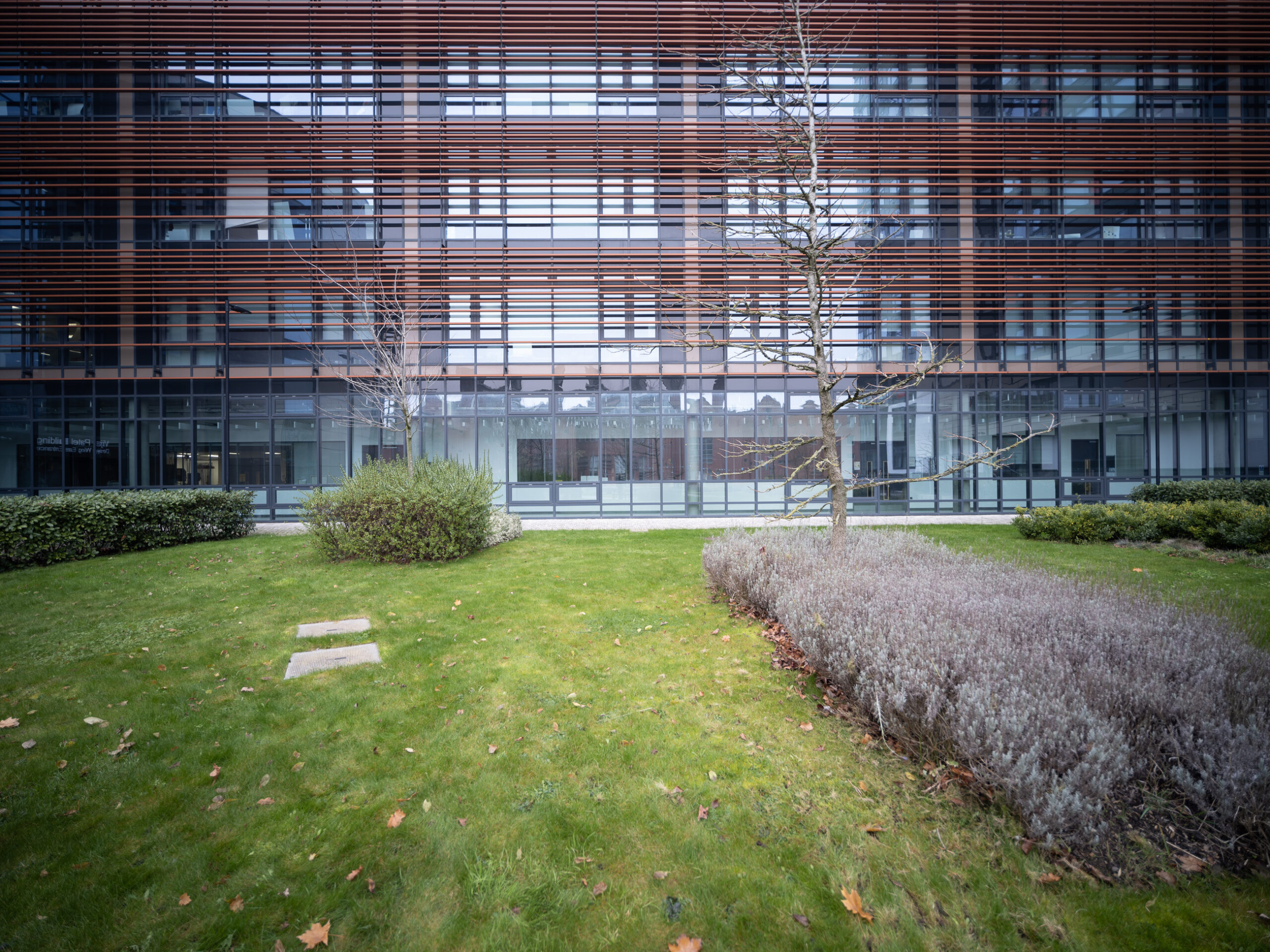
2.8
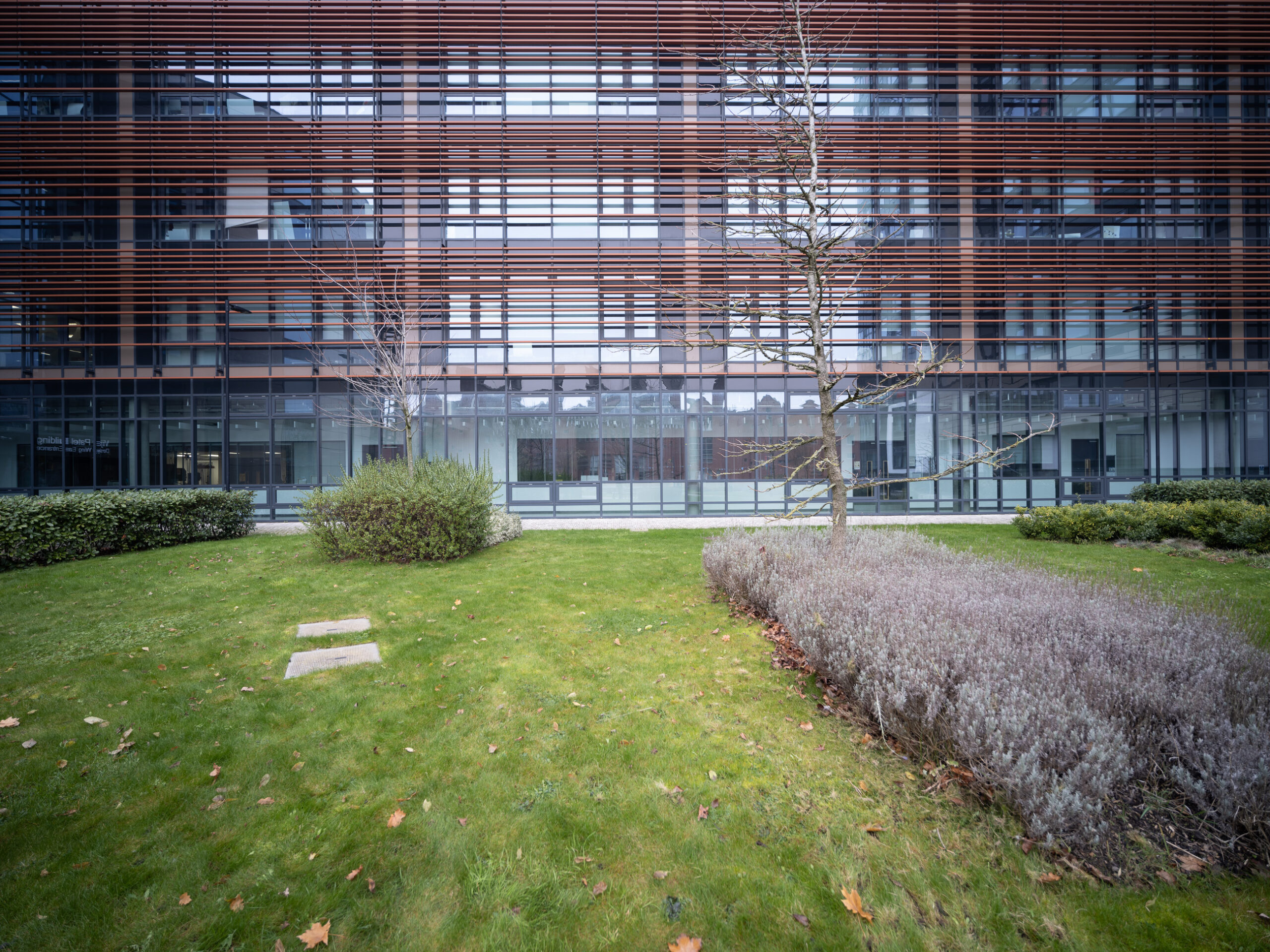
4

5.6

8
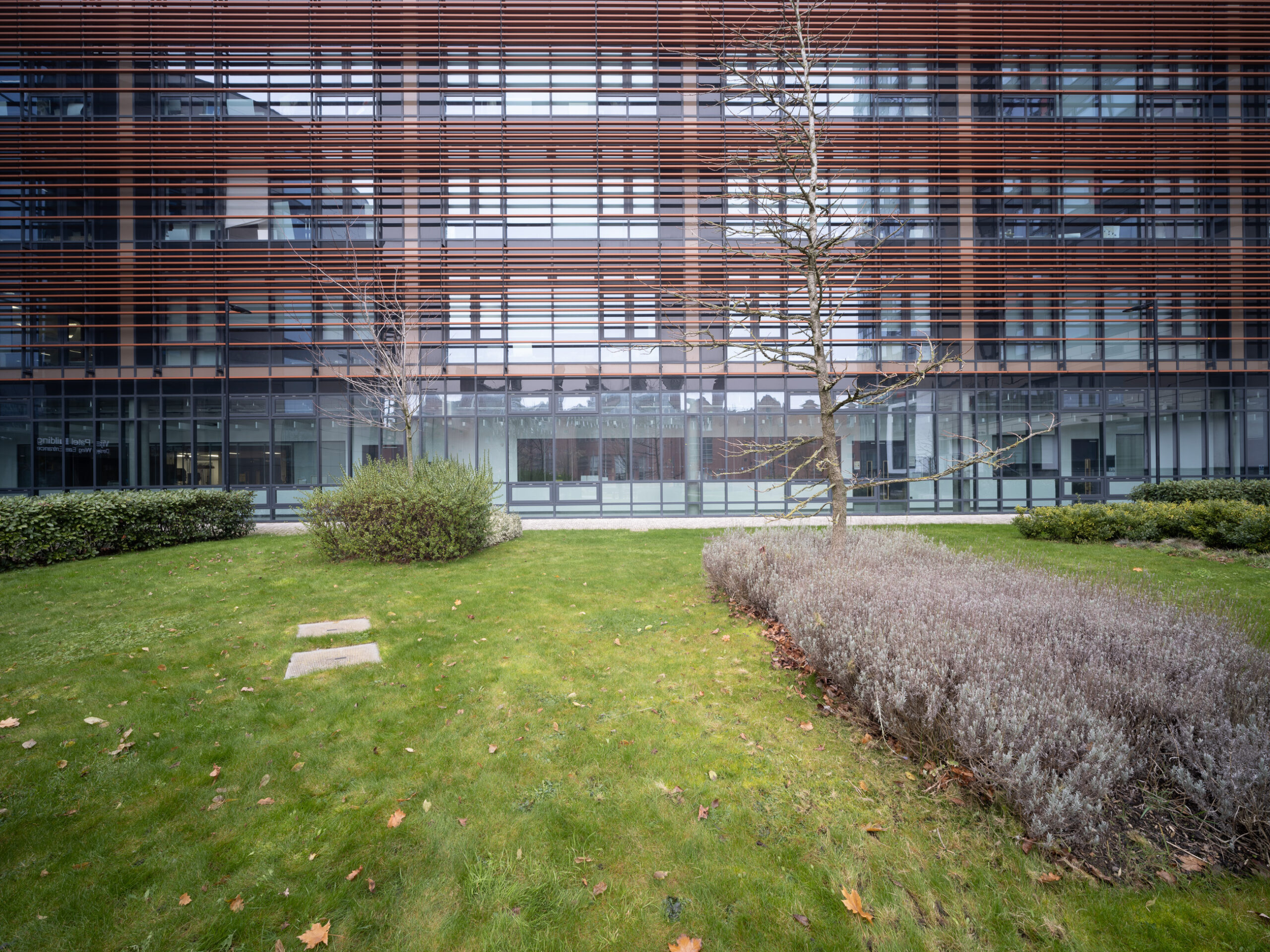
11

16
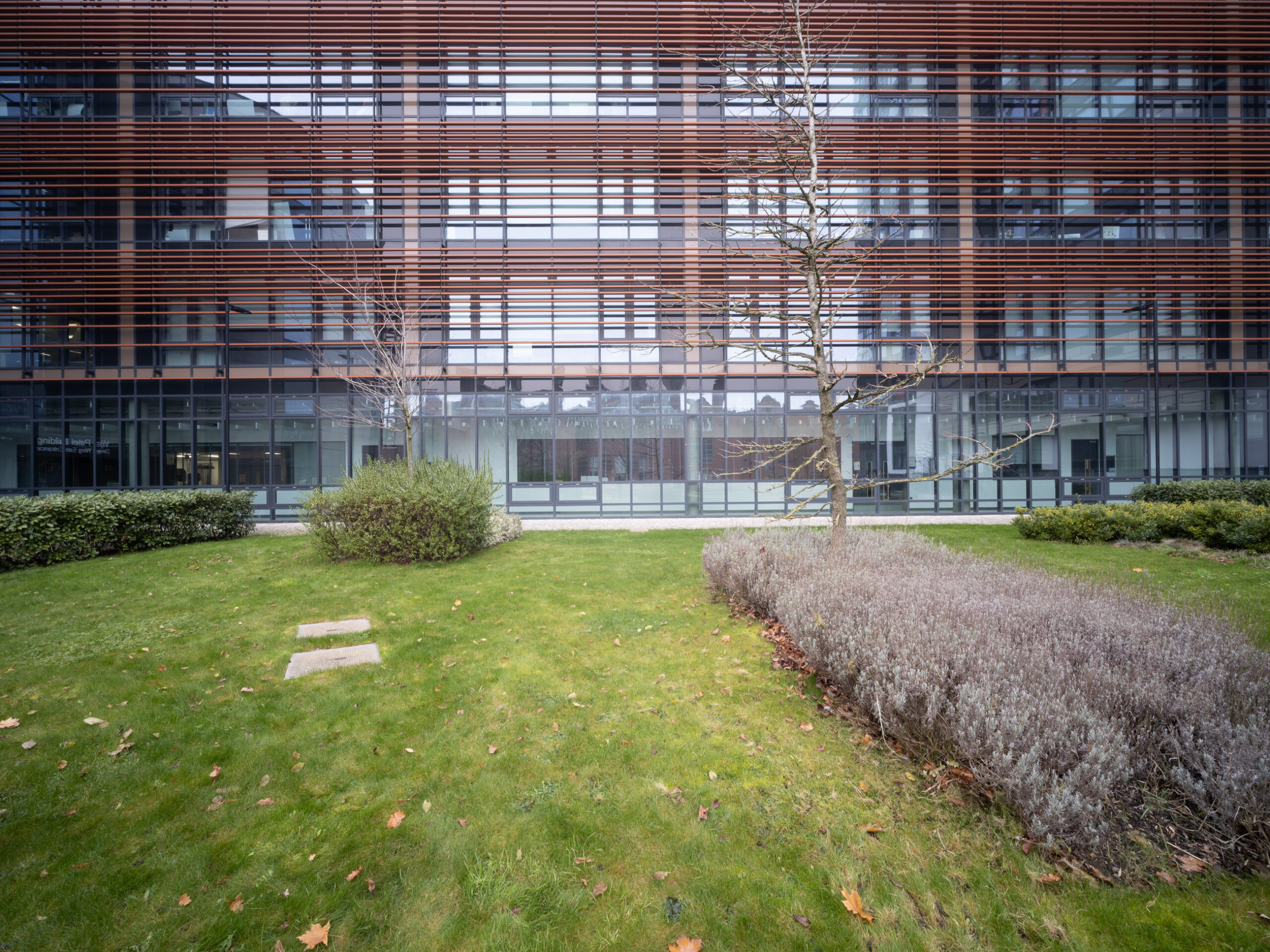
22
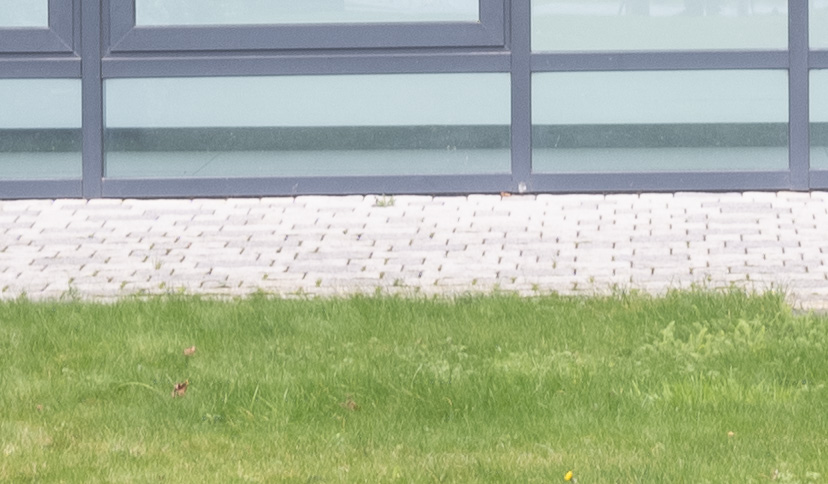
Now centre frame -f/2.8 to f/22

2.8
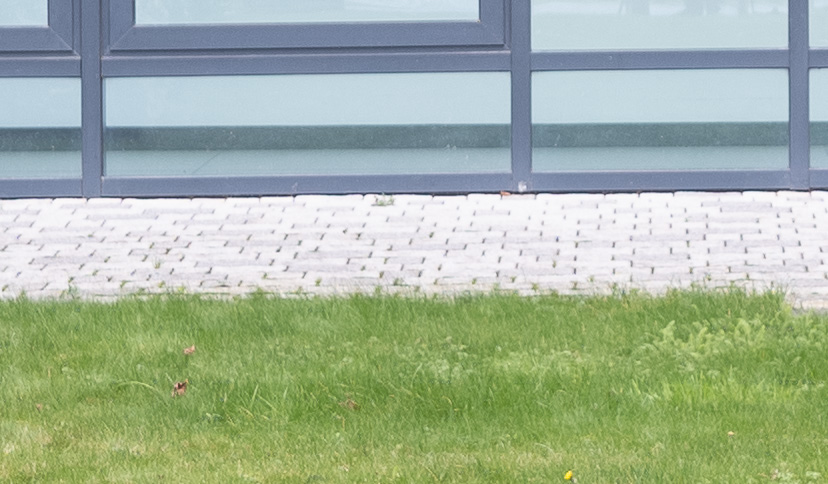
4

f/5.6 around the peak for centre detail

8
11

16

22
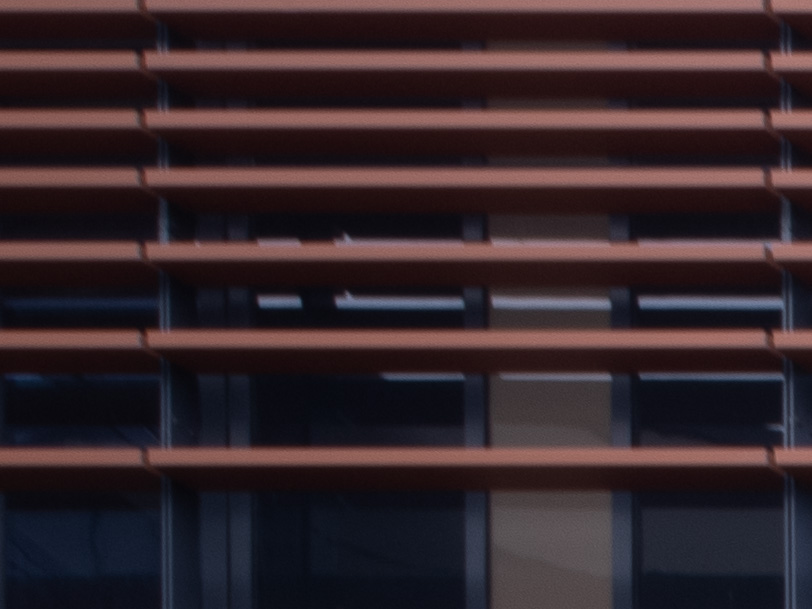
Now the top left corner – also from f/2.8 to f/22

2.8

4

5.6

8
f/8 is probably around the peak for corners

11
16

22
The softening of images with diffraction is noticeable as you stop down. I’d happily use f/11 if I needed the depth of field (which is huge from a 19mm lens).
Vignetting
Quite obvious at f/2.8, dropping off appreciably by f/5.6-8 still there though even at f/16
Easily fixable in post processing.
Chromatic aberration
Yes, there is some – barely a couple of pixel at worst, and easily fixe with the automatic correction in ACR when I opened up RAW images to look at in Photoshop.
This image is from the left centre of the f/8 test shot – lots of magnification and you can hardly see the difference.

The 5 blade aperture gives very prominent star effects.
Here, if you look carefully, you can also see some faint flare rings [click to enlarge]

The lens comes with a lens hood, but at such a wide angle its use will be limited. The level of flare seems pretty good for a lens like this but obviously, put the sun in the frame, and you will find flare…
Use at f/2.8
With the lens wide open, the out of focus areas are less ‘busy’ (no aperture blades to impinge.
These two shots are at f/8 and then f/2.8 at near closest focus
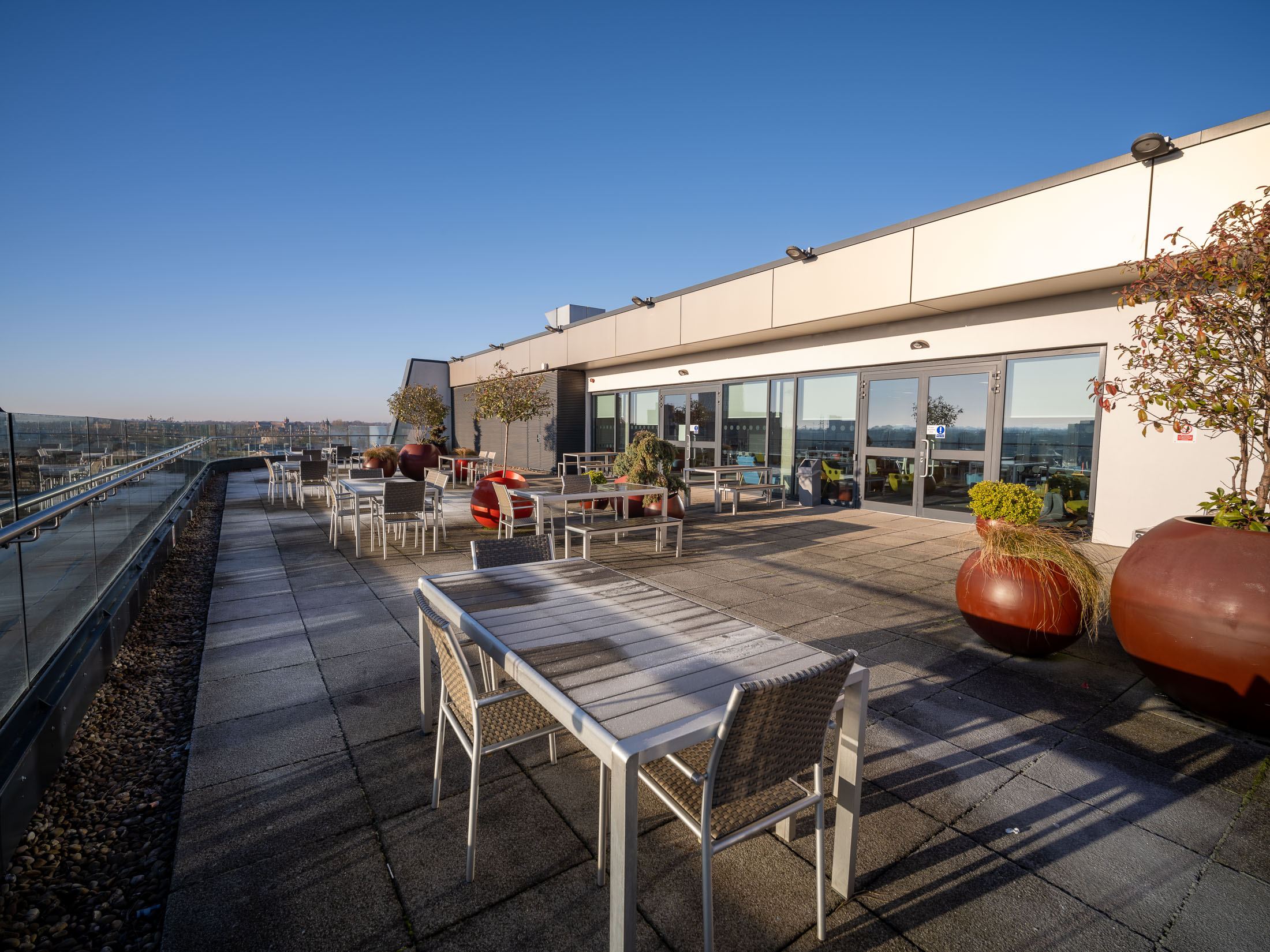

These two shots at f/2.8 and f/4 really show the effects of the aperture blades [click to enlarge]
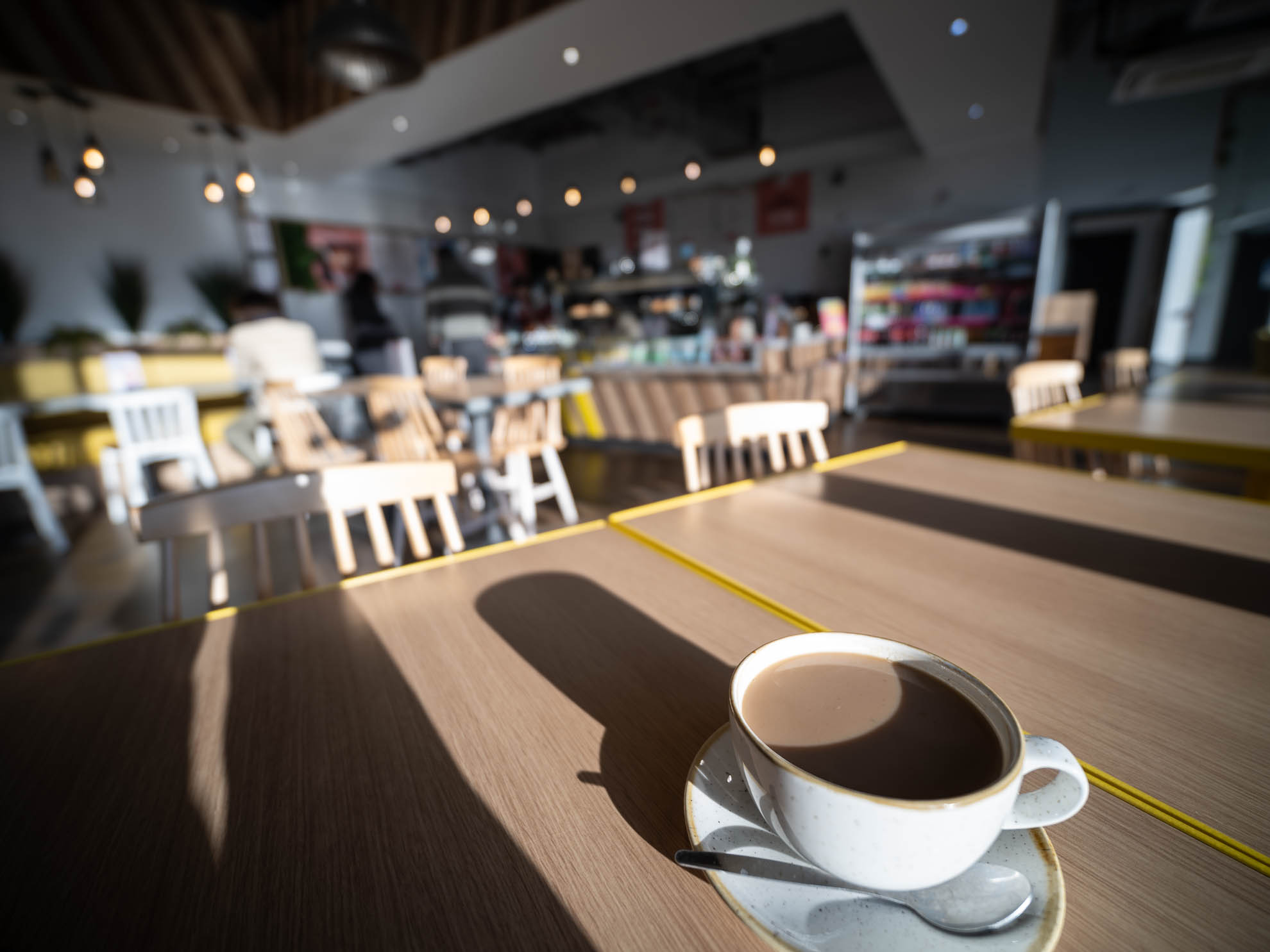
f/2.8 – round OOF lights

f/4 – pentagonal OOF lights
I ended up using the lens a lot at f/8 and you’re just not going to see many out of focus areas.


What about the Fuji 20-35mm f/4
Since I happen to have a copy here, what about this lens versus the vastly more expensive Fuji 20-35 f/4? [~£2300 vs £900]. Note – I’ll come back to this lens in more detail in one of my future looks at the GFX100S and lenses
I had it with me when I took the series of shots of the front of the building at different apertures, and did the same sequence.
Here’s one at f/5.6

Now that is impressive – it’s sharper than the Laowa and there is no real distortion whatsoever…
At this point I was feeling that despite the photos I’d taken, which looked good, the 20-35 was in a different league…
Then I went back to the RAW image processing and turned off the lens correction (which had defaulted to on).
Suddenly, it has the geometry of a cheap wide zoom…

Ouch…
The camera applies correction to its JPEG files, so they look like the 1st photo.
For RAW files you do get a chance to adjust what’s being done here. For me this would mostly involve turning down the vignetting correction. I often leave this under corrected, since with some subjects it helps draw the eye in to the image. If shooting wide and there are people in the frame, leaving a bit of barrel distortion may make for a better looking picture, but then again, remind me why I’m using a 19/20mm lens on medium format for photographing groups of people…
That said, results count, and if I was using the 20-35, I can’t see why I’d be that bothered.
So, it seems that the 20-35 gives its really good quality with the aid of software ;-)
The Laowa 19mm GFX manages pretty good performance without – I’m sure that a custom lens profile should appear before long – just don’t expect [with the lack of lens EXIF data] for automatic corrections
Update – image ‘shrpness’
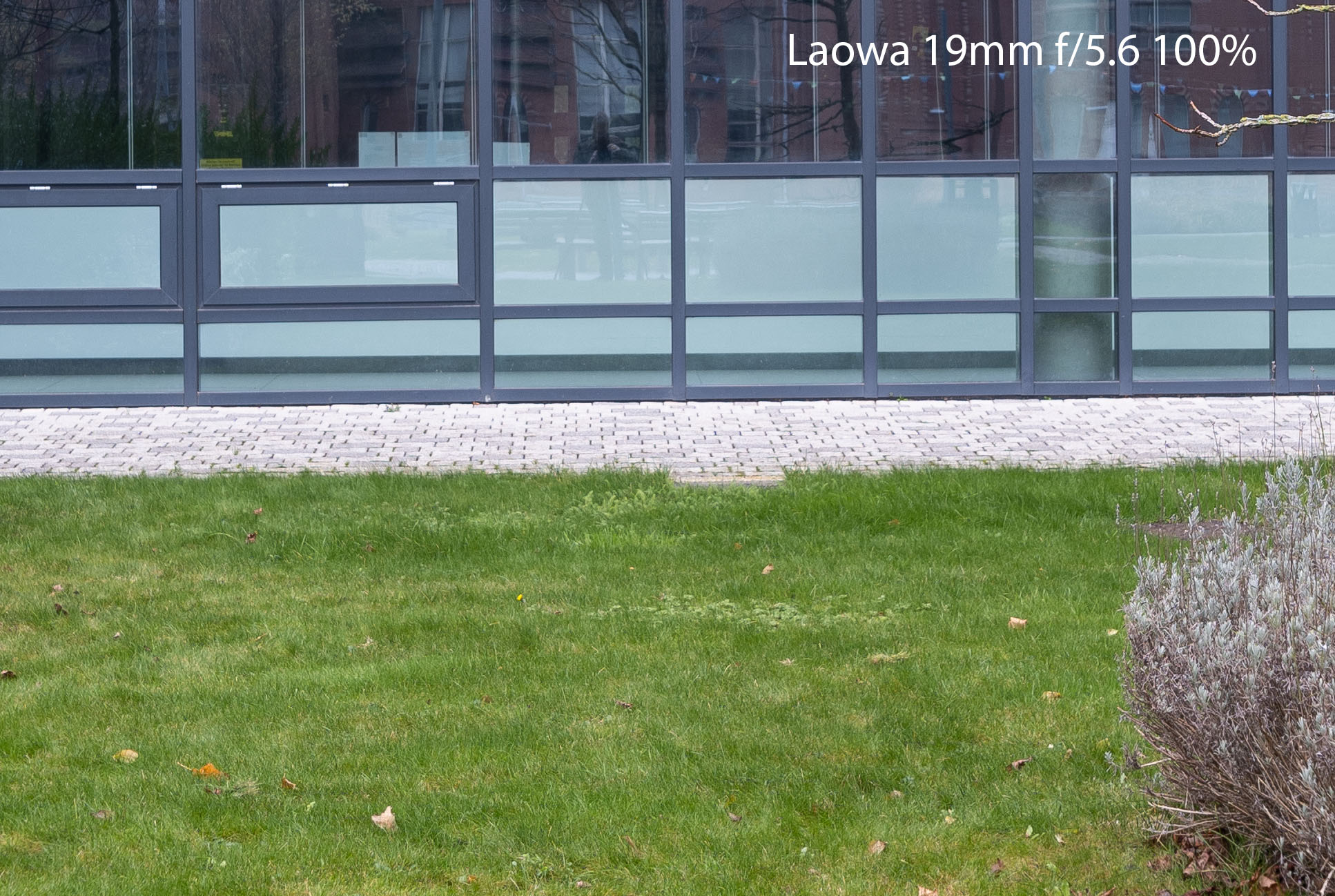
Someone said the sharpness of the Laowa looked ‘mediocre’. I disagree, but then again I’ve seen the RAW files. This is one of the problems of trying to show anything on the web – I don’t have the capacity to host multiple 100MB RAW files for download.
So…. Here are two 100% crops [click to zoom] of the sample images from the Laowa and 20-35 both at f/5.6 – both processed specially (just conversions settings, no extra sharpness) to give a better feel for how I find the sharpness.
The 20-35 has had the default corrections applied.

Laowa 19mm GFX conclusions
I’ll be extending/refining this review with a bit more testing, but I wanted to get it done ready for the launch of the lens.
The lens is solidly built and quite compact when mounted on the GFX100S. At ~550g it’s heavy for the size, but doesn’t feel out of scale with the GFX100S body.

It takes 77mm filters on the front, which is useful for such a wide angle lens.
In terms of image quality, it had no problem dealing with the 100MP sensor and in particular, the images cleaned up with software like Topaz Sharpen AI very nicely,
If I was getting such a lens I’d personally prefer a version without the 5 blade aperture – the star spikes can look great, but I don’t always want them jumping out at me from the image.
Whether the lens suits ‘typical’ users of a GFX100S is a question I can’t answer – for me the manual operation is a trivial matter.
At the price, if you shoot wide, it’s a very interesting proposition…
The list price (US) for the Laowa 19mm GFX is $999
The lens is available from Venus Optics.
Never miss a new article or review - Sign up for our occasional (ad-free) Newsletter
and please do subscribe to Keith's YouTube Channel

Other areas of our site that may be of interest...
All the latest articles/reviews and photo news items appear on Keith's Photo blog

Keith explains tilt and shift lenses
Keith has written a book that looks at the many ways that tilt/shift lenses can benefit your photography from a technical and creative point of view. If not in the UK check for import issues and maybe try an on-line bookshop. Keith has no connection with sales of the book.
ISBN 9781785007712
There is also a specific index page on the site with links to all Keith's articles, reviews and videos about using tilt and shift.
We've a whole section of the site devoted to Digital Black and White photography and printing. It covers all of Keith's specialist articles and reviews. Other sections include Colour management and Keith's camera hacks - there are over 1200 articles/reviews here...
Adverts removed
Keith | Feb 19, 2024 at 11:11 am
Wrong pic on website probably – I’m afraid.
I’ll see if I’ve got the originals to correct this.
Thales | Feb 17, 2024 at 11:08 pm
hi there. thanks for the review. looking carefully at the 100% crops for the laowa and the fuji 20-35 at the “update – image sharpness” section, it seems to me that the laowa is not really focused on the building but in the grass at the foreground of the crop. is it field curvature or wrong focusing? cheers
Keith | Apr 12, 2023 at 9:31 pm
Well, the 19mm is fractionally wider, until you include the shift of the 20mm…
Two widely differing lens types – an Apples and Oranges comparison I’d suggest.
Marc Damon | Apr 12, 2023 at 7:51 pm
Based on you sample images, it seems that the Laowa 19mm (110deg) is not any wider than the gf 20mm (108deg).
Do you agree with that?
How did the image quality compare with the Laowa 20mm?
Thx