


TTArtisan Tilt 50mm f/1.4 review
Review: TTArtisan Tilt 50mm
50mm lens with tilt/swing movements

No more Google ads. Too many deceptive and irritating adverts.
Any ad links left are non tracking, to companies we know, trust and we've worked with for years [Park Cameras]
Ads helped pay for site running costs, so if you found something useful, please
...Make small KoFi donation?
...Subscribe to Keith's YouTube Channel
...Get Keith's book about how to use tilt/shift lenses
Our site contains affiliate links - these help support the site. See our Advertising policies for more
Keith has been looking at the TTArtisan Tilt 50mm lens.
The lens is fully manual with a good wide f/1.4 aperture.
It’s designed for mirrorless systems and comes in at under £250.
Note that it’s tilt only, so is likely aimed at more creative uses of lens tilt/swing.
This manual lens also available for Z/E/L/X/M43 mounts.
If tilt/shift is new to you, I’ve a whole section of this web site devoted to articles, reviews and videos about using tilt and shift.
There are also these videos about the 50mm:
The list price (US) for the lens is $229 See TTArtisan for more

A tilt lens: TTArtisan tilt 50mm lens f/1.4
Normally I test tilt/shift lenses or sometimes shift only lenses. The ability to tilt is useful, but to be honest, I use it as a commercial/architectural photographer rather less than I use shift.
Note that I follow the convention of calling any movement of this lens as ’tilt’ along with the direction the lens is tilted. The lens rotates freely on the lens mount allowing the tilt to be set on any chosen axis.

TTArtisan tilt 50mm lens tilted to the left
This lens is an interesting one – it’s a 50mm f/1.4 lens designed for mirrorless camera mounts.

The version I’m testing here is an RF mount one, tested on my EOS RP. It’s available in the following mount options E/X/Z/RF/L/M43.
Note that the tilt function/effect is the same, whatever sensor size you use – just the field of view is different. It is a 50mm lens, whatever sensor it is used with
For more information, see the manufacturer’s page at https://www.ttartisan.com/?list_9/155.html
The TTArtisan tilt 50mm lens
The construction feels very solid with an all metal construction.
The lens is fully manual, so no electronic connections, which means no EXIF data, and that you need to make sure your camera is set to allow the taking of photos with no lens attached.

Mount rotation lock and angle indications
The aperture ring is clickless, with gearing style rings for powered focus/aperture – indicating a strong leaning towards video use. The lens cap is metal

The internal design shows a symmetrical lens design with two ‘high index’ glass elements. The short back focus distance means that this lens won’t work on DSLRs.
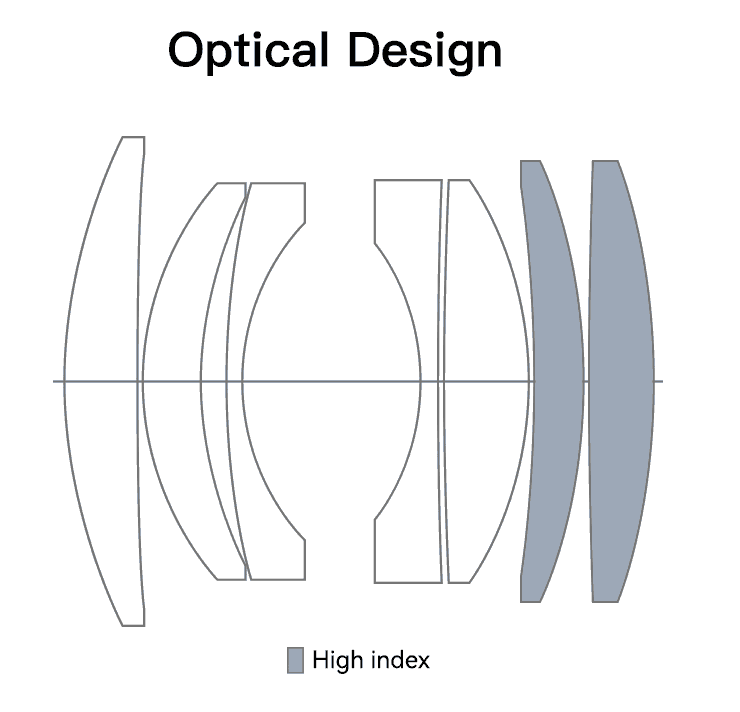
TTArtisan tilt 50mm lens – basic specs [from TTArtisan]
- Focal length: 50mm
- Maximum aperture: F1.4
- Closest focusing distance: 0.5m
- Minimum aperture: F16
- Sensor: Full Frame
- Diaphragm Blades: 12*
- Filter size: 62mm
- Optical Design: 7 Elements in 6 Groups
- Angle of view: 45°
- Focus method: Manual
- Weight: ~452g
- Lens Type: For mirrorless camera [not DSLR]
- Tilt Angle: ±8°
- Rotation Angle: 360°
*It says 12 in the published specs – BUT see below where I see 13…
MTF chart [un-tilted]

TTArtisan Tilt 50mm physical characteristics
The lens has smooth focus movement, with the lens extending as you focus closer. The roughly 100º throw makes manual focusing very easy, especially if you use focus peaking to assist.
The focus ring is click-less. personally I prefer clicks to allow me to change/set aperture without looking at the lens.
The aperture blades…
The specs say that it has a 12 blade aperture ring, but look at the photo below…

I count thirteen blades.
They give a smooth out of focus look, only slightly ‘busy’ at some settings. Remember too that any tilt changes the OOF look in an asymmetric manner. You’ll see it in some of the examples below.
Lens coating are competent, but bright light sources in the field can show as slight veiling or contrast reduction.

Sunstars are there at f/5.6, but not intrusive.
The 13 blade aperture nominally gives 26 points, but it would take quite some setup to see all of them.
Odd numbers of blades give twice as many spikes, even numbers of blades give the same number of spikes.
This shot repeated with the sun behind the glazing bar looks similar – neither show any excessive flare.There is no lens hood, so watch for sunlight hitting the front of the lens from an oblique angle.

The view from the rear at full aperture and tilt shows partly why there is an asymmetric vignetting in tilted shots at wider apertures.

Unlike some specialist tilt/shift lenses, the focus does not allow you to go past infinity. Although this sounds a good thing, it does limit the use of lens tilt in some circumstances. It’s worth remembering that once you tilt a lens the numbers on the focus scale no longer relate to focus distance,

I’ve an article including six videos all about what lens tilt does, if you are curious.
The tilt mechanism allows ±8º of tilt.
There is a locking knob and a detent at zero tilt, but the tilting mechanism is not geared, so take care not to knock the lens if tilted and the lock is only lightly applied.
The lens body is marked for full 360º rotation, with soft click stops at 15º intervals.
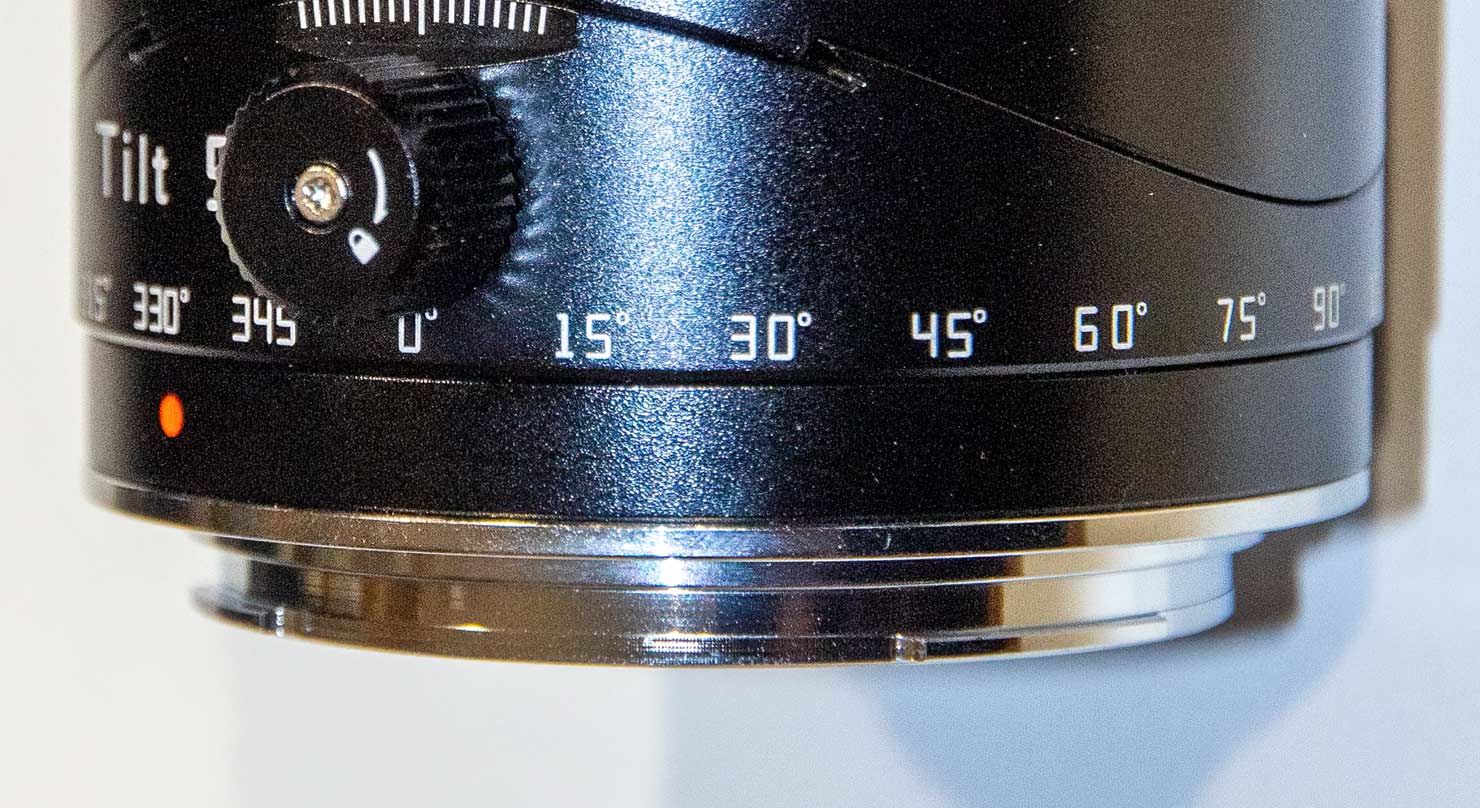
I’ve heard it mentioned that you can get light leaks at full tilt with this lens. I couldn’t see this at all, suggesting it was from a review of an early version of the lens – do note this if you are looking at other reviews.
Using the TTArtisan 50mm tilt lens – basic quality
As a basic 50mm f/1.4 lens it works OK, but hardly sparkles in performance.
It’s not a lens I’d pick for corner to corner sharpness – the vastly more expensive TS-E50mm 2.8L [review] does that well…
Vignetting reduces and overall sharpness improves by f/8 or f/11
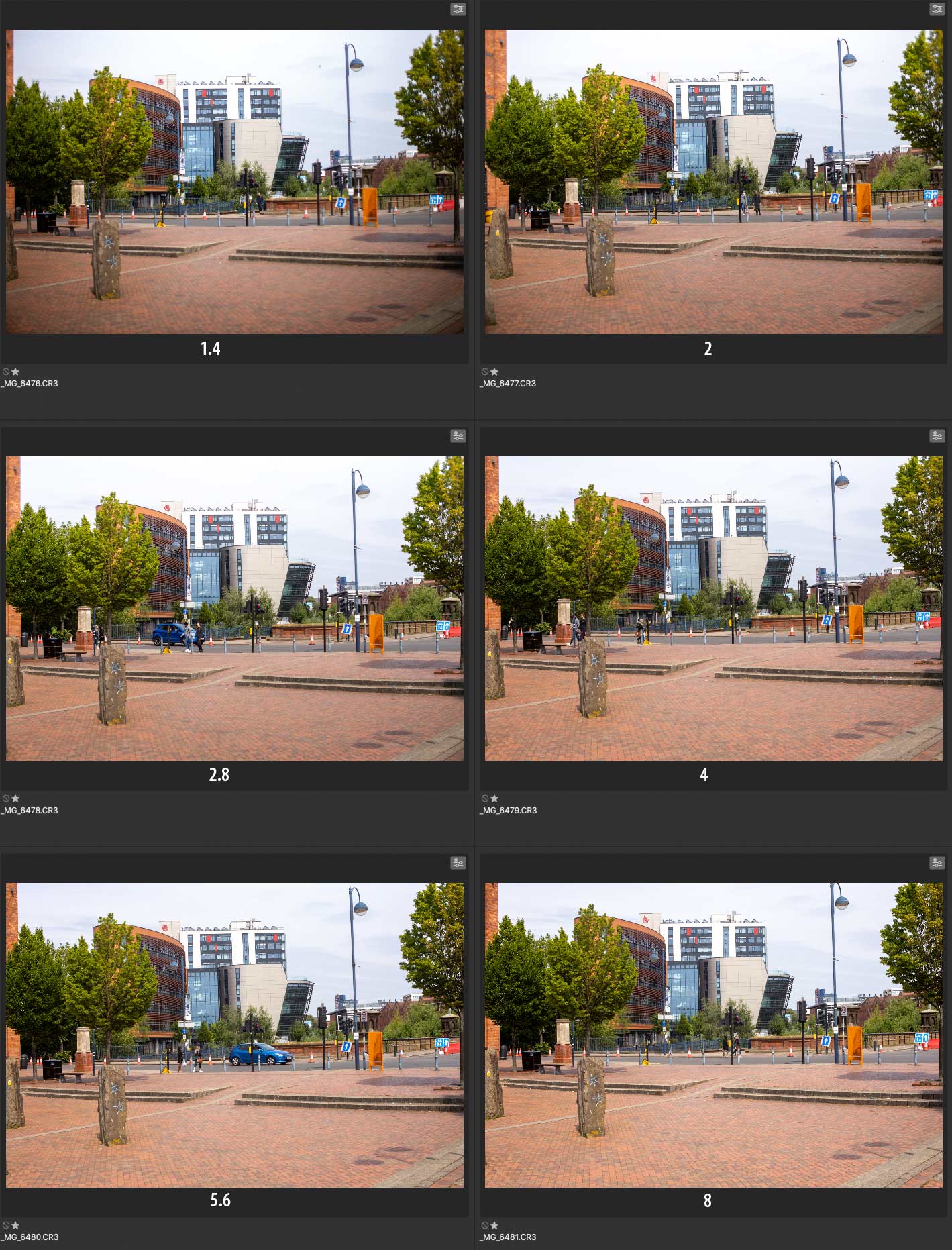
The lens still shows softness as you stop down, but if you are going for really thin DOF when using tilt, then don’t automatically assume you need f/1.4
Strongly visible tilt effects are still there at f/2.8 or f/4
Even at f/8 this [untilted] image is still showing a touch of softness at the extreme corners [click to enlarge]. Moving to f/11 may help, but by f/16 I was clearly seeing a softness from diffraction,
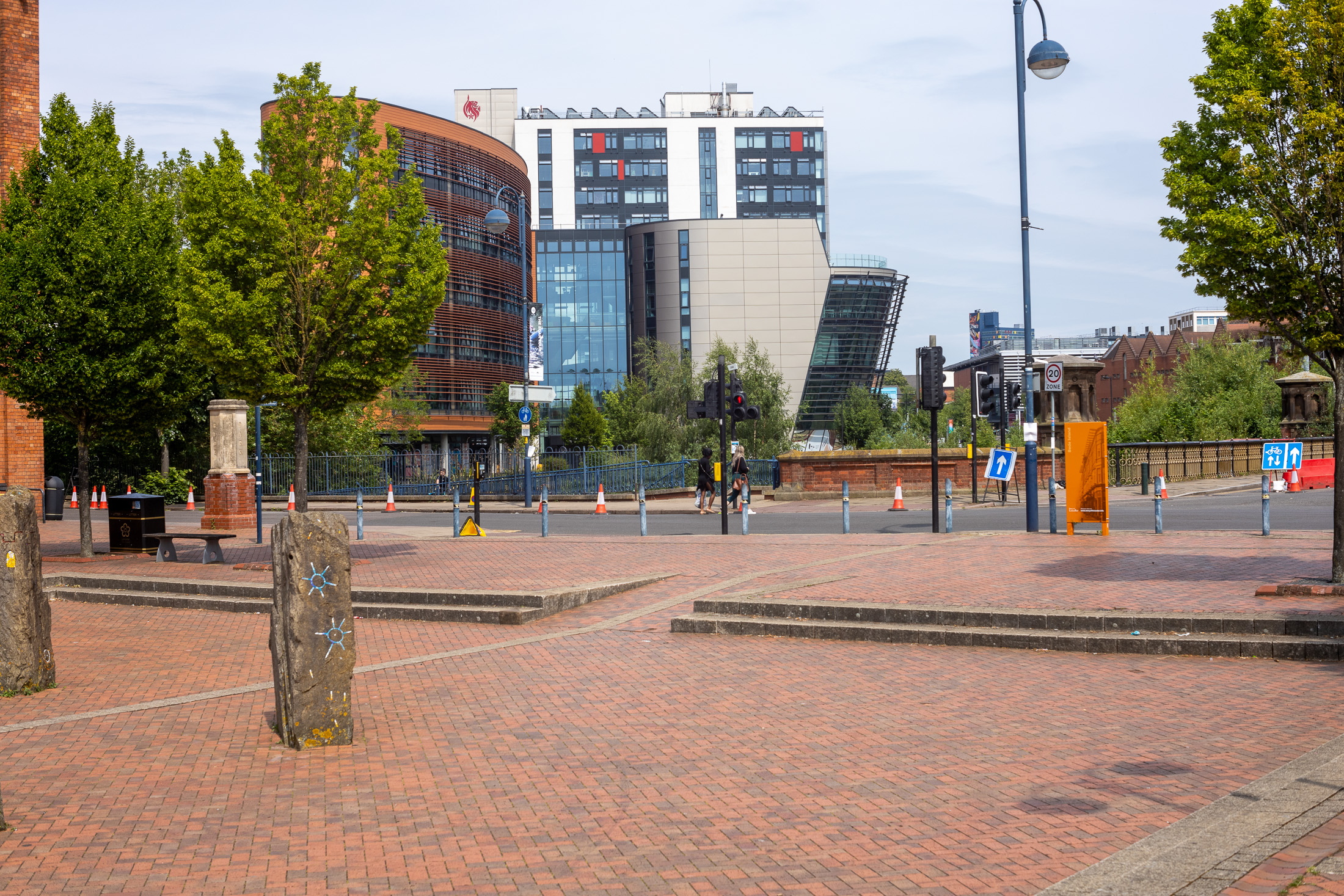
50mm at f/8
Chromatic aberration is slight – easily fixable in raw processing. Indeed, it’s noticeably less that the Canon TS-E45mm, a tilt/shift lens [ts-e45 review] which will still set you back at least £500 used.
A detail from the view above at 100% at f/2, f/4, f/5.6, f/8, f/16
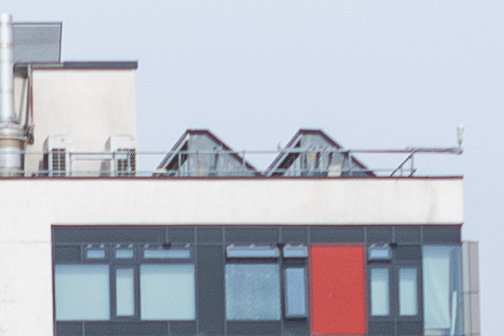
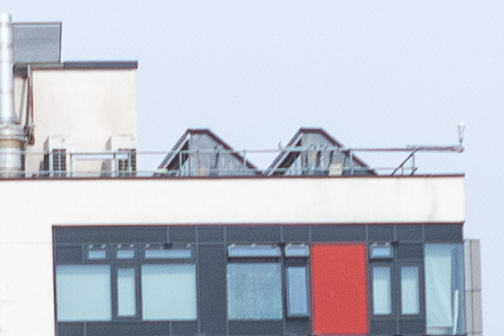
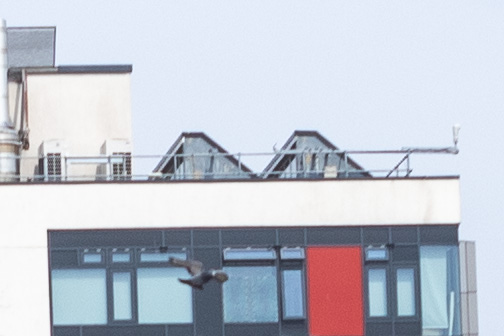
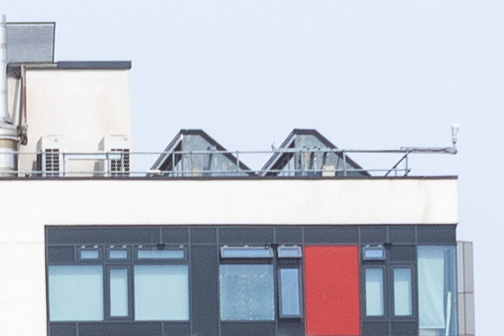

As ever, if you want lots of detailed examples/measurements of distortion and lens quality at a range of settings, search for other reviews, which cover this sort of stuff.
This lens is interesting because of the tilt. If you just wanted a good quality standard 50mm, move on.
A shot at f/2.8 looks OK at a small size [click to enlarge], but look at the left edge to see the barrel distortion [fixable] and top left for softness.
However, when do you shoot something like this at f/2.8?
I still use a Canon EF 50mm f/1.4 USM lens on occasions, and whilst it’s old, it’s still capable of giving good results. There are lots of 50mm lenses about and if you scan the used listings you’ll find all sorts of bargains…
BUT those lenses don’t have tilt, and that’s what you would get a lens like this for.
Tilting the lens
To dispel one myth, tilt does not give you a bigger depth of field, it allows you to place the plane of focus in a way which gives the impression of a greater DOF in parts of the image. Equally, it allows you to give the impression of a much reduced DOF – part of this being the ‘miniature world’ look which many mistakenly refer to as the ’tilt-shift effect’ [it’s just tilt].
With a horizontal camera, adding tilt gives a flat plane of focus running from below the camera into the distance. The slope of this plane depends on the focus setting alone. The tilt setting just changes how far below the camera the plane runs. This means that with the right tilt, you can get a sharp plane of focus run along a floor.
Change the axis/direction of tilt and you can get the plane of focus to run along the ceiling or walls.
With care you can set the plane to run where you want…
…well almost. The options are limited by the amount of tilt available and how close you want the nearest subject in the centre of the field of view.
A simple example [f/5.6] showing the limited DOF of a table top, followed by a shot with downwards lens tilt to run the plane of focus along the leaflets.


Note the slight vignetting at the top of the tilted shot, and also the apparent change in perspective.
The rotational axis of tilting is behind the lens optics, closer to the sensor.
Tilting a lens in the way it happens in most lenses [expensive ones too] introduces a bit of image shift, which I’ve compensated for by moving the camera slightly to maintain the framing, and to get the plane properly aligned with the booklets. With a full tilt/shift lens you often end up using a bit of shift in the mix…
Tilt also has asymmetric effects either side of the tilted view including the out of focus look. In the examples below I’ve picked image which show aspects of this.
Some TTArtisan Tilt 50mm examples
First, rightwards tilt [perhaps 5º – remember, no EXIF] – the plane of focus is off to my right.
f/5.6 to get enough thickness of the plane of focus at the sign and to improve sharpness in the sharp bits
The focus ring is then moved from infinity to swing the [vertical] plane of focus across the scene

Note the darkening on the right side of the image.
This shot of an Architecture studio at the department’s degree show has leftwards swing.
F/2.8 to get a thin DOF
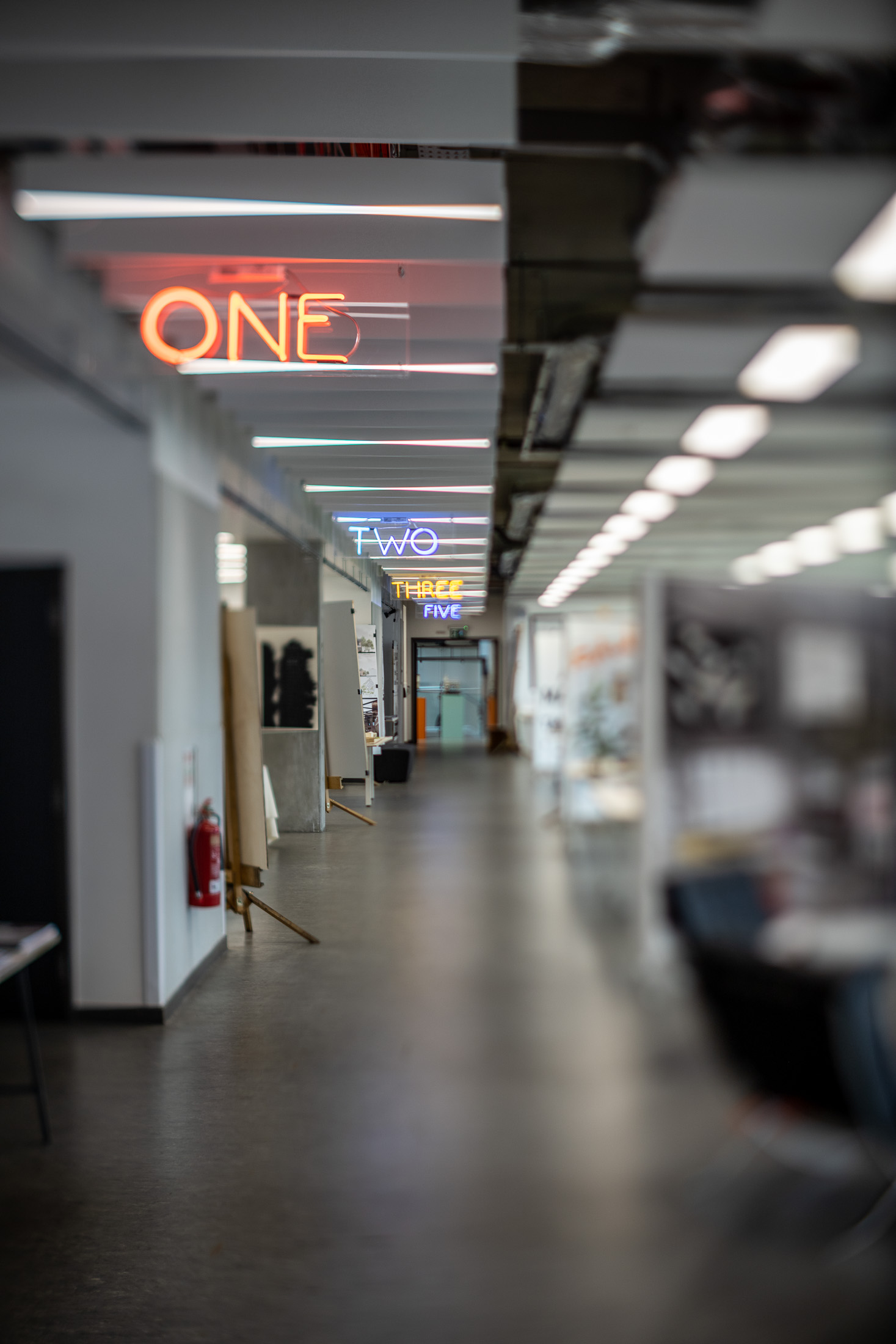
Note from the light fittings [such as just above/below the ‘ONE’], how the tilted lens shows longitudinal chromatic aberration either side of the plane of focus. Largely fixable if you wanted…
Downwards tilt
This time tilting the lens downwards and keeping the focus at infinity, gives a horizontal plane of focus sweeping out across the table tops to the horizon. The thickness of the plane of focus and softness of the top of the far building suggests F/5.6 or even f/8.

Twisting the lens
The benefit of the lens rotation is that you can set the plane of sharpness at an arbitrary angle.
In these handheld shots [as are most in this review BTW] the plane of focus runs along the stairs.
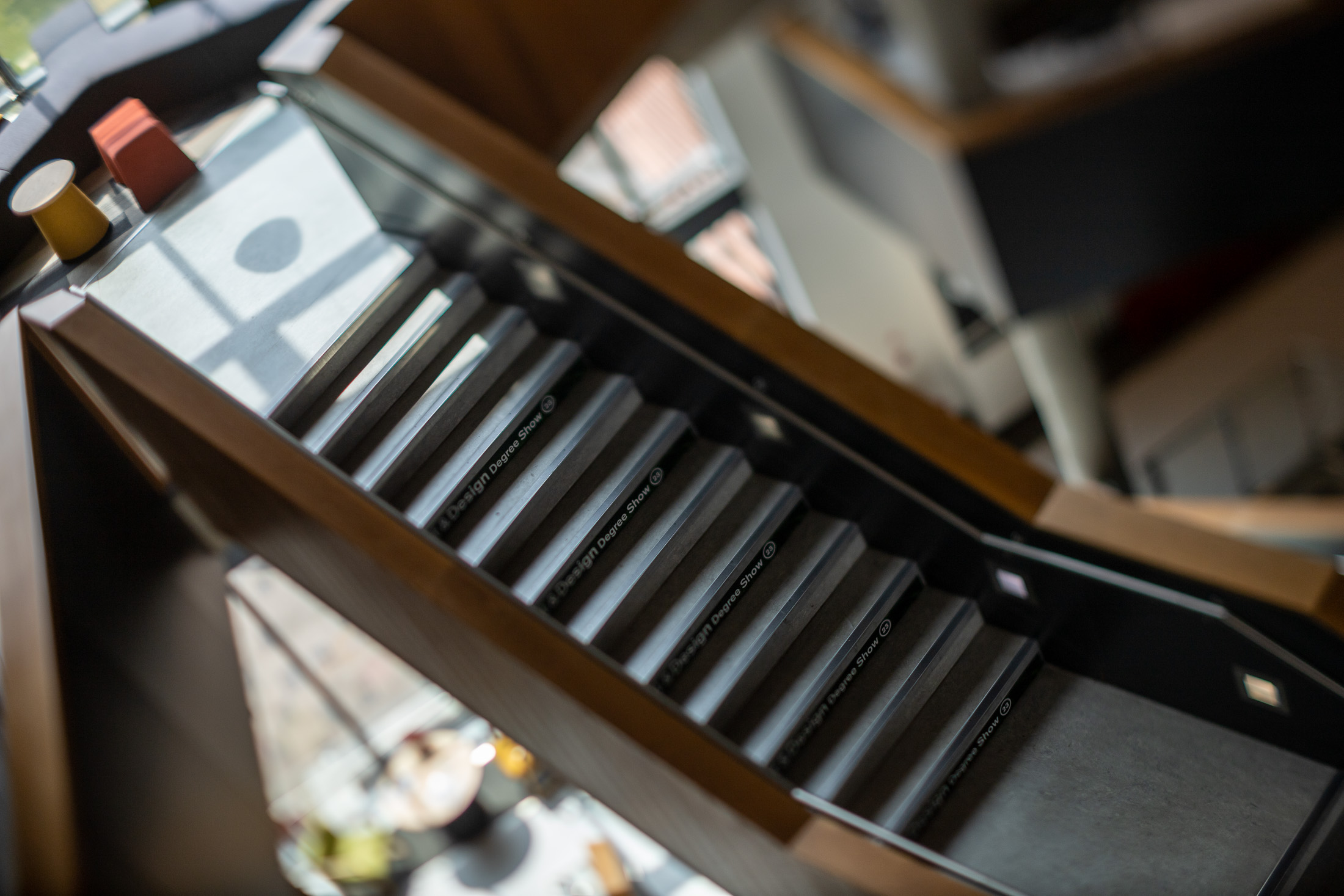

Is that a model?
Note how both of the stairs views have a slightly ‘off’ sense of scale. We don’t normally see big/distant things with any appreciable sharpness differences, so our visual system make assumptions they are small and near.
This can lead to the miniature or model world effect – something some [wrongly!] assume is the only thing tilt-shift lenses are good for.
It’s something which needs some experimenting. A good starting point is that looking down on subjects helps.
I’ll tilt the lens upwards at infinity and then adjust the focus to move the plane.
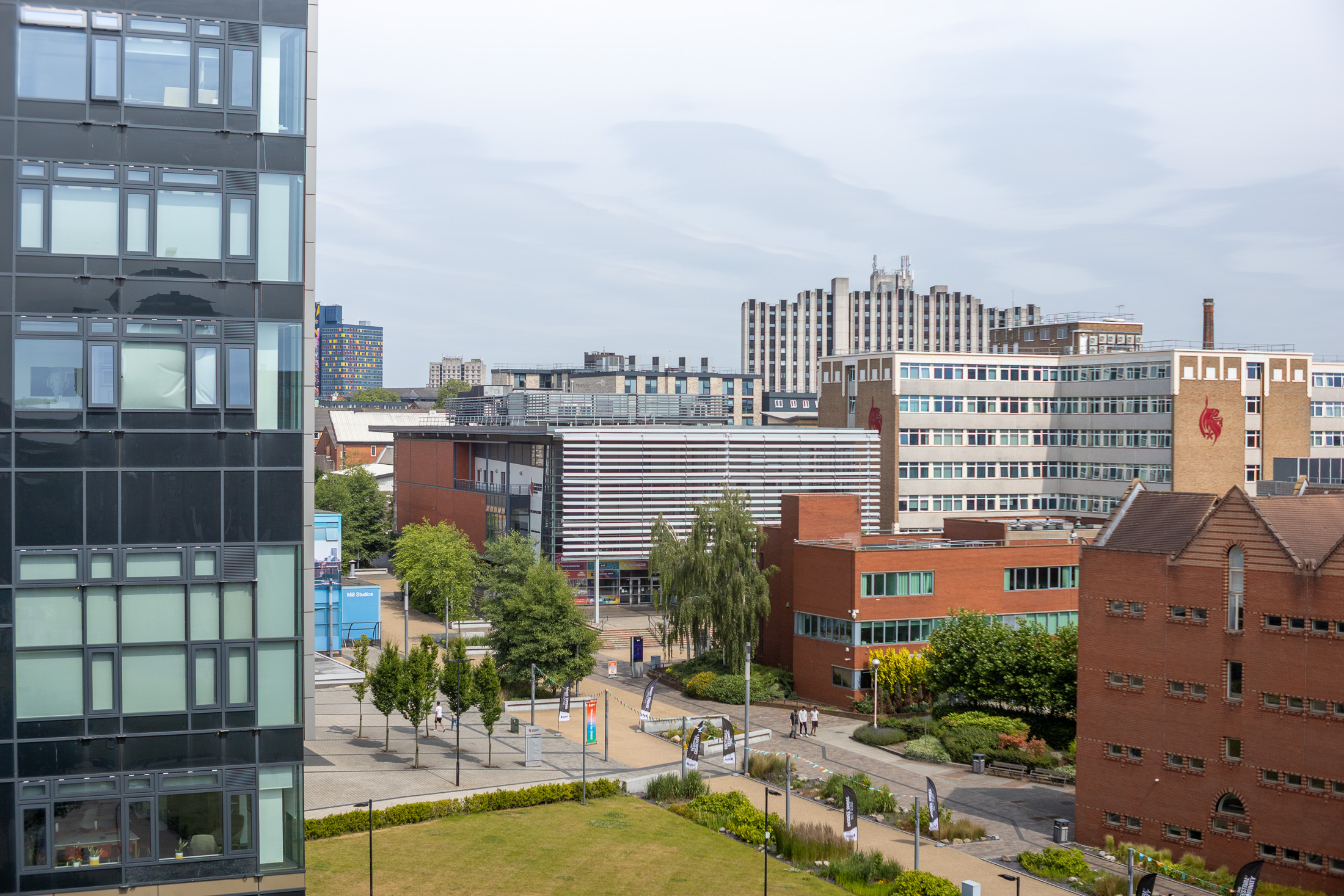
Two examples, from the roof terrace of the DMU building shown earlier
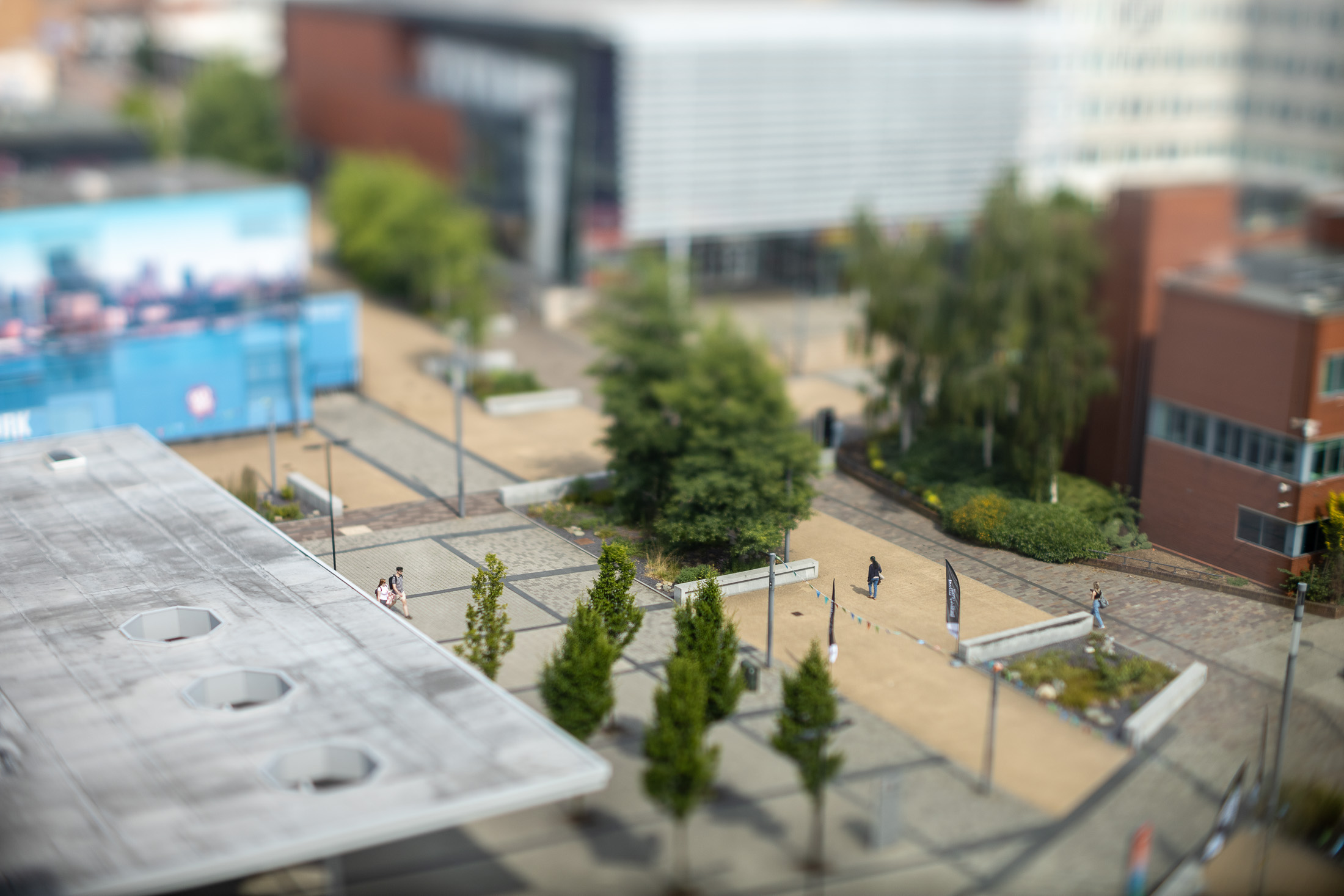
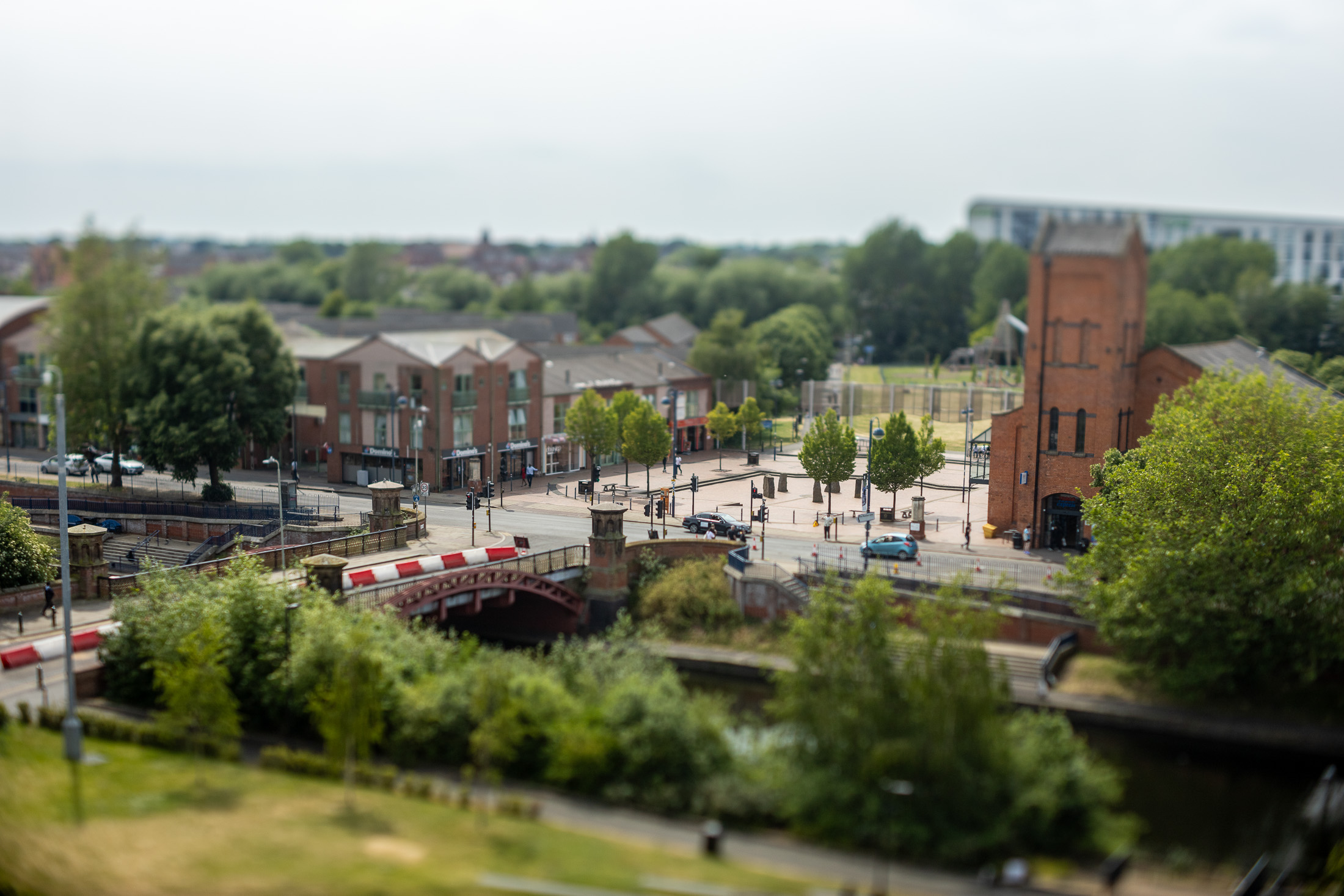
Now I’ll freely admit that such photos personally fall into the ‘Interesting, done that, what next’ examples of tilt use, but they can look interesting…
That said, in 20 years of architectural photography no client has ever asked for any like this ;-)
An f/2 comparison
Here are three shots of an ornament on the side of the house, all taken at f/2.
The first without tilt looks just as you would expect at f/2 on a 50mm lens. The other two both have right tilt.

Now with tilt.
Note how whilst both eyes are now sharp [and some of the wall beyond] the tip of the nose is less sharp [this is f/2 though].

A second view with tilt. A shorter focus setting has swung the plane of focus away from the wall. The small olive tree is several feet beyond the black plastic drainpipe.
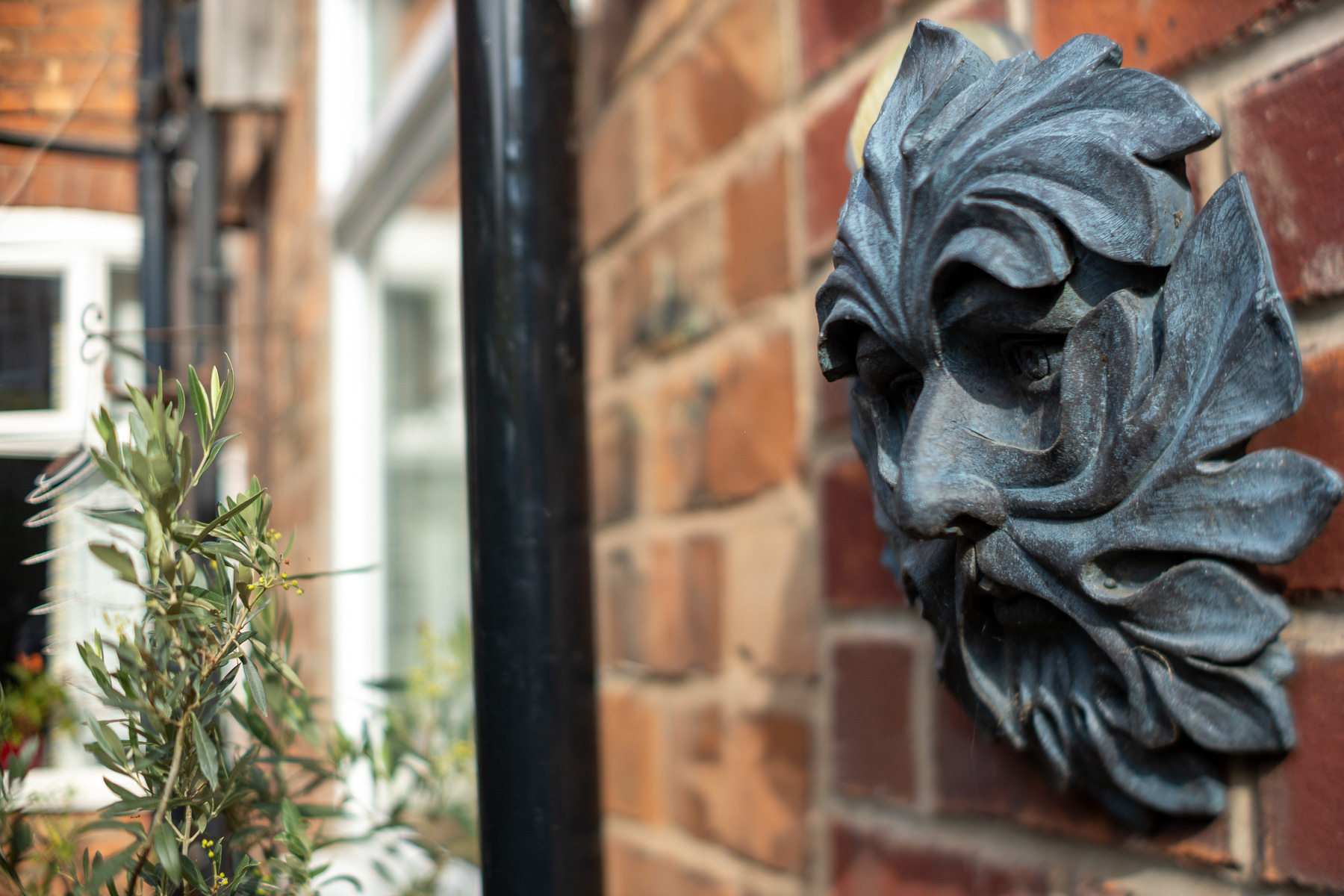
It takes some practice to get a feeling of control over the plane of sharpness.
Fortunately there are ways of setting things up to make it rather more predictable.
Setting the tilt more precisely
Of course, the lens is such that you can just fiddle around with settings and see what you get from it, but talking the time to appreciate how the settings affect where the plane of focus goes gives you the ability to decide on an effect and get what you want, rather than just what turns up…

The key is making use of this table – see my very detailed TS-E50mm 2.8L Macro tilt/shift lens review for more and an explanation of the measurements/numbers.
The tilting of the focal plane is ONLY dependent on the focal length, the lens focus setting and the lens tilt. Sensor size has NOTHING to do with it.

A simple example:
My camera is level, on a tripod at ~1.5m above the floor [5 feet].
What lens tilt do I need, so that the plane of focus can run along the floor?
The table says 1.9º
Of course, with the basic tilt mechanism, it will take some care to even set it to 2º – there is no great precision here. You are doing well with this lens if you can set it to half a degree. Remember this, if you get a phone app which gives all these figures to spurious levels of precision ;-)
So, with the camera level, at 5 feet from the ground, the focus scale set at infinity and ~2º of downwards tilt, the plane of focus will run along the floor.

Note that the plane of focus is actually a wedge, thinner closer to the camera, thicker further away – how thick/thin? Well that depends on the lens aperture. There are ways of working all this stuff out, but this is not the place for such maths! See some of my other tilt/shift articles for links to more formal analysis of focus and DOF for a tilted lens [HINT – you do not need to understand any of it to be able to use lens tilt!]
Similarly…
Tilt left at 8º and the plane will be vertical and pass some 35cm to the left of the camera.
Just remember that this lens is probably aimed more at those wanting creative effects from the lens than high precision.
A basic understanding of where the plane of focus goes, does make this lens so much easier to use. Just remember that it’s always a wedge of focus, thinner closer to the lens with a thickness given by the aperture setting.
Conclusions: TTArtisan 50mm tilt lens f/1.4
Definitely more of a fun lens than a precision one I’d use for my commercial work.
As a standard lens it’s not bad, but as I’ve noted, you wouldn’t buy this lens if you were just looking for a straightforward 50mm… It’s still vastly better than some ‘bendy’ lenses I’ve seen, which seem to avoid image quality almost by design ;-)
It has a very solid feel, with its all metal construction and smooth movements.
Personally I’d prefer click stops for aperture and a slightly stiffer tilt mechanism, but these are minor quibbles. As a tilt lens, I’d also like to see the focus scale allow movement past the infinity mark – yes, it is useful ;-)
Of course it’s a fully manual lens too – not a problem for me to use, but remember there is no EXIF data, so if a shot setup [aperture] is important or needs reproducing, write things down…
To get the most out of this lens, you need to take time to appreciate what lens tilt does – it’s not difficult [did I mention I’d written a book on the subject?]
It’s great to see third party lenses like this introducing new options
For more information, see the manufacturer’s page at https://www.ttartisan.com/?list_9/155.html
–ooOoo–
If you’ve any questions – please feel free to ask.
Lens intro
If you’ve any questions – please feel free to ask.
There is also a specific Tilt/shift index page on this site with links to all Keith’s articles, reviews and videos about using tilt and shift.
–ooOoo–
Never miss a new article or review - Sign up for our occasional (ad-free) Newsletter
and please do subscribe to Keith's YouTube Channel

Other areas of our site that may be of interest...
All the latest articles/reviews and photo news items appear on Keith's Photo blog

Keith explains tilt and shift lenses
Keith has written a book that looks at the many ways that tilt/shift lenses can benefit your photography from a technical and creative point of view. If not in the UK check for import issues and maybe try an on-line bookshop. Keith has no connection with sales of the book.
ISBN 9781785007712
There is also a specific index page on the site with links to all Keith's articles, reviews and videos about using tilt and shift.
We've a whole section of the site devoted to Digital Black and White photography and printing. It covers all of Keith's specialist articles and reviews. Other sections include Colour management and Keith's camera hacks - there are over 1200 articles/reviews here...
Adverts removed